Pakistan Deploys Thousands of Troops, Fighter Jets to Saudi Arabia Amid Iran War Tensions
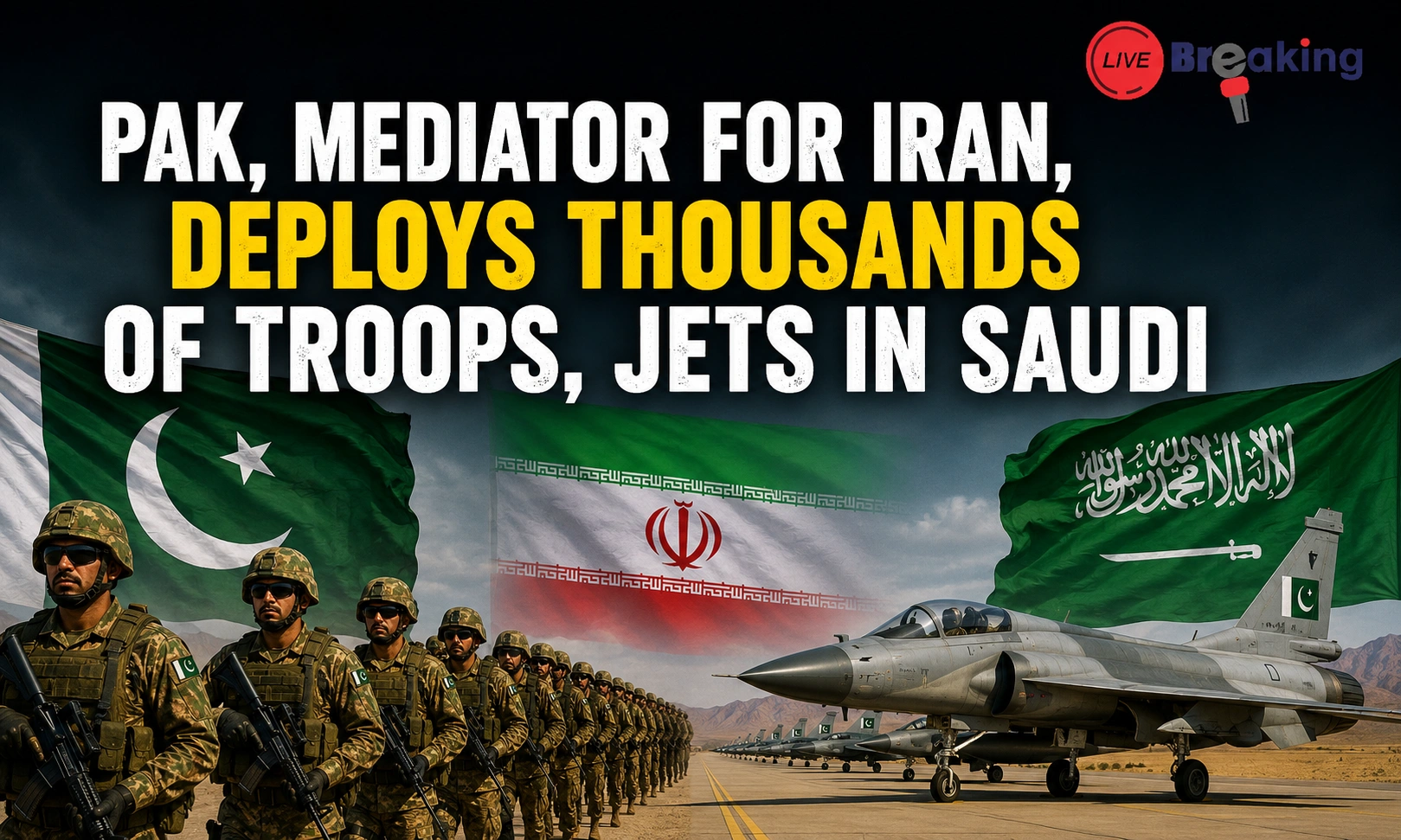
As tensions in the Middle East continue to escalate amid the ongoing Iran conflict, Pakistan has reportedly deployed thousands of troops, fighter jets, drones, and advanced air defence systems to Saudi Arabia under a strategic mutual defence agreement. The move comes at a crucial time when Islamabad is simultaneously attempting to position itself as a mediator in the Iran crisis.
According to multiple international reports, including Reuters , Pakistan’s deployment includes around 8,000 troops, a squadron of JF-17 fighter jets, drone units, and Chinese-made HQ-9 air defence systems. The development has sparked widespread geopolitical discussions, especially because Pakistan has publicly advocated diplomatic dialogue while strengthening military cooperation with Riyadh.
Pakistan’s Major Military Deployment To Saudi Arabia
Reports suggest that Pakistan began deploying military assets to Saudi Arabia earlier this year as regional tensions intensified following attacks linked to the broader Iran conflict. Sources quoted by Reuters stated that the deployment is not symbolic but combat-capable and designed to assist Saudi Arabia if the kingdom faces further attacks.
The deployment reportedly includes:
| Military Asset | Details |
|---|---|
| Troops | Around 8,000 Pakistani military personnel |
| Fighter Jets | Squadron of JF-17 Thunder jets |
| Drones | Two squadrons of drones |
| Air Defence | Chinese HQ-9 defence system |
| Naval Support | Possible warship deployment |
Security officials reportedly confirmed that Saudi Arabia is financing parts of the deployment while Pakistani personnel continue operating the equipment.
Why Saudi Arabia Needs Additional Military Support
Saudi Arabia has increasingly faced security threats amid the widening Iran conflict. Reports indicate that Iranian missile and drone attacks targeted several Gulf countries, including Saudi Arabia, during the regional escalation. Oil infrastructure, airports, and strategic facilities were reportedly attacked in recent months.
The Saudi leadership has been attempting to strengthen its defensive capabilities to prevent further escalation. Pakistan’s military support is seen as part of a broader Gulf security framework designed to deter attacks and reassure allies in the region.
Read More: Oil Shock Coming? Why Petrol And Diesel Prices In India May Rise Soon Amid Global Crude Crisis
Analysts believe the deployment also reflects Saudi Arabia’s long-standing military relationship with Pakistan, which has historically included joint exercises, defence cooperation, and training missions.
Pakistan’s Dual Role — Mediator And Military Partner
One of the most debated aspects of this development is Pakistan’s balancing act between diplomacy and military cooperation.
Islamabad has been actively involved in diplomatic efforts aimed at reducing tensions between Iran and the United States. Reports indicate that Pakistan helped facilitate ceasefire discussions and negotiations linked to the ongoing regional conflict.
However, the simultaneous deployment of military assets to Saudi Arabia has raised questions internationally about whether Pakistan can maintain neutrality while acting as a mediator.
Political observers note that Pakistan shares close economic and strategic ties with Saudi Arabia, which has historically provided financial assistance and investment support to Islamabad. At the same time, Pakistan also shares a sensitive border relationship with Iran, making the situation diplomatically delicate.
What Is The Pakistan-Saudi Defence Pact?
Reports mention a confidential strategic mutual defence agreement signed between Pakistan and Saudi Arabia in 2025. Under this pact, aggression against one country could be treated as aggression against both nations.
Read More: LPG, Defence Partnership Framework: Big Returns From PM Modi UAE Visit
Though the full details remain undisclosed, the agreement reportedly allows large-scale troop deployments and coordinated defence operations. Some reports even claim the pact could permit up to 80,000 Pakistani troops to be stationed in Saudi Arabia if required.
Experts believe the agreement reflects growing defence integration between the two countries amid evolving geopolitical risks in the Gulf region.
Rising Concerns Over Wider Regional Conflict
The deployment has also intensified fears of a broader Middle East conflict involving multiple countries.
Iran has reportedly warned Gulf nations against supporting hostile military operations, while regional powers continue increasing military readiness. Saudi Arabia, the UAE, and other Gulf states have already enhanced air defence systems following repeated attacks on strategic installations.
Global markets are closely monitoring the situation, especially because any prolonged instability in the Gulf could impact oil supply routes and international energy prices.
Read More: VD Satheesan: The Man Who Saved Congress – And Yet Almost Got Ignored For It
Security analysts suggest that Pakistan’s deployment sends a strong strategic signal but also risks drawing Islamabad deeper into regional tensions if the conflict escalates further.
International Reactions To Pakistan’s Deployment
International reactions have been mixed. Some analysts see the move as a natural extension of Pakistan-Saudi defence cooperation, while others question whether Islamabad’s role as a mediator could be compromised.
Western observers are also examining the increasing use of Chinese military systems in the Gulf through Pakistan’s deployment, particularly the HQ-9 air defence platform and JF-17 fighter aircraft.
Meanwhile, diplomatic circles continue emphasizing the importance of dialogue and de-escalation to prevent the conflict from spreading across the wider Middle East.
Strategic Importance Of JF-17 Fighter Jets
The JF-17 Thunder jets deployed by Pakistan are jointly developed with China and are considered one of Pakistan’s most important indigenous defence platforms.
Read More: Oil Shock Coming? Why Petrol And Diesel Prices In India May Rise Soon Amid Global Crude Crisis
These jets are designed for multi-role combat missions, including air defence, precision strikes, and tactical operations. Their deployment to Saudi Arabia highlights the increasing strategic value of Pakistan-China military collaboration in regional security dynamics.
Military experts believe the presence of these aircraft could significantly strengthen Saudi Arabia’s air defence posture during periods of heightened regional instability.
Future Implications For The Middle East
The coming weeks may prove critical for the Middle East as diplomatic negotiations continue alongside rising military preparations.
Pakistan’s decision to simultaneously mediate and deploy forces demonstrates the complicated geopolitical balancing acts many regional powers now face. Whether this strategy contributes to stability or further tension remains uncertain.
For now, the deployment underscores how rapidly the security landscape in the Gulf is changing and how countries are repositioning themselves amid fears of a wider regional war.
FAQ
Q1. Why did Pakistan deploy troops to Saudi Arabia?
Pakistan reportedly deployed troops under a strategic mutual defence pact with Saudi Arabia to help strengthen the kingdom’s security amid rising tensions linked to the Iran conflict.
Q2. How many troops has Pakistan deployed?
Reports claim around 8,000 Pakistani military personnel have been deployed to Saudi Arabia.
Q3. What military equipment has Pakistan sent?
Pakistan reportedly sent JF-17 fighter jets, drones, and HQ-9 air defence systems alongside troop deployments.
Read More: Major Policy Shift In West Bengal, No More Welfare Funds For Imams, Temple Priests
Q4. Is Pakistan supporting Saudi Arabia in the Iran conflict?
Pakistan officially maintains that it supports diplomatic solutions while also honouring defence agreements with Saudi Arabia.
Q5. What is the JF-17 fighter jet?
The JF-17 Thunder is a multi-role combat aircraft jointly developed by Pakistan and China.