West Bengal Ends Welfare Funds for Imams and Temple Priests: Major Policy Shift Sparks Political Debate
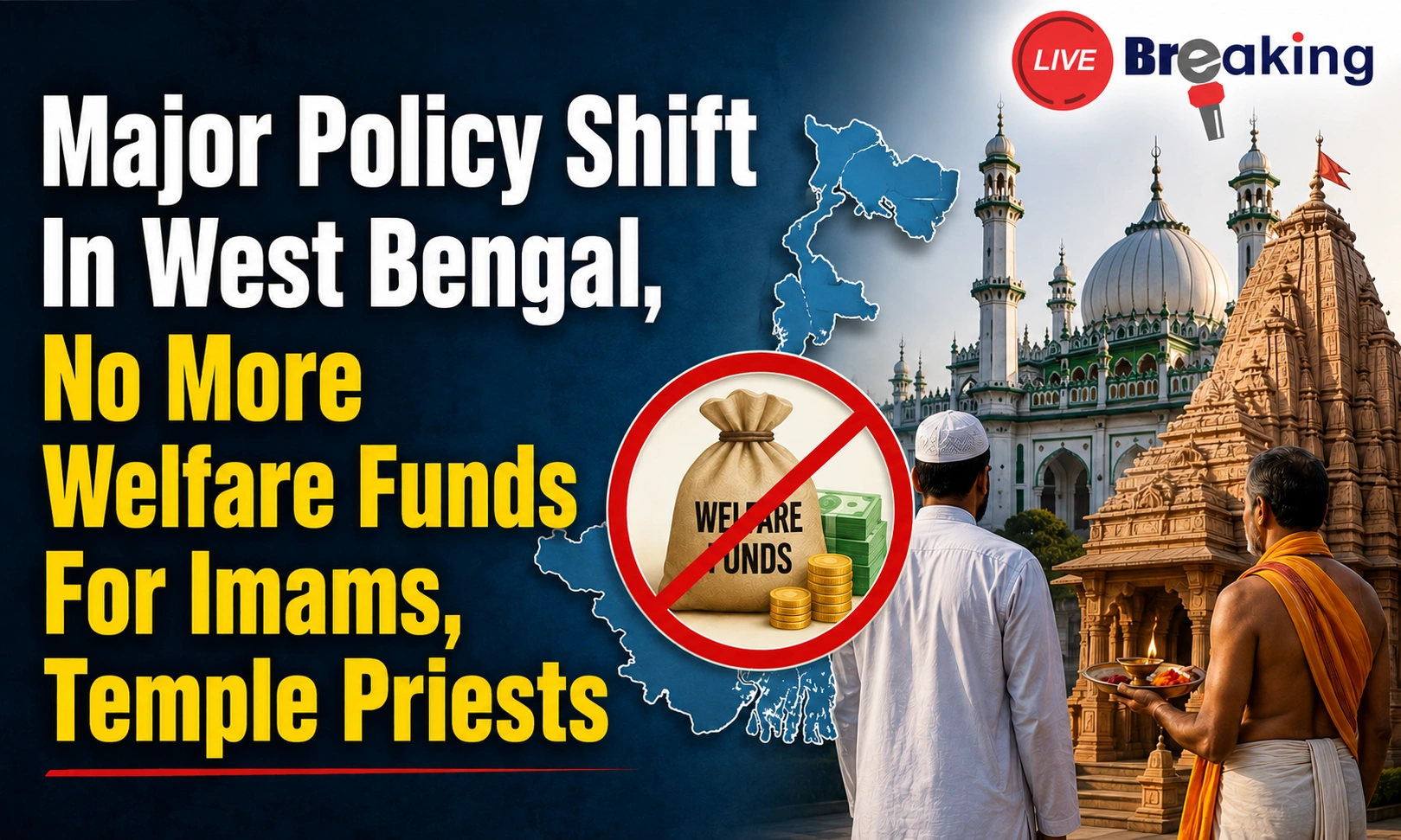
In a significant political and administrative move, the newly formed government in West Bengal has decided to discontinue welfare funds and monthly honorariums previously provided to imams, muezzins, and temple priests. The decision marks one of the biggest policy reversals in the state’s socio-religious welfare structure in over a decade and has already triggered sharp political reactions across the country.
The welfare schemes, introduced during the earlier Trinamool Congress (TMC) government under Mamata Banerjee, had aimed to financially support religious leaders belonging to economically weaker sections. However, the new administration led by Suvendu Adhikari has stated that government welfare policies should not be based on religious identity.
The move is being viewed as both a financial reform and a politically symbolic decision that could redefine the relationship between religion and state-sponsored welfare in Bengal politics.
What Were the Welfare Schemes for Imams and Temple Priests?
The welfare initiative began in 2012 when the then TMC government announced a monthly honorarium for imams across West Bengal. Under the scheme, registered imams reportedly received ₹2,500 per month. Later, similar support was extended to muezzins and Hindu temple priests (purohits).
The scheme was projected as a social welfare measure intended to help religious workers who often belonged to financially weaker backgrounds and lacked stable income sources.
Over the years, the policy became one of the most debated welfare programs in Bengal politics, drawing both praise and criticism from different sections of society.
Why Has the New Bengal Government Ended the Scheme?
According to reports, the new government believes welfare policies should be secular and not religion-specific. Officials associated with the administration argue that state funds should be directed toward broader public welfare initiatives such as healthcare, education, employment, and poverty alleviation rather than supporting religious identities directly.
The decision also aligns with the BJP’s broader political messaging around “equal treatment” and “non-appeasement politics.” Political observers believe the move is aimed at reshaping Bengal’s governance model after years of accusations regarding minority appeasement during the TMC regime.
Supporters of the policy change claim that religious institutions and leaders should ideally be supported through community-based contributions rather than taxpayer-funded government schemes.
Political Reactions Across Bengal
The announcement has intensified political tensions in West Bengal. Leaders from the Trinamool Congress have criticized the move, accusing the new administration of targeting vulnerable communities and dismantling social welfare protections built over the years.
On the other hand, BJP leaders have defended the decision, saying that governance should remain free from religion-based financial assistance. The development comes amid major political changes in Bengal following the recent assembly election results.
Political analysts believe the issue could become a major flashpoint in future political campaigns, especially in districts where religious welfare programs had strong local support.
Impact on Religious Leaders and Communities
The discontinuation of funds is expected to affect thousands of religious workers across the state. Many imams and temple priests depended on the honorarium as a supplementary source of income, particularly in rural areas where religious contributions from devotees remain limited.
Some community leaders have expressed concern that the sudden withdrawal could create financial hardship for elderly and economically vulnerable religious workers.
At the same time, there are voices supporting the move, arguing that long-term welfare should focus on employment generation, pensions, and universal social schemes rather than religion-linked financial support.
The Debate Around Secularism and Welfare
The issue has once again sparked a larger national debate about secularism and the role of governments in funding religious activities or religious representatives.
Critics of the earlier scheme had often questioned whether state funds should be used to support any religious group. Some legal and constitutional experts have also debated whether such schemes blur the line between welfare governance and religious patronage.
Interestingly, discussions around temple administration and welfare support have surfaced in courts as well. On May 18, 2026, the Supreme Court reportedly declined to entertain a plea seeking minimum wages and welfare benefits for temple priests working in state-controlled temples.
This wider context has added more intensity to the ongoing Bengal debate.
How Bengal Politics Has Changed
The policy shift reflects the rapidly changing political landscape in West Bengal. Following recent electoral developments and the rise of the BJP-led government, several policies introduced during the TMC era are now under review.
Read More: Oil Shock Coming? Why Petrol And Diesel Prices In India May Rise Soon Amid Global Crude Crisis
Observers say the removal of religion-based welfare programs is not merely an administrative decision but also a symbolic statement about the ideological direction of the new government.
For years, Bengal politics revolved around welfare-based governance combined with community outreach. The latest move indicates a possible transition toward a governance model focused on uniform welfare distribution rather than targeted religious assistance.
Could Similar Policies Be Reviewed in Other States?
The Bengal decision could influence political discourse in other states where governments provide various forms of support to religious institutions or workers.
Across India, different states offer subsidies, honorariums, grants, or administrative support linked to religious and cultural institutions. Political analysts believe the Bengal decision may encourage broader national discussions about the constitutional boundaries of such welfare policies.
However, experts also caution that each state has its own socio-political context, and any policy changes would likely depend on local political dynamics.
Public Opinion Remains Divided
Public reaction to the decision remains sharply divided. Supporters see it as a move toward fiscal discipline and secular governance, while opponents view it as a rollback of social security support for economically weaker religious workers.
Social media discussions have also reflected this divide, with debates focusing on constitutional secularism, minority rights, and the role of governments in religious welfare.
Read More: VD Satheesan: The Man Who Saved Congress – And Yet Almost Got Ignored For It
As the controversy grows, the issue is expected to remain politically significant in Bengal for months to come.
Conclusion
West Bengal’s decision to discontinue welfare funds for imams and temple priests marks a major policy and political shift in the state. While supporters call it a step toward neutral governance and financial reform, critics argue that it could hurt vulnerable religious workers who relied on the assistance.
The development has opened up a larger national conversation about secularism, religion-based welfare, and the role of governments in supporting faith-linked communities. Whether the move strengthens the new administration politically or triggers backlash among affected groups will become clearer in the coming months.
For now, the decision stands as one of the most significant governance changes in Bengal’s recent political history.
Read More: Oil Shock Coming? Why Petrol And Diesel Prices In India May Rise Soon Amid Global Crude Crisis
Key Details of Bengal’s Welfare Scheme Policy Shift
| Aspect | Previous Policy | New Policy |
|---|---|---|
| Beneficiaries | Imams, muezzins, temple priests | Welfare scheme discontinued |
| Introduced By | TMC Government | BJP-led Government ended scheme |
| Year Started | 2012 | Ended in 2026 |
| Imam Honorarium | ₹2,500 monthly | Discontinued |
| Government’s Reason | Financial support for religious workers | Welfare should not be religion-based |
| Political Reaction | Supported by TMC | Defended by BJP leadership |
| Public Debate | Minority welfare vs secularism | Governance neutrality vs social support |
FAQ
Q1. Why did the Bengal government stop welfare funds for imams and priests?
The government stated that welfare policies should not be based on religious identity and public funds should be used for broader social welfare programs.
Q2. When was the imam honorarium scheme introduced?
The scheme was introduced in 2012 by the previous TMC government in West Bengal.
Read More: LPG, Defence Partnership Framework: Big Returns From PM Modi UAE Visit
Q3. How much financial support did imams receive?
Registered imams reportedly received ₹2,500 per month under the scheme.
Q4. Were Hindu temple priests also receiving funds?
Yes, similar welfare assistance was later extended to temple priests (purohits).
Q5. What has been the political response to the decision?
The BJP has defended the move as secular governance, while the TMC has criticized it as harmful to vulnerable communities.