Employee Email To HR Seeking 1-Year WFH After PM Modi’s Fuel-Saving Appeal Goes Viral: ‘Least I Can Do For My Country’
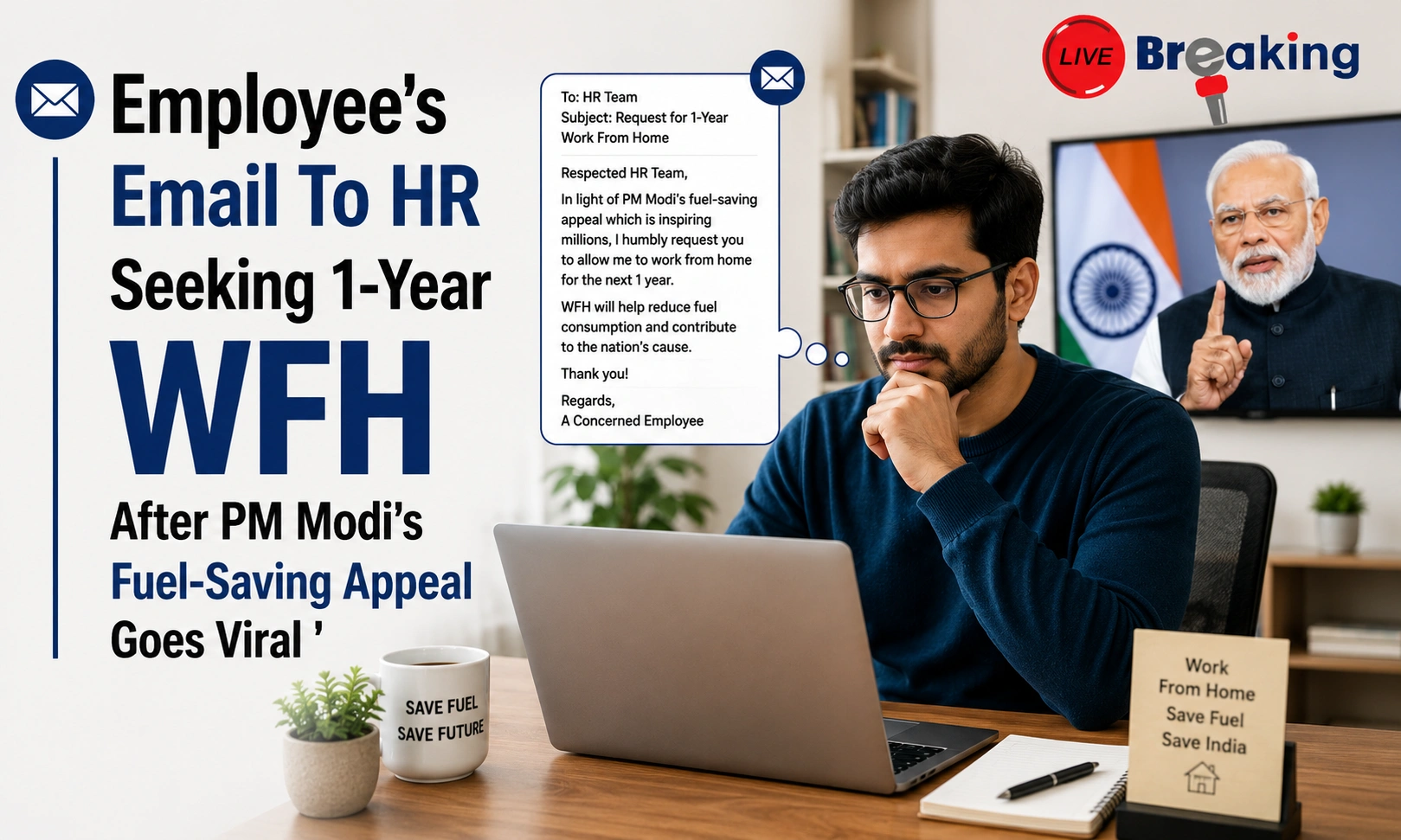
A simple email sent by an employee to the HR department has unexpectedly become one of the most talked-about topics online. The employee reportedly requested permission to work from home for an entire year after Prime Minister Narendra Modi urged citizens to reduce fuel consumption and adopt practices like remote work wherever possible. The email quickly spread across social media platforms, with many users calling it both “patriotic” and “bold.”
The viral incident comes at a time when conversations around fuel conservation, work-life balance, and hybrid work culture are dominating discussions in India’s corporate sector. PM Modi’s recent remarks encouraging work-from-home arrangements to save fuel amid rising global tensions and oil concerns have triggered a fresh national debate on whether India is ready to return to large-scale remote work models.
What Was Mentioned In The Viral Email?
According to reports, the employee wrote to HR requesting approval for work from home until May 2027. In the email, the employee reportedly mentioned that opting for remote work was the “least I can do for my country” in response to the Prime Minister’s appeal for conserving fuel and reducing unnecessary travel.
The tone of the email appeared polite yet humorous, which made it instantly relatable for millions of office workers across India. Screenshots of the mail soon began circulating on LinkedIn, X, and Instagram, sparking thousands of comments and reactions.
While some social media users appreciated the employee’s creativity and national spirit, others joked that many employees were probably preparing similar emails for their own HR departments.
Why PM Modi Encouraged Work From Home
Prime Minister Narendra Modi recently urged citizens and businesses to revive certain habits adopted during the Covid-19 pandemic, including online meetings, virtual conferences, and work-from-home practices. The appeal came amid concerns over global fuel prices and geopolitical tensions affecting oil supply chains.
Read More: 6 Reasons Why Mamata Banerjee Lost Bhabanipur to Suvendu Adhikari in 2026
During his address, PM Modi emphasized the importance of reducing petrol and diesel consumption and encouraged people to use public transport, carpooling, and digital alternatives whenever possible. The appeal was presented not merely as a convenience measure but as a national responsibility linked to economic stability and energy conservation.
The statement instantly reignited discussions around flexible work culture in India, especially within the IT and corporate sectors where remote work remains operationally feasible.
Corporate India Divided Over Remote Work
The viral email has also reopened an old debate: Is India truly ready for long-term work-from-home culture again?
Many employees support hybrid and remote work because it reduces commuting stress, saves fuel costs, and improves work-life balance. Several professionals quoted in recent reports argued that productivity today depends more on outcomes rather than physical office presence.
However, not everyone agrees.
Some HR leaders and employers believe permanent remote work can negatively affect collaboration, creativity, team bonding, and organizational culture. Industries like manufacturing, retail, and traditional businesses also cannot fully adopt remote work models.
Read More: TVK Chief Vijay Meets Tamil Nadu Governor, Stakes Claim To Form Next Government
As a result, many companies are now leaning toward hybrid work arrangements rather than complete work from home.
IT Employees Push For Mandatory WFH
The Prime Minister’s remarks have received strong support from sections of the IT industry. Employee groups and unions have reportedly requested the government to officially encourage work-from-home wherever possible for India’s massive IT workforce.
Many IT professionals on social media argued that remote work is already proven to be effective after the Covid era. They believe flexible work policies could reduce traffic congestion, improve employee wellbeing, and contribute significantly toward national fuel savings.
At the same time, others fear that fully remote setups may blur personal and professional boundaries, leading to burnout and longer working hours.
Why The Viral Email Resonated With People
The employee’s email went viral because it touched multiple emotions at once — patriotism, humor, frustration with daily commuting, and the universal desire for flexibility.
For many office-goers in metro cities like Delhi, Bengaluru, Mumbai, and Hyderabad, commuting consumes hours every day along with rising fuel expenses. The idea of staying productive from home while contributing to fuel conservation sounded appealing to many people online.
Read More: “Can Stable Government Be Formed With 113 MLAs?” What Governor Asked Vijay
The email also highlighted how workplace culture has changed after the pandemic. Employees today increasingly value flexibility, mental wellness, and autonomy over rigid office attendance policies.
Experts Say Hybrid Work May Be The Future
Several workplace experts believe the future of work in India will likely be hybrid rather than fully remote or fully office-based. Studies conducted after the pandemic have shown that employees prefer flexible work environments that allow them to balance personal and professional responsibilities effectively.
Hybrid work models are also viewed as beneficial for organizations because they can reduce operational costs while maintaining productivity.
Many companies are already experimenting with flexible attendance policies, remote collaboration tools, and digital-first workflows. The recent fuel-saving appeal may accelerate this transition further.
Pros And Cons Of Long-Term Work From Home
| Advantages of WFH | Challenges of WFH |
|---|---|
| Saves fuel and commuting costs | Reduced face-to-face collaboration |
| Better work-life balance | Difficulty separating work and personal life |
| Lower stress from travel | Team bonding may weaken |
| Increased flexibility | Monitoring productivity can become difficult |
| Supports environmental sustainability | Risk of employee burnout |
| Less traffic congestion | Not feasible for all industries |
Read More: Thalapathy Vijay Wins Again, TVK Crosses 118-Mark With VCK, Left Support
Social Media Flooded With Reactions
Social media users reacted to the viral email with a mix of humor and serious discussions.
Some users joked that HR departments across India were probably receiving similar requests after the viral post. Others praised the employee for cleverly aligning personal convenience with national interest.
A few users even questioned whether companies would genuinely consider such requests unless the government formally issued guidelines encouraging remote work.
The incident has once again shown how quickly workplace culture conversations can dominate online discussions in India.
Will More Companies Allow Extended WFH?
Although it is unlikely that most companies will immediately approve one-year work-from-home requests, the conversation around flexible work policies is clearly gaining momentum.
Several organizations have already indicated that they are reviewing travel policies and hybrid work arrangements following the Prime Minister’s appeal.
Industry experts believe companies may increasingly adopt role-based flexibility, allowing employees whose work can be performed remotely to operate from home for part of the week.
The viral email may have started as a humorous post, but it has successfully triggered a larger national conversation about fuel conservation, employee expectations, and the future of work in India.
FAQ
Why did the employee ask for one year of work from home?
The employee reportedly requested one year of WFH after PM Narendra Modi encouraged citizens to reduce fuel consumption and adopt remote work wherever possible.
Why did PM Modi promote work from home?
PM Modi suggested work-from-home practices as part of fuel-saving and economic conservation measures amid global oil supply concerns.
Read More: $72 Billion: The Forex Logic Behind PM Modi Appeal To Avoid Buying Gold
Did the employee’s email really go viral?
Yes, screenshots of the email spread widely across social media platforms and triggered debates around remote work culture.
Are Indian companies bringing back WFH?
Some companies are reportedly reviewing hybrid and remote work policies, though most organizations are unlikely to shift completely to full-time WFH.
What is the future of work in India?
Experts believe hybrid work models combining office and remote work are likely to become the preferred option for many industries.