Delhi High Court on CJP Leaders: Riots Abroad Mentioned
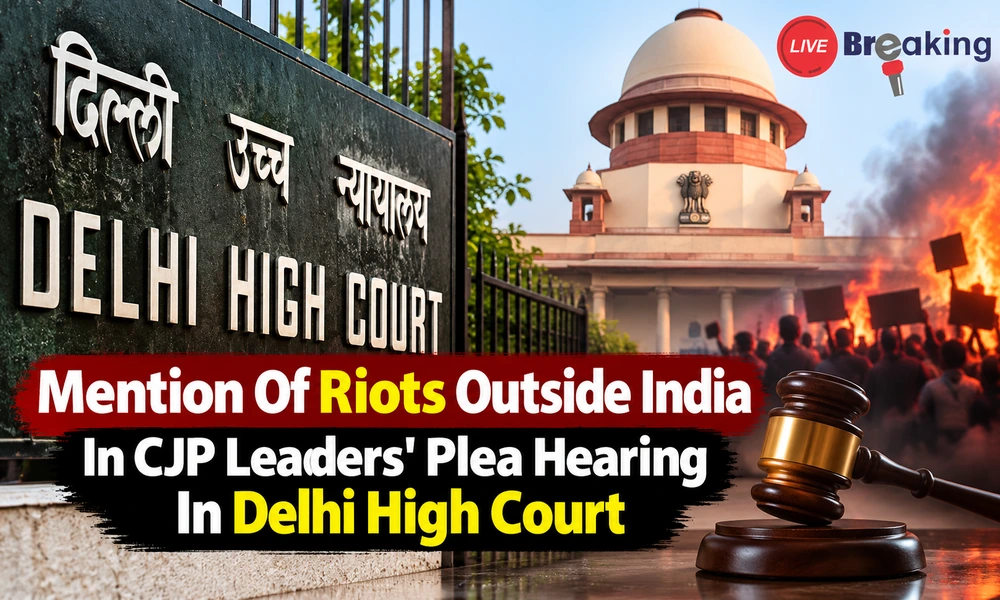
The Delhi High Court on Wednesday, October 21, 2026, questioned Cockroach Janta Party (CJP) leaders Ashutosh Ranka and Saurav Das during a hearing concerning the extension of their judicial custody following an attempted protest at Jantar Mantar in New Delhi. During the proceedings, the court referred to incidents in other countries where student protests had escalated into violence, including arson and the burning of buildings.
Justice Subramonium Prasad raised concerns about the consequences of breaking barricades during demonstrations and the possibility that other participants could act beyond the organisers’ control. The observations came as the two leaders challenged a magistrate’s order extending their custody.
The hearing also focused on the alleged breach of peace bonds furnished after the leaders’ earlier apprehension. The court questioned whether authorities could seek stricter conditions when individuals allegedly violated bonds intended to maintain public peace. The lawyers subsequently withdrew the plea after the court suggested that they await the leaders’ appearance before the magistrate.
Why Did the Delhi High Court Mention Riots Outside India?
The reference to violence in other countries arose in the context of the court’s concerns about how protests can develop when participants disregard police barricades or when crowd behaviour becomes difficult to control.
During the hearing, Justice Subramonium Prasad reportedly pointed to international examples in which student demonstrations had escalated into arson and damage to buildings. The reference served as a cautionary observation about the potential consequences of a protest moving beyond peaceful expression.
The central issue was not simply whether a demonstration had been planned, but whether the conduct of its organisers could create a risk to public peace and tranquillity.
The court observed that people leading a protest may not necessarily be able to control everyone who joins them. If barricades are breached, additional participants may follow, potentially creating circumstances that organisers cannot manage.
Such observations underline the importance of assessing the circumstances surrounding a demonstration, including its organisation, the conduct of participants and the possibility of a disturbance.
However, a reference to violent protests abroad should not be interpreted as a finding that every protest will lead to violence. The circumstances of each demonstration and the evidence presented before the relevant authorities remain important.
What Is the CJP Leaders’ Case About?
The proceedings concern Ashutosh Ranka and Saurav Das, leaders associated with the Cockroach Janta Party, and their attempts to organise a protest at Jantar Mantar in Delhi.
According to report, Ranka, Das and another CJP member, Abhijeet Dipke, were apprehended at Delhi airport on October 10, 2026, after arriving to lead a demonstration at Jantar Mantar.
They were released the same day after furnishing peace bonds of ₹50,000. The bonds were intended to address concerns about maintaining peace.
The situation developed further on October 14, when Das and Ranka were apprehended again following an attempt to stage a Tiranga protest at Jantar Mantar. They were subsequently sent to five days of judicial custody.
A Special Executive Magistrate, in an order dated October 19, observed that the respondents had deliberately breached their bonds and immediately committed a breach of peace. Their custody was extended, prompting the leaders to approach the Delhi High Court.
During the October 21 hearing, the High Court questioned their alleged breach of the bonds and examined the circumstances surrounding the attempted demonstration.
Court Questions the Alleged Breach of Peace Bonds
One of the key aspects of the hearing was the court’s questioning of the leaders about their alleged failure to comply with the conditions attached to their earlier release.
The court reportedly asked whether authorities were entitled to seek a stricter bond when an individual broke an existing bond. The question brought the legal significance of preventive measures and compliance with peace-related conditions into focus.
Peace bonds are intended to help prevent situations that authorities reasonably anticipate could disturb public order. Their practical implications depend on the applicable legal provisions, the circumstances of the case and the orders issued by the competent authority.
In this case, the magistrate’s order and the subsequent challenge before the High Court centred on the alleged breach and the decision to extend judicial custody.
The hearing highlighted a key issue in preventive proceedings: when authorities believe that a previous undertaking has been violated, they may seek further safeguards, but the relevant legal requirements and facts must still be considered.
The court’s questions were part of the hearing and should not, by themselves, be treated as a final ruling on every issue raised by the parties.
“You Are Not Gen Z”: Court Raises Questions About the Leaders’ Age and Cause
Another notable part of the proceedings involved questions about the ages of Ranka and Das and the cause behind the protest.
The court was informed that the two leaders were 27 and 31 years old. Justice Prasad then questioned the characterisation of the demonstration as a student protest and referred to the distinction between the participants’ ages and the nature of the cause being pursued.
The exchange also brought attention to the purpose and identity of the organisation associated with the demonstration.
The court reportedly observed that questions about a person’s identity, intentions, association and the purpose of that association could become relevant when a magistrate assesses an apprehension of a breach of peace.
These observations indicate that the proceedings involved more than the immediate circumstances of the attempted protest. They also touched on how the authorities assess the context in which a demonstration is organised.
At the same time, age alone does not determine whether a person’s participation in a protest is lawful. The legal assessment depends on the applicable law, the relevant facts and the conduct under examination.
Why Is Jantar Mantar Important for Protest-Related Cases?
Jantar Mantar is a prominent protest location in New Delhi, associated with demonstrations and public expressions of political and social demands.
Because demonstrations can attract participants, supporters and public attention, questions about permissions, crowd management and compliance with applicable restrictions may become important.
In the present case, the report describes the location as denotified in connection with the attempted protest. The reported proceedings focused on the leaders’ efforts to stage their demonstration and the alleged breach of their peace bonds.
The case illustrates how protest-related disputes can move beyond the immediate question of whether a demonstration took place. Authorities may also examine the circumstances of the gathering, compliance with existing orders and the possibility of a disturbance.
Nevertheless, the legal position in any particular case must be determined from the applicable orders and relevant facts. The broader significance of Jantar Mantar as a protest location does not, on its own, establish whether a particular demonstration complied with all legal requirements.
What Happened After the Delhi High Court Hearing?
The High Court suggested that the leaders’ lawyer wait until the leaders appeared before the magistrate later that day.
Following the suggestion, the lawyer withdrew the plea.
This procedural development is significant because withdrawal of the plea should not automatically be interpreted as a judicial endorsement of every allegation or observation made during the hearing. Nor does it, by itself, establish the final outcome of the underlying proceedings.
The immediate issue involved the magistrate’s order extending custody and the challenge brought by the two leaders. The subsequent proceedings before the magistrate would be relevant to understanding the next stage of the matter.
Readers should distinguish between the court’s oral observations during a hearing, the orders formally passed and any later decisions affecting custody or the underlying allegations.
For developments after the reported hearing, the latest court orders and verified news reports should be consulted.
What the Case Means for Public Protests and Law Enforcement
The hearing raises broader questions about the responsibilities of protest organisers, the maintenance of public order and the legal safeguards that apply when authorities anticipate a possible disturbance.
First, organisers may face scrutiny over how a demonstration is conducted, particularly if there are allegations that participants have breached barricades or failed to comply with existing conditions.
Second, authorities must assess the circumstances of each situation rather than assume that every demonstration presents the same risks. Peaceful public assembly and the prevention of violence are important considerations that must be evaluated within the applicable legal framework.
Third, preventive proceedings require attention to the specific facts, the relevant legal provisions and the orders issued by the competent authority. A court’s questions during a hearing provide insight into the issues being considered, but the final legal position depends on the formal decisions and subsequent proceedings.
Finally, international examples of protests turning violent can inform discussions about crowd management, but they do not substitute for an assessment of the facts in an individual Indian case.
The CJP leaders’ hearing therefore brings together several issues: the alleged breach of peace bonds, the circumstances surrounding the Jantar Mantar protest attempt and the court’s concerns about how demonstrations can develop when crowd behaviour becomes difficult to control.
The next developments in the proceedings will be important in clarifying the legal position and the status of the custody order.
Key Details at a Glance
| Particular | Details |
|---|---|
| Court | Delhi High Court |
| Hearing date | October 21, 2026 |
| Judge mentioned in the report | Justice Subramonium Prasad |
| Leaders involved | Ashutosh Ranka and Saurav Das |
| Organisation | Cockroach Janta Party (CJP) |
| Protest location | Jantar Mantar, New Delhi |
| Earlier apprehension | October 10, 2026 |
| Subsequent apprehension | October 14, 2026 |
| Peace bond amount reported | ₹50,000 |
| Magistrate’s order | October 19, 2026 |
| Main issue | Alleged breach of peace bonds and extension of judicial custody |
| Court’s international reference | Student protests abroad that escalated into violence |
| Outcome reported | Lawyer withdrew the plea after the court suggested awaiting appearance before the magistrate |
Frequently Asked Questions (FAQs)
1. Why did the Delhi High Court mention riots outside India?
The court referred to incidents in other countries where student protests reportedly escalated into arson and the burning of buildings. The observation arose during a discussion about barricades, crowd behaviour and the possibility that protest organisers may not be able to control all participants.
2. Who are Ashutosh Ranka and Saurav Das?
Ashutosh Ranka and Saurav Das are associated with the Cockroach Janta Party (CJP). They were apprehended in connection with attempts to organise a protest at Jantar Mantar and subsequently challenged an order extending their judicial custody.
3. Why were the CJP leaders taken into custody?
The report states that the leaders were apprehended after an attempted Tiranga protest at Jantar Mantar on October 14, 2026. The subsequent magistrate’s order referred to an alleged breach of peace bonds furnished after their earlier apprehension.
4. What is a peace bond?
A peace bond is a legal undertaking associated with preventing a breach of peace, subject to the applicable law and the conditions imposed by the competent authority. The consequences of an alleged breach depend on the relevant legal provisions, the facts and the orders made in the individual case.
5. What did the Delhi High Court say about breaking barricades?
The court reportedly observed that breaking barricades could encourage others to follow and that some participants might not remain under the organisers’ control. The comments reflected concerns about crowd management and the possibility of a disturbance during a protest.
6. Did the Delhi High Court deliver a final judgment in the hearing?
The lawyer withdrew the plea after the court suggested waiting until the leaders appeared before the magistrate. The report does not describe this as a final judgment resolving every issue in the underlying proceedings.
7. What is the significance of the Jantar Mantar protest case?
The case highlights the interaction between public demonstrations, compliance with peace bonds and preventive measures intended to maintain public order. Its legal significance depends on the specific facts, applicable law and the formal orders issued during the proceedings.