Shashi Tharoor on Rahul Gandhi’s Vietnam Trip: ‘Not a Travel Agent’
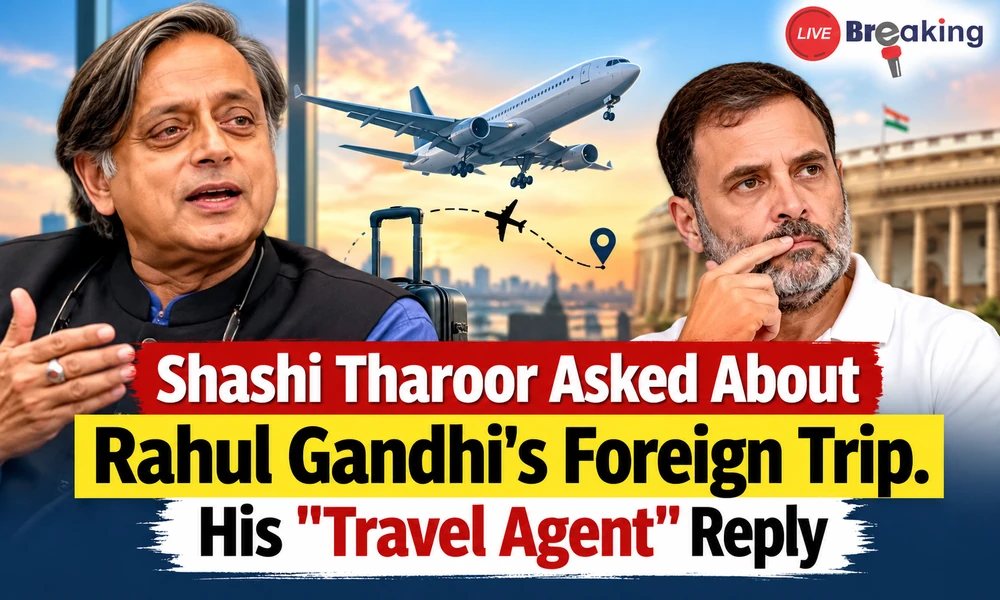
Congress MP Shashi Tharoor has responded to questions about Rahul Gandhi’s foreign trip with a brief but pointed remark, saying, “I am not a travel agent.” The comment came when reporters asked Tharoor why the Leader of the Opposition in the Lok Sabha had travelled abroad while political protests were taking place in Delhi.
The exchange has attracted attention amid a political debate over Gandhi’s reported four-day visit to Vietnam. The Bharatiya Janata Party (BJP) has criticised the Congress leader’s foreign travel, while Congress leaders have questioned why his trips should become a political controversy.
Tharoor, who was in Kerala when reporters approached him, declined to offer an explanation for Gandhi’s travel plans. Instead, he pointed out that individuals have their own responsibilities and said he could not comment on the reasons behind his colleague’s visit.
The incident has added another dimension to the political discussion surrounding Gandhi’s overseas travel, the ongoing protests against Chief Election Commissioner Gyanesh Kumar, and the competing claims made by the ruling party and the opposition.
What Did Shashi Tharoor Say About Rahul Gandhi’s Foreign Trip?
When reporters asked Tharoor why Rahul Gandhi had travelled abroad, the Congress MP made it clear that he was not in a position to explain his colleague’s itinerary.
“I am not a travel agent. There is no point in asking me that question. Why did I leave Delhi and come here now? Every person has certain responsibilities. So, I cannot comment on that,” Tharoor said, according to NDTV’s report.
His response shifted the focus away from Gandhi’s destination and towards the question of whether one political leader should be expected to explain another leader’s personal travel decisions.
Tharoor did not provide details about the purpose of Gandhi’s Vietnam visit, nor did he confirm any specific meetings or activities during the trip. His statement was a refusal to comment rather than an endorsement or criticism of the travel.
The remark has become a talking point because it came at a time when Gandhi’s absence from the political scene was being discussed by the BJP amid ongoing opposition protests.
Why Is Rahul Gandhi’s Vietnam Trip in the News?
Rahul Gandhi’s reported four-day Vietnam trip became a subject of political debate amid protests against Chief Election Commissioner Gyanesh Kumar.
According to the NDTV report, the BJP criticised Gandhi’s foreign travel and questioned the timing of his visit. The party also shared a video on social media platform X that it claimed showed Gandhi aboard a flight to Vietnam.
The episode quickly became part of the broader political exchange between the BJP and the Congress. The BJP questioned Gandhi’s priorities, while Congress leaders argued that his travel should not automatically be treated as evidence of a lack of commitment to political responsibilities.
The controversy illustrates how the movements and schedules of prominent political figures can become subjects of public debate, particularly when their parties are involved in active political campaigns or protests.
However, the purpose of Gandhi’s Vietnam visit was not established in Tharoor’s response. Claims about the objectives of the trip should therefore be distinguished from independently confirmed information.
BJP Criticises Rahul Gandhi’s Foreign Travel
The BJP used Gandhi’s reported visit to renew its criticism of his overseas travel. The party questioned why he was abroad during a period of political activity in Delhi and suggested that the timing deserved scrutiny.
Read More: RBI Hikes Repo Rate By 25 Basis Points To 5.5% Amid Rising Inflation
BJP leader Sambit Patra made allegations concerning Gandhi’s supposed intentions and alleged links to George Soros. He claimed that Gandhi had travelled abroad to receive guidance on efforts to bring about regime change in India.
BJP spokesperson Pradeep Bhandari also questioned whether Gandhi’s trip was intended as a break or involved meetings with people he described as collaborators.
These statements represent the BJP’s political allegations. They should not be treated as established facts without supporting evidence.
The controversy also demonstrates how foreign travel can become a political talking point in India, particularly when leaders are engaged in disputes over elections, governance, or the functioning of constitutional institutions.
For the BJP, the timing of Gandhi’s visit became a basis for questioning his political priorities. For the Congress, the criticism raised questions about whether an opposition leader’s movements were being scrutinised more intensely than necessary.
Congress Defends Rahul Gandhi’s Right to Travel
Congress leader Sandeep Dikshit defended Gandhi’s right to travel abroad and argued that the BJP was making an unnecessary issue of the visit.
Dikshit said Gandhi was an individual as well as the Leader of the Opposition, with responsibilities that could include engaging with students, academics, intellectuals, and international audiences.
He referred to Gandhi’s interactions with students at Yale University and in London, along with his engagement with intellectuals and the media, to argue that overseas travel should not automatically be viewed as a political failing.
Dikshit also questioned why the BJP objected to Gandhi travelling abroad, pointing out that other political leaders also undertake foreign visits.
Read More: Pregnant Journalist Alleges Rahul Gandhi Pushed Her. Lies, Says Congress
His response offered a different perspective from the BJP’s criticism. Rather than focusing exclusively on Gandhi’s physical presence during protests, the Congress argument emphasised the range of activities that a national political leader might undertake.
At the same time, Dikshit’s defence did not establish the specific purpose of Gandhi’s Vietnam trip. The stated arguments should therefore be understood as the Congress’s position in the political dispute.
How Does the Controversy Connect With the Delhi Protests?
The debate over Gandhi’s foreign travel emerged amid protests against Chief Election Commissioner Gyanesh Kumar.
Political disagreements surrounding election administration and electoral processes have been an important part of the wider contest between the BJP and the Congress. Gandhi’s reported absence during the protests gave the ruling party an opportunity to question his priorities.
The Congress, meanwhile, has continued to challenge the BJP’s criticism and defend its leaders’ political activities.
In such circumstances, travel schedules can become symbols in a larger political argument. Critics may interpret an overseas visit as a sign of absence at a crucial moment, while supporters may argue that a leader’s responsibilities extend beyond attending a particular protest.
It is important, however, to separate the timing of a visit from claims about its purpose. The fact that Gandhi travelled abroad during a period of protests does not, by itself, establish the intentions attributed to him by political opponents.
Read More: In First Show Of Support, Rahul Gandhi Backs CJP Leaders Jailed For Protest
Similarly, Tharoor’s refusal to explain the trip should not be interpreted as confirmation of any allegation concerning Gandhi’s activities abroad.
What Tharoor’s Response Actually Tells Us
Tharoor’s statement was brief, but it made one point clear: he did not consider himself responsible for explaining Gandhi’s travel plans.
By saying that he was not a travel agent, Tharoor avoided speculating about the reasons for the trip. His reference to his own journey from Delhi to Kerala also suggested that individuals have separate schedules and responsibilities.
The response should not be read as confirmation that Tharoor agreed with the BJP’s criticism, nor does it establish that he endorsed every aspect of Gandhi’s travel decisions.
In political reporting, such distinctions matter. A leader declining to answer a question is different from supporting an allegation, confirming a rumour, or providing an explanation.
Tharoor’s response therefore leaves the central question about the official purpose of Gandhi’s Vietnam visit unanswered.
It also highlights a familiar challenge in political communication: when a prominent figure is unavailable during a politically significant event, opponents may use the absence to question priorities, while supporters may argue that the criticism is selective.
Key Details About the Shashi Tharoor–Rahul Gandhi Vietnam Trip Controversy
| Topic | Details |
|---|---|
| Congress leader questioned | Shashi Tharoor |
| Leader whose trip prompted questions | Rahul Gandhi |
| Destination reported | Vietnam |
| Reported duration | Four days |
| Tharoor’s response | “I am not a travel agent.” |
| Location where Tharoor was questioned | Kerala |
| Political backdrop | Protests against Chief Election Commissioner Gyanesh Kumar |
| BJP’s position | Criticised the timing of Gandhi’s foreign visit and questioned its purpose |
| Congress’s position | Defended Gandhi’s right to travel and carry out his responsibilities |
| Official purpose of the visit | Not established by Tharoor’s response |
Conclusion
Shashi Tharoor’s “I am not a travel agent” reply has become a notable moment in the political debate over Rahul Gandhi’s reported Vietnam trip.
Read More: India Selling More To US Despite Tariffs, But China Trade Gap Keeps Rising
The BJP has questioned the timing and purpose of Gandhi’s overseas travel, while Congress leaders have defended his right to travel and argued that the issue is being politicised.
Tharoor, however, declined to explain his colleague’s plans and emphasised that every individual has separate responsibilities.
For now, the central question about the purpose of Gandhi’s Vietnam visit remains unanswered in the cited report. The exchange serves as another example of how the travel of senior political leaders can become part of the wider contest between India’s ruling party and opposition.
Frequently Asked Questions (FAQs)
1. What did Shashi Tharoor say about Rahul Gandhi’s Vietnam trip?
Shashi Tharoor said, “I am not a travel agent,” when reporters asked why Rahul Gandhi had travelled abroad. He declined to comment on Gandhi’s travel plans and noted that every individual has certain responsibilities.
2. Where did Rahul Gandhi reportedly travel?
According to NDTV’s report, Rahul Gandhi travelled to Vietnam for a reported four-day visit. Tharoor’s response did not establish the official purpose of the trip or provide details about Gandhi’s activities there.
3. Why is the BJP criticising Rahul Gandhi’s foreign visit?
The BJP questioned the timing of Gandhi’s reported visit, which coincided with political protests in Delhi. Party leaders also made allegations about the purpose of his foreign travel, but those claims should be distinguished from independently verified facts.
Read More: Mention Of Riots Outside India In CJP Leaders’ Plea Hearing In Delhi High Court
4. How did the Congress react to the controversy?
Congress leader Sandeep Dikshit defended Gandhi’s right to travel abroad. He argued that Gandhi has responsibilities as an individual and as Leader of the Opposition, including engaging with students, intellectuals, and the media.
5. What is the connection between the Vietnam trip and the Delhi protests?
The reported trip became controversial because it took place amid protests against Chief Election Commissioner Gyanesh Kumar. The BJP questioned Gandhi’s absence, while Congress leaders argued that his foreign travel should not automatically be treated as a political controversy.
6. Did Shashi Tharoor reveal the purpose of Rahul Gandhi’s Vietnam visit?
No. Tharoor declined to comment on the reasons behind Gandhi’s travel. His response did not confirm the purpose of the visit, any meetings in Vietnam, or the allegations made by political opponents.
7. Is the controversy evidence of a disagreement between Shashi Tharoor and Rahul Gandhi?
Tharoor’s refusal to comment does not, by itself, establish a disagreement between the two Congress leaders. His statement focused on his unwillingness to explain another person’s travel plans, and no conclusion about an internal dispute should be drawn from this exchange alone.