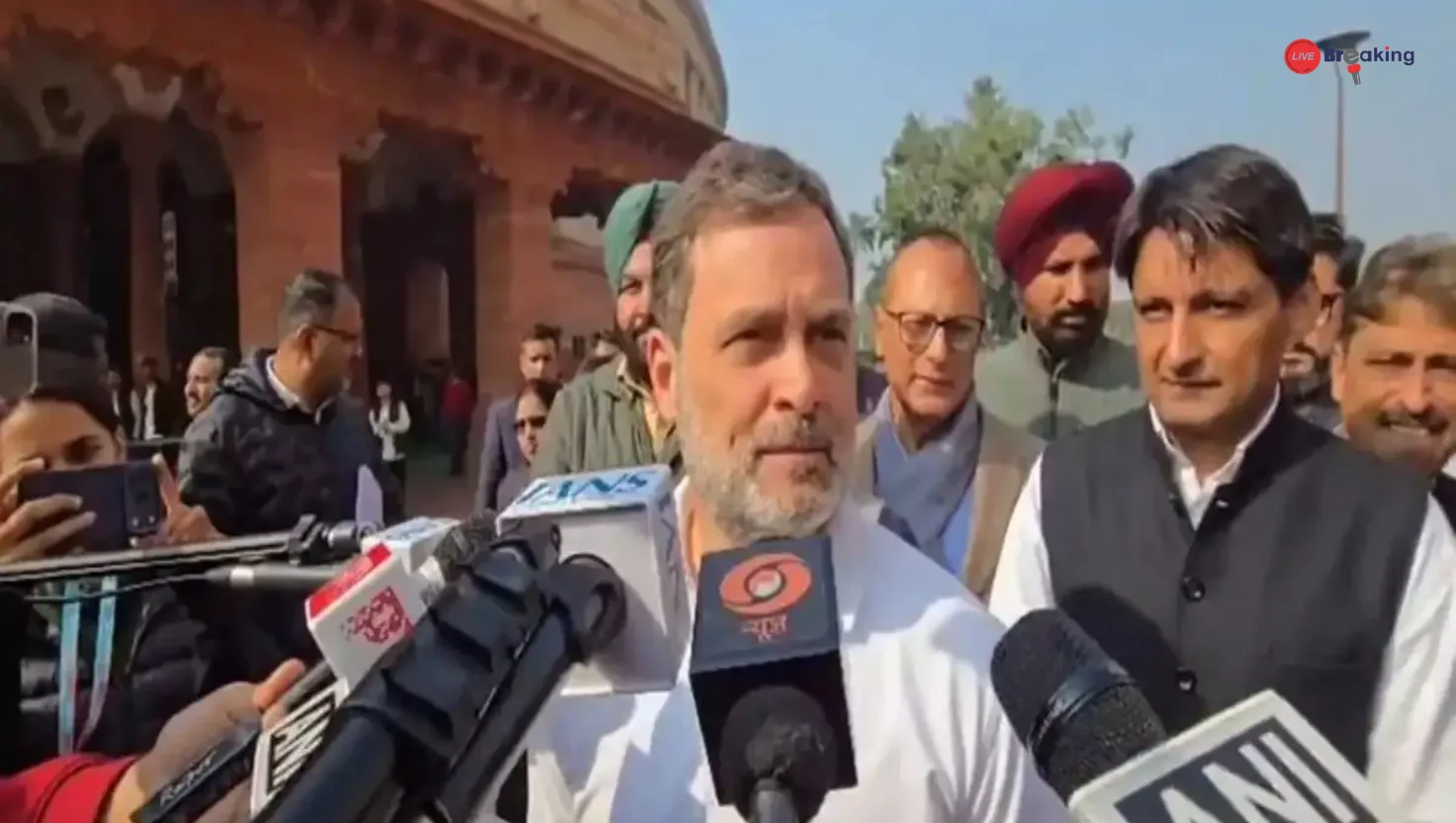
“Traitor Friend” Remark by Rahul Gandhi on BJP’s Ravneet Bittu Triggers Political Storm
Indian politics witnessed another flashpoint after senior Congress leader Rahul Gandhi made a sharp remark referring to BJP MP Ravneet Singh Bittu as a “traitor friend.” The comment, followed by an awkward handshake moment, quickly snowballed into a major political controversy, with the Bharatiya Janata Party (BJP) accusing Gandhi of disrespect, arrogance, and undermining democratic norms.
The incident, reported by NDTV, occurred amid heightened political tensions in Parliament, where opposition parties have been aggressively targeting the ruling government on multiple fronts.
What Exactly Did Rahul Gandhi Say?
During an interaction that was caught on camera, Rahul Gandhi was seen making a sarcastic reference to Ravneet Singh Bittu as a “traitor friend.” The remark was widely interpreted as a dig at Bittu’s political journey — particularly his shift from the Congress to the BJP.
Adding fuel to the fire was Gandhi’s body language during the exchange. After the comment, Gandhi appeared to briefly extend his hand for a handshake, only to pull it back moments later, a gesture that BJP leaders described as insulting and theatrical.
Within minutes, the clip began circulating widely on social media, triggering strong reactions from both sides of the political spectrum.
BJP’s Sharp Reaction: “Arrogance and Disrespect”
The BJP was quick to condemn Rahul Gandhi’s remarks, calling them “undemocratic” and “deeply disrespectful.” Party leaders accused the Congress MP of mocking a democratically elected representative and trivializing political differences.
Several BJP spokespersons argued that personal attacks and name-calling reflect a lack of substantive issues within the Congress party. According to them, Rahul Gandhi’s comment was not just an insult to Ravneet Bittu, but also to voters who elected him.
The ruling party also highlighted the handshake snub, framing it as symbolic of what they described as the Congress leadership’s “elitist mindset.”
Congress Defends Rahul Gandhi
The Congress party, however, came out strongly in defense of Rahul Gandhi. Senior leaders argued that the remark was being taken out of context and exaggerated for political mileage.
Congress leaders maintained that Rahul Gandhi was pointing to what they see as a broader issue of political defections driven by power rather than ideology. According to them, the BJP’s outrage was an attempt to divert attention from pressing national issues being raised by the opposition in Parliament.
Some Congress members also questioned why the BJP often celebrates political defections, yet reacts strongly when such moves are criticized.
Who Is Ravneet Singh Bittu?
Ravneet Singh Bittu is a prominent political figure from Punjab and the grandson of former Punjab Chief Minister Beant Singh. Once considered a loyal Congress leader, Bittu’s move to the BJP was seen as a significant political shift, especially in the context of Punjab’s complex political landscape.
Read more: New Panel To Review Impact Of AI On Services Sector: Nirmala Sitharaman
His switch has often been cited by Congress leaders as an example of what they allege is the BJP’s strategy of encouraging defections to weaken opposition parties.
A Pattern of Political Flashpoints
This episode is not an isolated one. Rahul Gandhi’s remarks in and around Parliament have frequently triggered intense political reactions. Supporters view him as a vocal opposition leader unafraid to challenge the ruling establishment, while critics accuse him of relying on provocative statements rather than policy-driven debate.
The “traitor friend” remark fits into a larger pattern of sharp political rhetoric that increasingly dominates Indian political discourse, particularly in the run-up to major elections.
Social Media and Public Reaction
As expected, social media platforms were flooded with reactions. BJP supporters condemned Rahul Gandhi’s tone, while Congress supporters defended his right to criticize political defections. Hashtags related to the incident trended for hours, reflecting how quickly political moments now turn into nationwide debates.
Read more: “Justice Crying Behind Closed Doors”: Mamata Banerjee To Chief Justice On SIR
Political analysts note that such incidents, while controversial, often help leaders consolidate their core support bases, even as they deepen polarization.
What This Means Politically
The controversy underscores the fragile and confrontational nature of current parliamentary politics. With opposition parties pressing the government on accountability and governance, and the BJP pushing back aggressively, personal remarks are increasingly becoming flashpoints.
Whether the row will have lasting political consequences remains to be seen, but it has certainly added another chapter to the ongoing Congress-BJP rivalry.
FAQs
Q1. Why did Rahul Gandhi call Ravneet Singh Bittu a “traitor friend”?
Rahul Gandhi’s remark was widely interpreted as criticism of Ravneet Bittu’s decision to leave the Congress and join the BJP, which the Congress views as political defection.
Read more: 8 Opposition MPs Suspended For Throwing Papers At Chair In Lok Sabha, BJP Says ‘Utter Disrespect’
Q2. How did the BJP respond to the comment?
The BJP condemned the remark, accusing Rahul Gandhi of arrogance, disrespect, and undermining democratic values.
Q3. Did Congress clarify Rahul Gandhi’s statement?
Yes, Congress leaders defended him, saying the comment was taken out of context and reflected broader concerns about political defections.
Q4. Why did the handshake moment become controversial?
Rahul Gandhi’s brief handshake gesture, followed by pulling back his hand, was seen by BJP leaders as insulting and symbolic of disrespect.
Q5. Will this controversy impact Parliament proceedings?
While it has heightened tensions, such controversies are common and usually fade as new political issues take center stage.