Amit Shah Challenges INDIA Bloc Over Gyanesh Kumar, Demands Special Parliament Session
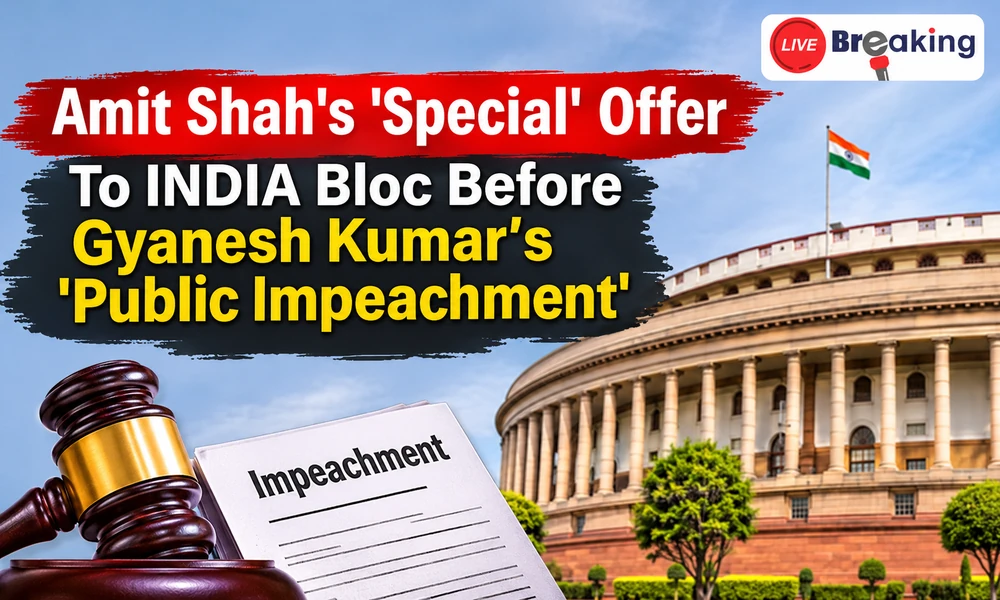
Ahead of the INDIA bloc’s planned public impeachment protest against Chief Election Commissioner Gyanesh Kumar, Union Home Minister Amit Shah has challenged Rahul Gandhi and Akhilesh Yadav to discuss the electoral roll controversy in a special session of Parliament.
India’s political atmosphere has heated up once again as Union Home Minister Amit Shah issued a direct challenge to Congress leader Rahul Gandhi and Samajwadi Party chief Akhilesh Yadav over allegations surrounding the Election Commission and the Special Intensive Revision (SIR) of electoral rolls.
Speaking at a Bharatiya Janata Party (BJP) state executive committee meeting in Lucknow on Friday, October 30, Amit Shah said that the BJP was ready to discuss the controversy in Parliament and challenged the Opposition to agree to a special session.
His remarks came at a politically significant moment, just ahead of the Congress party’s planned ‘public impeachment’ programme against Chief Election Commissioner (CEC) Gyanesh Kumar. The Opposition has been questioning the electoral roll revision exercise and demanding accountability from the Election Commission.
The development has added another dimension to the ongoing confrontation between the ruling BJP and the INDIA bloc, with Parliament, electoral transparency and the credibility of democratic institutions at the centre of the debate.
Amit Shah Challenges Rahul Gandhi and Akhilesh Yadav
During his address in Lucknow, Amit Shah directly named Rahul Gandhi and Akhilesh Yadav while challenging them to take the electoral roll controversy to Parliament.
The Home Minister said the BJP was prepared to discuss the issue openly and had nothing to hide. He also proposed convening a special session of Parliament to debate the allegations.
Shah accused the Opposition of disrupting parliamentary proceedings instead of engaging in a meaningful discussion. According to him, opposition parties were more interested in creating political controversy outside Parliament than participating in a formal debate.
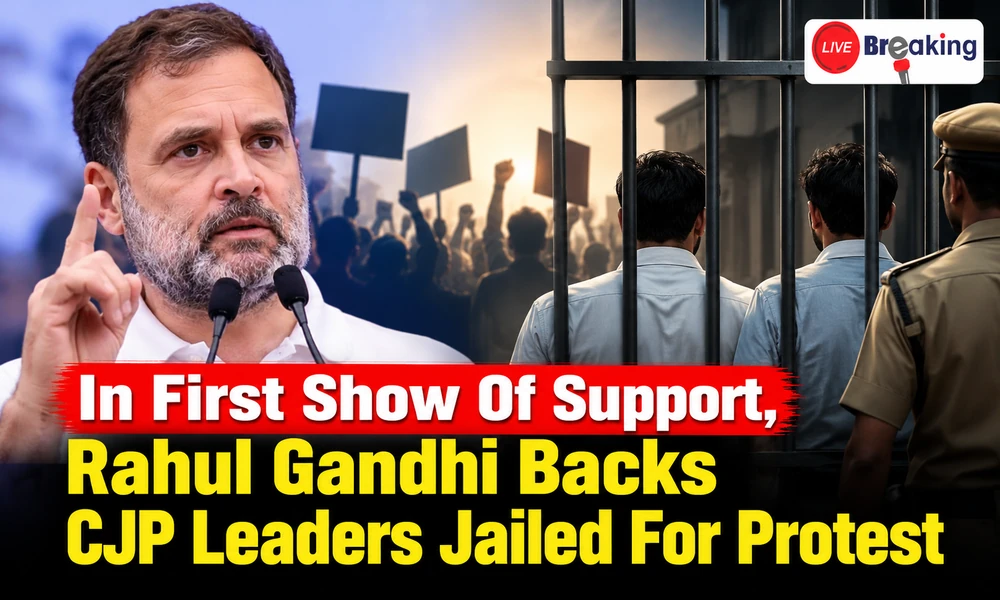
His remarks were particularly directed at Rahul Gandhi, who has repeatedly raised concerns about alleged irregularities in voter lists and questioned the functioning of the Election Commission.
By bringing Akhilesh Yadav into the challenge, Shah also sought to put pressure on the INDIA bloc’s broader political leadership.
The BJP’s message is that allegations concerning elections should be discussed through parliamentary debate, while the Opposition maintains that electoral transparency requires serious institutional scrutiny.
Why Is the INDIA Bloc Protesting Against Gyanesh Kumar?
The controversy centres on Chief Election Commissioner Gyanesh Kumar and the Special Intensive Revision of electoral rolls.
The INDIA bloc has been protesting against the Election Commission’s handling of the voter list revision process. Opposition parties have raised concerns about the deletion of names, the verification process and the possible impact on eligible voters.
The Opposition has demanded Gyanesh Kumar’s resignation, suspension of the SIR exercise and restoration of electoral rolls that existed before the revision.
According to the figures cited in the report, approximately 13 crore names have been deleted from electoral rolls during the exercise, representing around 14 per cent of the pre-revision total.
These figures have become a major point of political debate. Opposition parties argue that such large-scale changes require transparency, clear explanations and effective mechanisms for affected voters to challenge deletions.
The Election Commission’s role in maintaining accurate and reliable voter lists is therefore at the heart of the controversy.
However, deletion figures alone do not establish that eligible voters were unlawfully removed. The reasons for individual deletions, the verification process and the availability of correction or appeal mechanisms are important factors in assessing the allegations.
Congress Plans ‘Public Impeachment’ Programme
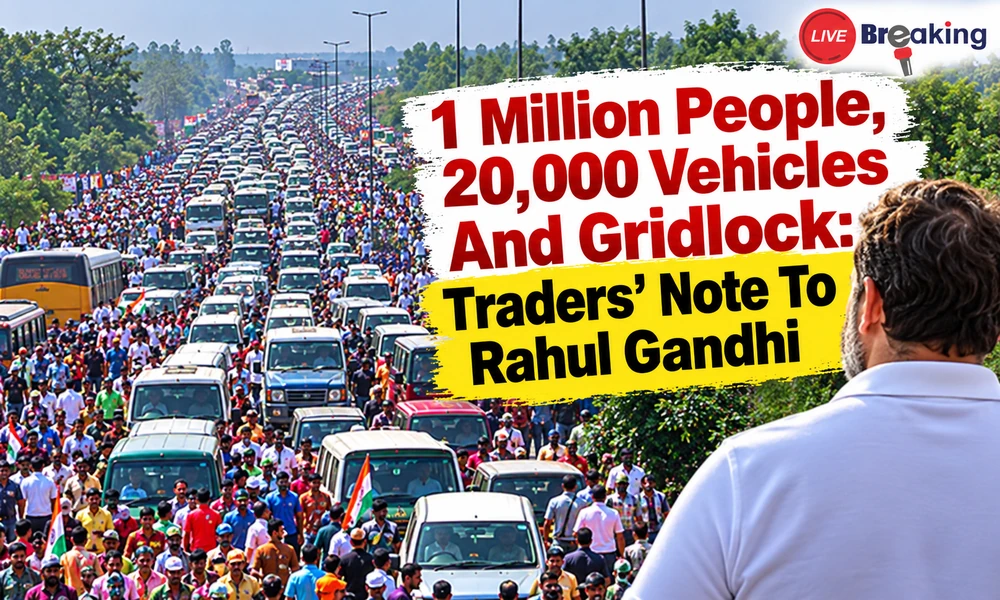
The Congress party has planned a symbolic political programme against Chief Election Commissioner Gyanesh Kumar, describing it as a ‘public impeachment’.
The event was initially scheduled as a mock Parliament exercise but was subsequently renamed a public impeachment programme.
The programme was postponed on Friday after rainfall in Delhi disrupted arrangements. It is now scheduled to take place on Saturday, October 31, ahead of the INDIA bloc’s planned rally at Ramlila Ground.
Congress president Mallikarjun Kharge is expected to move the symbolic impeachment motion during the programme.
It is important to distinguish this political event from an actual constitutional removal proceeding. The term ‘public impeachment’ is being used by the Opposition as a political expression. It does not mean that Gyanesh Kumar has been impeached or removed from office.
The Opposition had previously submitted formal notices seeking action against the Chief Election Commissioner. However, those notices were rejected by the Lok Sabha Speaker and the Rajya Sabha Chairman in April.
The latest programme is therefore intended to amplify the Opposition’s political demands and draw public attention to its allegations.
What Is the Special Intensive Revision (SIR) Controversy?
The Special Intensive Revision is an exercise aimed at reviewing and updating electoral rolls.
Voter lists need regular verification to account for changes such as deaths, migration, duplicate registrations and corrections in personal details.
However, the scale and implementation of the current revision exercise have triggered political disagreements.
Opposition leaders have questioned whether the process adequately protects the voting rights of eligible citizens. They have also sought greater clarity on how names are identified for deletion and what safeguards are available to people whose names are removed.
For voters, the issue is significant because inclusion in the electoral roll is essential for exercising the right to vote.
The controversy raises several important questions:
- How are names selected for deletion during the SIR process?
- What documents are required to verify voter eligibility?
- How can citizens check whether their names remain on the electoral roll?
- What options are available to people whose names have been incorrectly removed?
- How can political parties and independent observers assess the transparency of the exercise?
These questions make the debate larger than a political disagreement between the BJP and Congress. The credibility of electoral administration and public confidence in democratic institutions are also involved.
Amit Shah Cites BJP’s Electoral Victories
During his Lucknow speech, Amit Shah also defended the BJP’s electoral performance and referred to the party’s victories in several states and regions.
He mentioned Haryana, Maharashtra, Bihar, Delhi, Puducherry, Assam and West Bengal while arguing that the BJP had continued to secure electoral support.
Shah suggested that Opposition parties were questioning the electoral process because they were struggling to accept political defeats.
Using a cricket analogy, he said that a team that loses a match should work harder rather than blame the umpire.
The remarks reflected the BJP’s broader political response to allegations of vote manipulation. The ruling party has consistently rejected the Opposition’s claims and argued that electoral outcomes should be respected.
The Opposition, on the other hand, maintains that raising questions about voter lists and electoral procedures is part of its responsibility in a democracy.
This disagreement has increasingly become a central feature of the political confrontation between the two sides.
Parliament Has Previously Witnessed Disruptions Over SIR
The voter list controversy has already affected parliamentary proceedings.
During the 2025 Monsoon Session, repeated disruptions and adjournments took place amid disagreements over the SIR exercise, particularly in Bihar.
The government maintained that the Election Commission is an independent constitutional institution and argued for discussions on broader electoral reforms rather than a debate focused exclusively on the revision exercise.
During a parliamentary discussion on electoral reforms in December 2025, Rahul Gandhi challenged Amit Shah to respond to his allegations concerning alleged vote theft.
Shah responded that he would decide the sequence of his own speech. Opposition members subsequently staged a walkout.
The latest proposal for a special Parliament session has brought this unresolved disagreement back into focus.
Whether the government and Opposition can agree on the format and agenda of a dedicated discussion remains an important political question.
Why the Amit Shah Challenge Matters for Indian Politics
Amit Shah’s challenge carries significance beyond the immediate exchange of political statements.
First, it places pressure on the INDIA bloc to clarify whether it is prepared to participate in a parliamentary discussion on the electoral roll controversy.
Second, it allows the BJP to present itself as willing to defend its position through a formal legislative debate.
Third, it gives the Opposition an opportunity to put its concerns about the Election Commission, voter deletions and electoral transparency before a wider audience.
The controversy also comes at a crucial time for Uttar Pradesh politics.
The BJP and Samajwadi Party are already preparing for the 2027 Uttar Pradesh Assembly elections. The latest political confrontation could therefore influence the narratives and strategies adopted by both parties in the coming months.
Akhilesh Yadav has criticised the BJP following the recent Uttar Pradesh Legislative Council election results, while Amit Shah has expressed confidence that the BJP government will return for a third consecutive term.
The exchange demonstrates how national political controversies and state-level electoral strategies are becoming increasingly interconnected.
What Happens Next?
The immediate focus is on the Congress-led symbolic public impeachment programme and the INDIA bloc’s planned rally at Ramlila Ground.
The Opposition is expected to use the events to reiterate its demands concerning Gyanesh Kumar and the SIR exercise.
At the same time, Amit Shah’s special-session challenge has put the possibility of a parliamentary debate back on the political agenda.
However, a special session would require an appropriate decision and formal arrangements. Shah’s public challenge should not be interpreted as confirmation that such a session has already been announced.
The coming days could determine whether the controversy moves towards a parliamentary discussion or continues primarily as a political confrontation between the BJP and the INDIA bloc.
Ultimately, the central issue is public confidence in the electoral process. Citizens need accurate voter lists, transparent verification procedures and accessible remedies when errors occur.
The debate over Gyanesh Kumar and SIR is therefore likely to remain an important issue in India’s political discourse, particularly as parties prepare for upcoming electoral battles.
Conclusion
Amit Shah’s challenge to Rahul Gandhi and Akhilesh Yadav has intensified the political confrontation over the Election Commission and voter list revisions. While the BJP has invited the Opposition to discuss the issue in a special Parliament session, the INDIA bloc continues to demand accountability over the SIR exercise and the role of Chief Election Commissioner Gyanesh Kumar.
With the symbolic public impeachment programme and the Ramlila Ground rally scheduled for October 31, the controversy has entered another significant phase. Whether the competing political positions lead to a meaningful parliamentary debate or further confrontation remains to be seen.
Frequently Asked Questions (FAQs)
1. Why did Amit Shah challenge Rahul Gandhi and Akhilesh Yadav?
Amit Shah challenged Rahul Gandhi and Akhilesh Yadav to discuss allegations concerning the Election Commission and the SIR voter list revision exercise in a special session of Parliament. He said the BJP was ready for an open discussion.
2. Why is the INDIA bloc protesting against Gyanesh Kumar?
The INDIA bloc is protesting against Chief Election Commissioner Gyanesh Kumar over concerns surrounding the Special Intensive Revision of electoral rolls. Opposition parties have demanded his resignation and the suspension of the revision exercise.
3. What is the public impeachment of Gyanesh Kumar?
The public impeachment is a symbolic political programme organised by the Congress to highlight its allegations against Chief Election Commissioner Gyanesh Kumar. It is not an actual constitutional impeachment or removal proceeding.
4. What is the SIR voter list controversy?
The SIR controversy concerns the Special Intensive Revision of electoral rolls. Opposition parties have questioned the deletion of voter names, verification procedures and safeguards for eligible voters.
5. How many voter names were reportedly deleted during SIR?
Figures cited in the October 31, 2026 report put the number at approximately 13 crore names, representing around 14 per cent of the pre-revision electoral roll total.
6. When will the INDIA bloc hold its rally against Gyanesh Kumar?
The INDIA bloc’s rally at Ramlila Ground in Delhi is scheduled for October 31, 2026, following the planned symbolic public impeachment programme.
7. Has Gyanesh Kumar been impeached or removed from office?
No. The public impeachment programme is symbolic and political in nature. It does not constitute a completed constitutional removal process.
8. Will the government convene a special Parliament session?
Amit Shah has challenged the Opposition to hold a special session to discuss the issue. However, his statement is an invitation and challenge, not confirmation that the government has formally announced such a session.