Shashi Tharoor Reacts to ‘Cockroach Janata Party’ Trend, Advises Opposition on Youth Anger
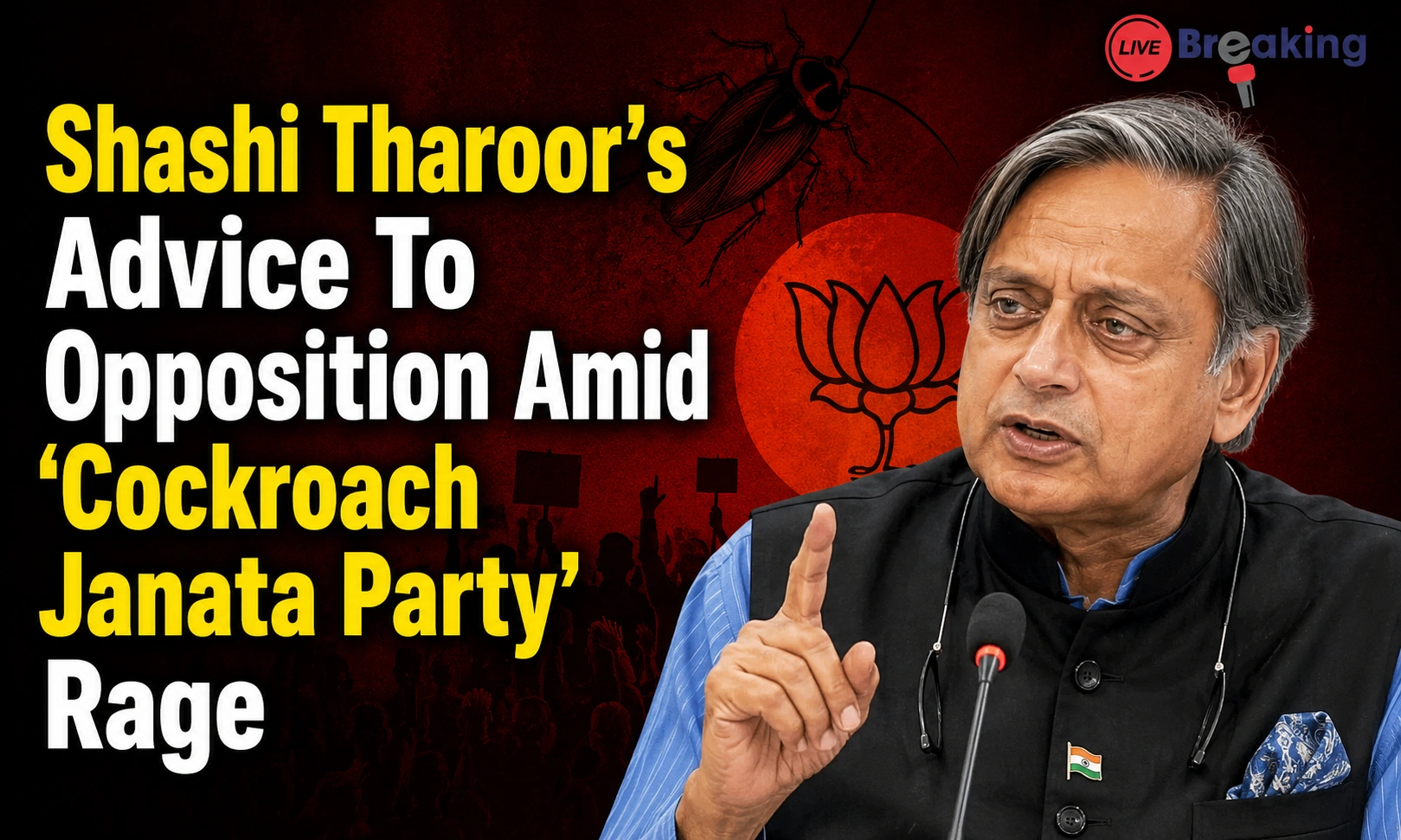
The sudden rise of the viral “Cockroach Janata Party” (CJP) has triggered intense political debate across India, with Congress MP Shashi Tharoor offering a sharp message to the Opposition: convert public frustration into meaningful electoral politics rather than dismissing it as online satire.
The controversial movement, which began as a satirical digital campaign, has rapidly gained traction among frustrated youth who are unhappy with unemployment, political rhetoric, governance issues, and the current state of mainstream politics. What started as internet humor has now evolved into a wider political conversation about dissent, youth anger, and democratic expression.
According to reports, Tharoor described the blocking of the Cockroach Janata Party’s social media account as “deeply unwise” and warned that democracies require spaces for criticism, satire, and dissent. He also argued that the Opposition must recognize this growing dissatisfaction and turn it into a constructive political alternative.
What Is the ‘Cockroach Janata Party’?
The “Cockroach Janata Party” is not an officially registered political organization but a satirical online movement that exploded across social media platforms in recent days. The group uses the cockroach as a symbolic mascot representing survival, resilience, and frustration among ordinary citizens.
The movement reportedly gained momentum after controversial public remarks comparing unemployed youth to “cockroaches,” sparking outrage online. Since then, thousands of young users have joined the movement digitally, turning it into one of the biggest political satire trends in India this year.
Social media platforms have seen millions of interactions related to the movement, with memes, parody manifestos, and protest-style content becoming widely popular among first-time voters and politically frustrated youth.
Political observers believe the phenomenon reflects deeper public dissatisfaction rather than merely a temporary viral trend.
Shashi Tharoor’s Key Message to the Opposition
Speaking on the issue, Tharoor emphasized that the Opposition should not ignore the emotional undercurrent driving the movement.
He stated that the Opposition’s responsibility is to “channelise this discontent into mainstream politics” and convert online frustration into electoral participation.
According to Tharoor, if citizens—especially young voters—feel disconnected from traditional political parties, then Opposition groups must rethink their communication strategies and reconnect with public sentiment.
Read More: Pakistan, Mediator For Iran, Deploys Thousands Of Troops, Jets In Saudi: Report
The Congress MP suggested that dismissing such trends could become politically dangerous because they reveal a larger trust deficit between voters and conventional political structures.
Why the Trend Matters Politically
The rise of the Cockroach Janata Party has become politically significant for several reasons:
| Key Factor | Political Impact |
|---|---|
| Youth frustration | Indicates growing dissatisfaction among young voters |
| Viral social media reach | Shows digital platforms are shaping political narratives |
| Satire as protest | Reflects distrust in traditional political discourse |
| Opposition challenge | Pressure on Opposition parties to connect better with voters |
| Government response | Debate over free speech and online censorship |
Analysts believe the trend highlights how younger audiences increasingly use humor and satire to express political opinions.
The phenomenon also demonstrates how social media movements can rapidly influence mainstream political conversations, especially during periods of economic stress and rising unemployment concerns.
Debate Over Freedom of Expression
Another major controversy emerged after reports suggested that the social media account linked to the movement was withheld or restricted.
Read More: In Big Order, Supreme Court Allows Killing Of Rabid, Aggressive Stray Dogs
This prompted criticism from free speech advocates and political commentators, including Tharoor, who argued that democracies should allow room for satire and criticism.
The debate has now expanded into a broader discussion about online censorship, political dissent, and how governments and platforms handle controversial digital movements.
Supporters of the movement claim the restrictions prove that authorities are uncomfortable with public criticism, while critics argue that unregulated online campaigns can spread misinformation and destabilize public discourse.
Opposition Faces Bigger Challenge
Tharoor’s comments are being interpreted as more than just a defense of satire. Political experts say his remarks indirectly highlight the Opposition’s ongoing struggle to create a strong and unified narrative against the ruling establishment.
Several analysts have pointed out that public anger alone does not automatically translate into votes. The Opposition must provide leadership, organization, and policy alternatives capable of converting dissatisfaction into electoral support.
Read More: Video: PM Modi Cashes In On Internet Memes With Melody Gift For Meloni
The Congress leader’s remarks also come at a time when Opposition parties continue to face questions about internal unity, leadership clarity, and their ability to attract younger voters.
Social Media Is Changing Indian Politics
The Cockroach Janata Party trend also underlines the growing role of social media in shaping political conversations in India.
Research studies and recent political developments show that digital campaigns, hashtags, memes, and online communities now significantly influence public opinion.
Experts believe satire-based political movements are especially attractive to younger audiences because they simplify complex political frustrations into relatable internet culture.
This shift means political parties can no longer rely only on traditional rallies and television debates. Digital engagement, online narratives, and social media responsiveness are becoming equally important.
Can Viral Anger Become Electoral Power?
The biggest question remains whether the viral movement can actually influence electoral politics.
While many online campaigns fade quickly, some political analysts believe the underlying frustration reflected in the Cockroach Janata Party trend is genuine and widespread.
If Opposition parties successfully engage these dissatisfied voters, the movement could become an important indicator of changing political attitudes among urban and digitally active youth.
Read More: Tamil Nadu Congress MLA Mentions Rahul Gandhi During Oath, Governor Objects
However, if political parties fail to address these concerns, such movements may remain symbolic expressions of frustration without translating into real political change.
FAQs
What is the Cockroach Janata Party?
The Cockroach Janata Party is a satirical online political movement that gained popularity on social media as a symbol of public frustration, especially among youth.
Why did Shashi Tharoor comment on it?
Shashi Tharoor commented on the issue after reports emerged about restrictions on the movement’s social media accounts and growing public discussion around youth dissatisfaction.
What did Tharoor advise the Opposition?
He advised Opposition parties to channel public anger and dissatisfaction into mainstream democratic politics and electoral participation.
Why is the movement trending?
The movement became viral due to social media memes, satire, youth frustration, and debates around unemployment, governance, and political expression.
Read More: Punjab Man Installs CCTV On Highway, Sends Footage Of Army’s Movement To Pakistan
Is the Cockroach Janata Party a real political party?
No, it is primarily a satirical online movement and not an officially registered political party.
Conclusion
The rise of the Cockroach Janata Party may have started as internet satire, but it has quickly evolved into a serious political conversation about democracy, dissent, and youth frustration in India.
Shashi Tharoor’s remarks highlight a growing concern within Opposition circles: citizens, especially young voters, are searching for new ways to express political dissatisfaction. Whether traditional political parties can effectively respond to that sentiment may shape future electoral battles.
As online political culture continues to influence real-world politics, movements like these demonstrate that satire, memes, and digital activism are no longer separate from mainstream democratic discourse—they are becoming part of it.