Supreme Court’s Big Remark in Twisha Sharma Case: “Narrative Being Built” Over Ex-Judge Accused
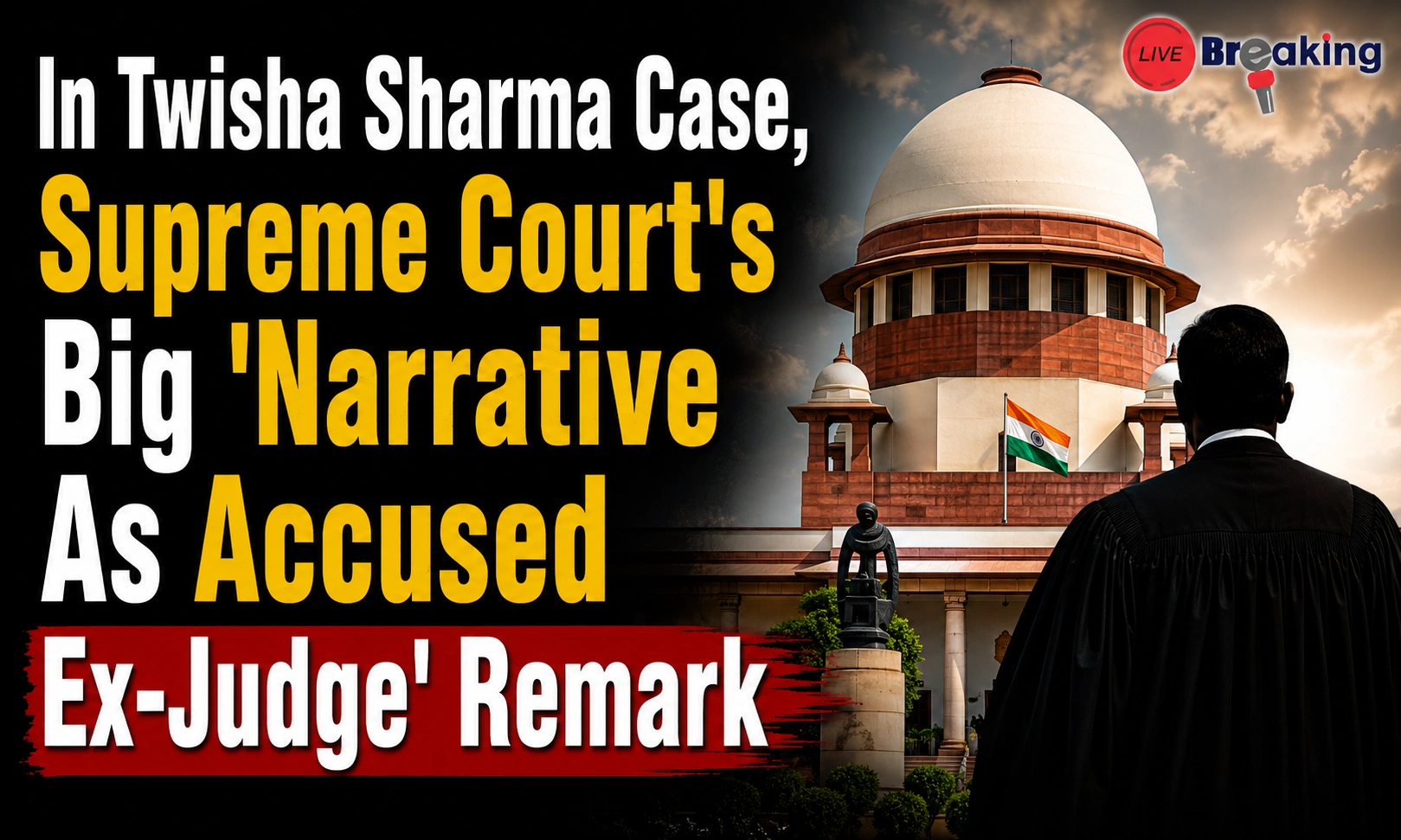
The Supreme Court on Monday made a significant observation while hearing the high-profile Twisha Sharma death case, stating that a “narrative” appeared to be developing because one of the accused is a former judge. The remarks came during proceedings related to the controversial case involving allegations surrounding the death of Twisha Sharma and the legal scrutiny faced by former judge Giribala Singh and others.
The case has generated widespread public attention due to the involvement of influential individuals and the emotional appeals made by the victim’s family. However, the apex court emphasized that criminal proceedings must remain grounded in evidence and legal principles rather than media-driven perceptions.
The observation from the Supreme Court has now sparked fresh debate over judicial accountability, media trials, and the fairness of public discourse in sensitive criminal investigations.
Supreme Court Questions “Narrative” Around Former Judge
During the hearing, the bench noted that a particular narrative seemed to be emerging solely because one of the accused was previously associated with the judiciary. The court stressed that the justice system cannot function based on assumptions or emotional narratives created outside the courtroom.
According to reports, the bench remarked that allegations must be tested through proper investigation and judicial scrutiny instead of public opinion.
The statement is being viewed as an attempt by the Supreme Court to underline the importance of maintaining neutrality while handling high-profile criminal matters.
Legal experts believe the observation reflects the judiciary’s concern over increasing media influence in ongoing investigations. In recent years, several sensitive cases have witnessed intense social media discussions that often shape public opinion before the completion of trials.
Background of the Twisha Sharma Death Case
The Twisha Sharma case came into the spotlight following allegations related to suspicious circumstances surrounding her death. The matter drew national attention after accusations surfaced against former judge Giribala Singh and Samarth Singh.
Family members of the deceased have consistently demanded a fair and transparent investigation, claiming there were serious lapses in the handling of evidence and procedural aspects.
On the other hand, the accused have denied wrongdoing and argued that attempts are being made to sensationalize the case because of the former judge’s identity and past position in the legal system.
The case has since moved through various legal stages, including petitions, hearings, and procedural challenges, eventually reaching the Supreme Court.
Why the Supreme Court’s Observation Matters
The apex court’s comments are important for several reasons:
1. Reinforcing Judicial Neutrality
The court’s observation highlights the principle that every accused person deserves a fair trial, regardless of professional background or public perception.
2. Concern Over Media Trial
The remarks indirectly point toward concerns about media narratives influencing public understanding of ongoing investigations.
3. Protecting Due Process
The judiciary emphasized that criminal liability must be determined through evidence presented before the court and not through emotional or social pressure.
Read More: In Big Order, Supreme Court Allows Killing Of Rabid, Aggressive Stray Dogs
4. Impact on High-Profile Cases
The statement may influence how future high-profile criminal cases involving public figures are discussed and reported.
Legal Experts React to Supreme Court Remarks
Several legal analysts have interpreted the court’s comments as a reminder that constitutional courts are expected to function independently from media narratives.
Senior advocates noted that while public interest in criminal cases is natural, excessive speculation can sometimes interfere with investigative integrity.
Some experts also pointed out that when former judges or influential personalities are accused, the scrutiny often becomes more intense due to public expectations of accountability.
However, legal commentators stressed that equal treatment before the law remains a foundational constitutional principle.
Public Debate Intensifies
The Supreme Court’s remarks have triggered mixed reactions across social media and legal circles.
Read More: Video: PM Modi Cashes In On Internet Memes With Melody Gift For Meloni
Supporters of the Court’s View Say:
- Media narratives should not determine guilt.
- Every accused individual deserves procedural fairness.
- Courts must rely solely on evidence and legal standards.
Critics Argue:
- Public attention is necessary in sensitive cases.
- Influential individuals may otherwise escape accountability.
- Judicial observations could affect public confidence in transparency.
The discussion reflects a broader national debate over balancing fair trials with public accountability in India’s justice system.
Key Details of the Case at a Glance
| Aspect | Details |
|---|---|
| Case | Twisha Sharma Death Case |
| Key Accused | Former judge Giribala Singh, Samarth Singh |
| Court Hearing | Supreme Court of India |
| Main Observation | “Narrative” being created because accused is ex-judge |
| Core Issue | Fair investigation and legal scrutiny |
| Public Attention | High-profile due to involvement of former judge |
| Legal Focus | Due process and evidence-based proceedings |
Media Trials and the Indian Justice System
The Twisha Sharma case once again raises concerns about the growing phenomenon of media trials in India.
Read More: Tamil Nadu Congress MLA Mentions Rahul Gandhi During Oath, Governor Objects
In several prominent criminal investigations, television debates and social media commentary often begin long before judicial findings are established. While public awareness can promote transparency, unchecked speculation may also prejudice ongoing proceedings.
The Supreme Court has repeatedly emphasized in past judgments that media reporting should avoid influencing trials or damaging reputations without verified evidence.
The latest observation appears consistent with the judiciary’s long-standing position that courts—not public sentiment—must determine criminal responsibility.
What Happens Next in the Case?
The legal proceedings in the Twisha Sharma matter are expected to continue in the coming weeks. Investigative findings, witness testimonies, and procedural submissions are likely to play a critical role in shaping the final outcome.
Read More: Shashi Tharoor Advice To Opposition Amid ‘Cockroach Janata Party’ Rage
The Supreme Court’s remarks do not indicate innocence or guilt but instead reinforce the principle that allegations must be evaluated fairly and objectively.
As the matter progresses, both the victim’s family and the accused are expected to continue pursuing legal remedies within the judicial framework.
FAQs
What did the Supreme Court say in the Twisha Sharma case?
The Supreme Court observed that a “narrative” appeared to be developing because one of the accused is a former judge, emphasizing that cases must be decided on evidence and legal procedure.
Who are the accused in the Twisha Sharma case?
The case reportedly involves former judge Giribala Singh and Samarth Singh among the accused individuals.
Why is the case receiving national attention?
The involvement of a former judge and allegations surrounding the circumstances of Twisha Sharma’s death have made the case highly sensitive and widely discussed.
Did the Supreme Court give any final verdict?
No, the court’s remarks were observations made during the hearing. The legal proceedings are still ongoing.
Read More: How Urban India Weekend Obsession Became A $50 Million Market
What is meant by a “media trial”?
A media trial refers to extensive public discussion and reporting that may influence public perception before a court delivers a final judgment.
Conclusion
The Supreme Court’s strong remarks in the Twisha Sharma death case have added a fresh dimension to an already sensitive legal battle. By cautioning against narratives formed due to the accused being a former judge, the apex court has reiterated the importance of fairness, neutrality, and evidence-based justice.
As the investigation and hearings continue, the case is likely to remain under close public and legal scrutiny. However, the court’s observations serve as a reminder that the justice system must operate independently of emotional narratives and public pressure.