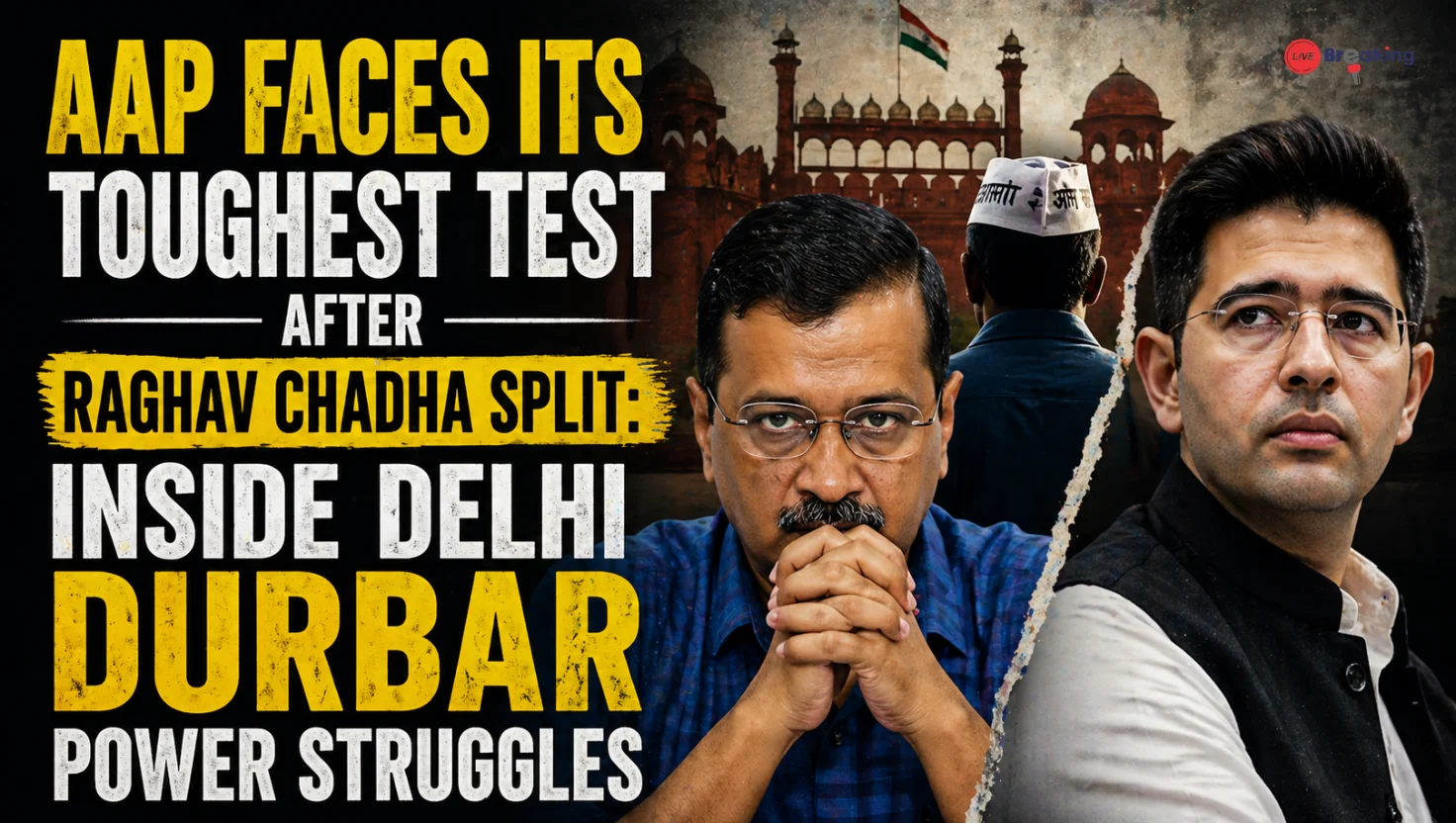
AAP Faces Toughest Test After Raghav Chadha Split: Delhi Durbar Power Struggles Explained
The Aam Aadmi Party (AAP) is navigating one of the most turbulent phases in its political journey. The sudden and dramatic exit of Raghav Chadha, once considered a close aide of Arvind Kejriwal, has sent shockwaves across India’s political corridors—especially in what is often referred to as the “Delhi Durbar.”
This split is not just about one leader leaving; it reflects deeper structural cracks within AAP. With multiple MPs resigning and joining rival camps, the party now faces questions about leadership stability, ideological coherence, and electoral viability.
What Triggered the Raghav Chadha Exit?
The roots of this political rupture lie in simmering internal tensions that had been building for months. Chadha’s removal from key positions, allegations of being sidelined, and disagreements over party direction played a crucial role.
Reports indicate that Chadha, along with several Rajya Sabha MPs, decided to part ways with AAP and align with the BJP, citing ideological differences and dissatisfaction with internal functioning.
His statement that he was “silenced, not defeated” highlights the depth of the rift and suggests a leadership clash rather than a routine political exit.
The Delhi Durbar Factor – Power, Influence, and Control
The phrase “Delhi Durbar” symbolizes the inner circle of power within the national capital. In AAP’s case, it represents the centralized decision-making structure dominated by top leadership.
The Chadha episode has exposed:
- Centralized control over party decisions
- Limited internal dissent tolerance
- Growing factionalism within leadership
Political analysts believe that such power struggles often emerge when a party grows rapidly but fails to institutionalize internal democracy. AAP, which once prided itself on transparency, is now facing criticism for internal opacity.
AAP’s Parliamentary Setback – Numbers and Impact
| Aspect | Before Split | After Split | Impact |
|---|---|---|---|
| Rajya Sabha MPs | 10 | Reduced significantly | Weak legislative presence |
| Key Leaders | Stable leadership core | Multiple exits | Leadership vacuum |
| Political Influence | Rising | Declining | Reduced bargaining power |
| Public Perception | Reform-driven | Crisis-hit | Credibility concerns |
According to reports, nearly two-thirds of AAP’s Rajya Sabha MPs shifted allegiances, significantly weakening its parliamentary strength.
Read More: “China, India Or Some Other Hell-Hole…”: Trump Reposts Anti-India Rant Over Birthright Citizenship
Political Reactions – War of Narratives
The fallout has triggered a fierce political battle:
- AAP’s Stand: The party has accused the BJP of orchestrating defections through pressure tactics and “Operation Lotus.”
- Opposition Claims: Critics argue the split reflects internal corruption and power struggles.
- Chadha’s Position: He claims ideological drift within AAP forced his exit.
This clash of narratives has turned the issue into a national political debate.
Impact on Upcoming Elections
The timing of this crisis could not be worse for AAP. With elections approaching in states like Punjab, Gujarat, and Goa, the party faces significant challenges:
Read More: Was Bengal’s 92.8% Voter Turnout Shaped By 90.8 Lakh Voter Purge?
- Organizational instability
- Reduced leadership strength
- Loss of voter confidence
- Weak campaign machinery
Experts believe that this internal turmoil could severely affect AAP’s performance in upcoming polls.
Leadership Crisis – Is Kejriwal’s Authority Under Question?
For years, Arvind Kejriwal has been the face and driving force of AAP. However, repeated high-profile exits—from founding members to senior leaders—raise concerns about leadership style and internal management.
Critics argue:
- Decision-making is overly centralized
- Dissenting voices are sidelined
- Internal conflict resolution mechanisms are weak
Supporters, however, maintain that strong leadership is necessary to maintain party discipline.
Historical Pattern – Not the First Exit
The Chadha episode is part of a larger pattern. Since its inception in 2012, AAP has seen several prominent leaders leave the party over ideological and strategic disagreements.
Read More: Trump Vindicated? Iran Crisis Turning US Crude Into World’s Safe Bet
This recurring trend suggests deeper structural issues rather than isolated incidents.
What Lies Ahead for AAP?
AAP now stands at a critical crossroads. The party has two possible paths:
1. Rebuilding and Reform
- Strengthening internal democracy
- Rebuilding leadership structure
- Reconnecting with grassroots workers
2. Continued Decline
- Further defections
- Electoral setbacks
- Loss of national relevance
The coming months will determine which path the party takes.
Read More: “Kabhi India Aa Ke Dekho”: Iran’s “Cultural Detox” Jibe At Donald Trump Over “Hell-Hole” Remark
Conclusion – A Defining Moment in AAP’s Journey
The exit of Raghav Chadha is more than just a political defection—it is a defining moment for the Aam Aadmi Party. It has exposed internal weaknesses, triggered a leadership debate, and raised serious questions about the party’s future.
Whether AAP emerges stronger or weaker from this crisis depends on how effectively it addresses internal dissent and rebuilds trust among its leaders and voters.
FAQ Section
Q1: Why did Raghav Chadha leave AAP?
He cited ideological differences, internal conflicts, and dissatisfaction with party leadership.
Q2: How many MPs left AAP with him?
Around seven MPs reportedly exited, significantly weakening the party’s Rajya Sabha presence.
Read More: US-Iran Talks in Pakistan: Agenda, Ceasefire Stakes & Key Issues Explained
Q3: What is “Delhi Durbar” in this context?
It refers to the central power structure and decision-making circle within Delhi politics.
Q4: Will this affect AAP in upcoming elections?
Yes, the crisis could impact voter confidence and organizational strength.
Q5: Is this the biggest crisis in AAP’s history?
It is considered one of the most significant due to the scale of defections and timing before elections.