80-Kg Hanging Dummy Test in Twisha Sharma Case: CBI Recreates Scene With Samarth Singh and Giribala Singh
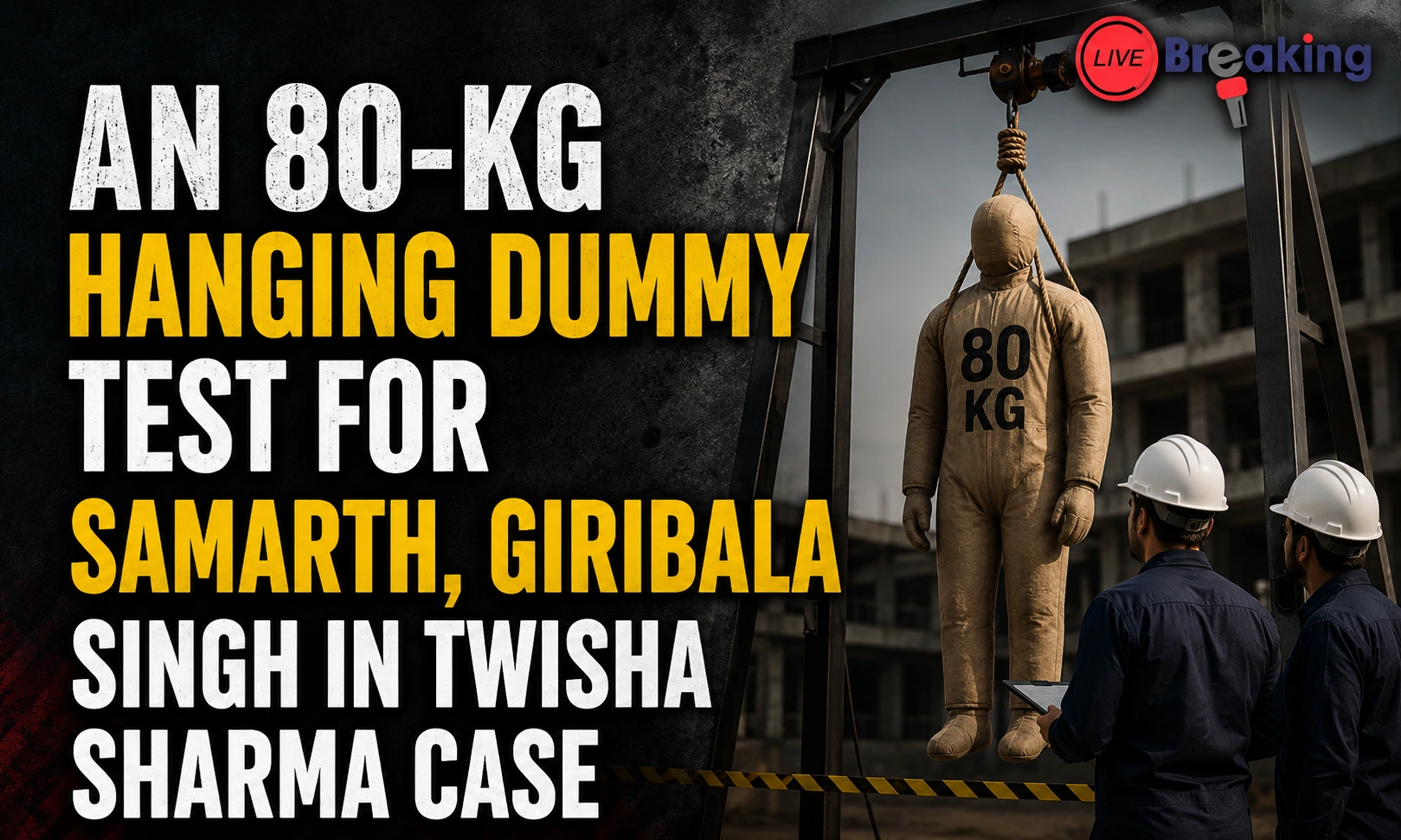
The Central Bureau of Investigation (CBI) is preparing to conduct a detailed crime-scene reconstruction in the controversial Twisha Sharma death case by using an 80-kilogram hanging dummy. The move comes as investigators attempt to verify the statements given by Twisha’s husband, Samarth Singh, and her mother-in-law, retired district judge Giribala Singh.
According to investigation sources, the reconstruction exercise will take place at the residence where Twisha Sharma was found hanging on May 12 in Bhopal’s Katara Hills area. The agency aims to determine whether the version presented by the accused matches the physical evidence and circumstances present at the scene.
The case has attracted nationwide attention after allegations of dowry harassment, mental cruelty, evidence tampering, and suspicious circumstances surrounding Twisha’s death emerged.
Why Is The CBI Using An 80-Kg Dummy?
Investigators believe that recreating the incident is crucial to understanding what exactly happened on the night Twisha Sharma died.
The dummy, weighing approximately 80 kilograms, will be used to simulate the victim’s body weight. During the exercise, Samarth Singh will reportedly be asked to demonstrate how he brought Twisha down after allegedly finding her hanging.
Meanwhile, Giribala Singh will be required to show investigators how she untied the ligature or belt that was allegedly used in the incident.
The agency will also test whether the belt could withstand the weight and whether the actions described by the accused were physically possible under the circumstances.
Forensic experts are expected to closely observe the reconstruction process and compare the findings with medical reports, forensic evidence, and witness statements.
Twisha Sharma Death Case: Background
Twisha Sharma, a former model and actor, was found dead at her matrimonial home in Bhopal on May 12. Her death was initially reported as a case of suicide.
However, her family later alleged that she had been subjected to continuous dowry harassment and mental torture by her husband and in-laws. They also claimed she had communicated her distress to family members shortly before her death.
Read More: How Urban India Weekend Obsession Became A $50 Million Market
The allegations led to widespread public outrage and demands for an independent investigation.
Following intervention by the Supreme Court and growing scrutiny over the investigation, the CBI formally took over the case from the Madhya Pradesh Police.
Arrest Of Giribala Singh Intensifies Investigation
The investigation took a significant turn when the CBI arrested Giribala Singh after several rounds of questioning.
The arrest came shortly after the Madhya Pradesh High Court cancelled her anticipatory bail. Investigators are reportedly examining allegations related to evidence tampering and inconsistencies in statements provided during the probe.
Samarth Singh, who was arrested earlier, remains in custody as investigators continue questioning both accused individuals.
Authorities believe that confronting both accused together and recreating the scene may help establish a clearer timeline of events from the night of Twisha Sharma’s death.
Key Questions Being Examined By Investigators
The reconstruction exercise is expected to help investigators answer several crucial questions:
Read more: ‘Twisha Sharma Bipolar, Relationship Troubled’: CBI To Decode Husband’s Claims
- Was the sequence of events described by the accused physically possible?
- Could a single individual bring down an 80-kg body under the reported circumstances?
- Does the condition of the ligature match the accused’s statements?
- Were there signs of struggle before death?
- Was there any attempt to alter evidence after the incident?
Investigators are also reviewing digital records, CCTV footage, phone conversations, WhatsApp chats, and forensic reports to piece together the final hours before Twisha’s death.
Timeline Of Major Developments
| Date | Development |
|---|---|
| May 12, 2026 | Twisha Sharma found dead at her Bhopal residence |
| May 13-20 | Family alleges dowry harassment and foul play |
| May 22 | Samarth Singh arrested |
| May 25 | Supreme Court seeks impartial investigation |
| May 26 | CBI formally takes over probe |
| May 29 | Giribala Singh arrested by CBI |
| May 30 | CBI announces 80-kg dummy reconstruction test |
Forensic Reconstruction Could Become Key Evidence
Crime-scene reconstruction is often used in high-profile investigations when witness accounts and physical evidence need verification.
Experts say such exercises can reveal whether a version of events is consistent with scientific and forensic realities. The findings from the dummy test may become a critical component of the CBI’s investigation and could influence future legal proceedings.
Read More: In Twisha Sharma Case, Supreme Court’s Big ‘Narrative As Accused Ex-Judge’ Remark
While the reconstruction may not provide all the answers, investigators hope it will clarify inconsistencies and establish whether the accused’s statements align with the available evidence.
As the nation closely follows developments, the Twisha Sharma case continues to raise serious questions about alleged dowry harassment, accountability, and the role of forensic science in uncovering the truth.
FAQs
1. Why is the CBI using an 80-kg dummy in the Twisha Sharma case?
The CBI is using an 80-kg dummy to recreate the events surrounding Twisha Sharma’s death and verify whether the statements given by the accused match the physical circumstances.
2. Who are the accused in the case?
Twisha Sharma’s husband, Samarth Singh, and mother-in-law, retired judge Giribala Singh, are being investigated in connection with the case.
Read More: Rs 20 Lakh Shares, Logs, Final Hours: CBI Probe Into Twisha Sharma Death
3. What happened to Twisha Sharma?
Twisha Sharma was found hanging at her matrimonial home in Bhopal on May 12, 2026. Her family later alleged dowry harassment and suspicious circumstances surrounding her death.
4. Why did the CBI take over the investigation?
The case was transferred to the CBI amid public concern, allegations of irregularities, and calls for an independent and impartial investigation.
5. What will the reconstruction test determine?
The exercise aims to determine whether the accused’s version of events is physically possible and consistent with forensic evidence.