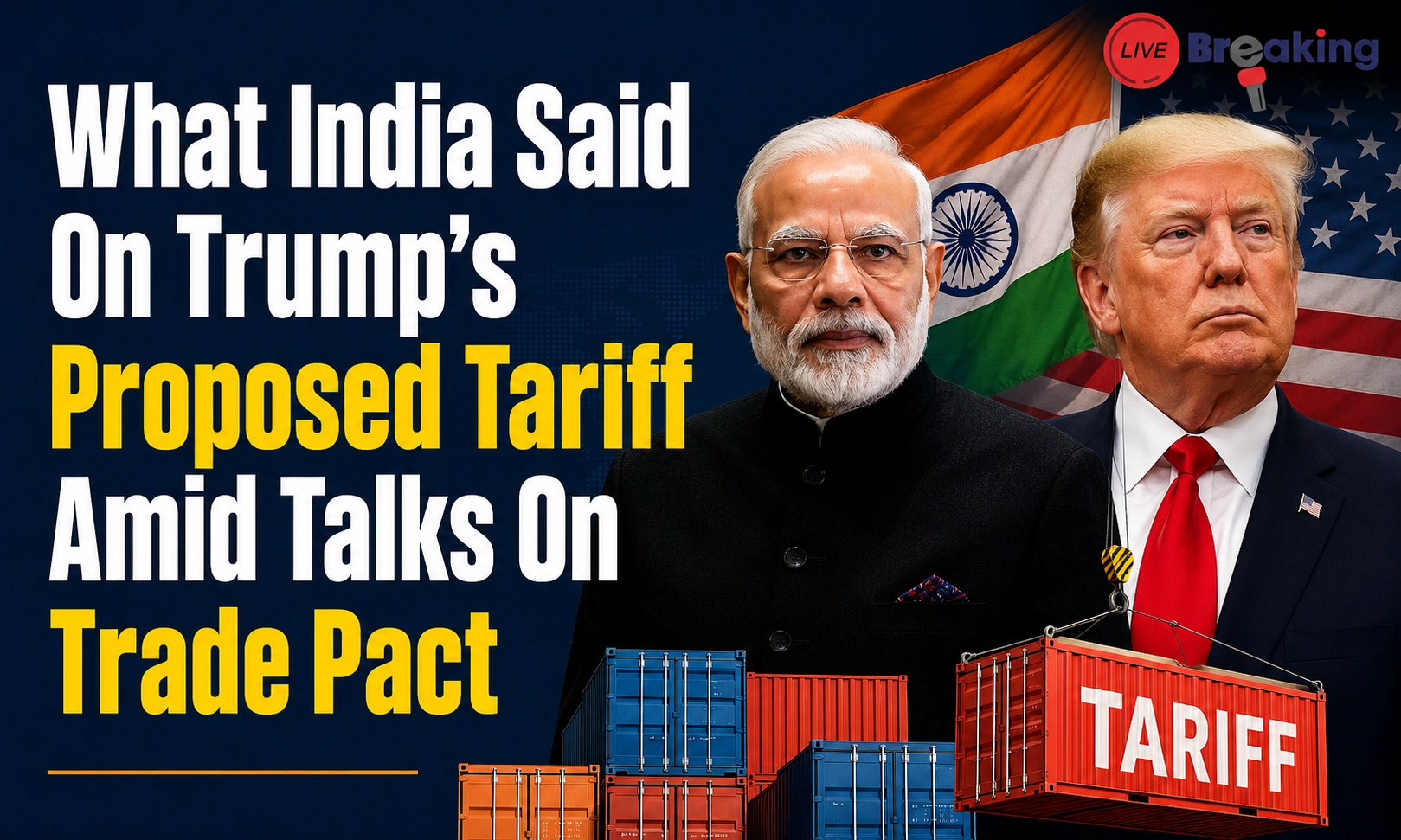
India Responds to Trump Proposed Tariff Amid Ongoing US Trade Deal Negotiations
As India and the United States move closer to finalizing a long-awaited bilateral trade agreement, a fresh tariff proposal from the Trump administration has introduced new uncertainty into the discussions. The proposal, which seeks to impose additional duties on imports from several countries including India, comes at a sensitive moment when trade negotiators from both nations are working to conclude key aspects of the deal.
India has responded cautiously, emphasizing continued engagement with US authorities while maintaining its commitment to advancing the trade partnership. The development highlights the complex balance between economic cooperation and trade policy disputes that often characterize major international agreements.
What Is Trump’s Proposed Tariff?
The United States Trade Representative (USTR) has proposed additional tariffs under Section 301 of the US Trade Act. The proposed measure includes an extra tariff of up to 12.5% on imports from India, citing concerns related to supply chains and trade practices. The proposal is currently open for public consultation before any final decision is made.
The tariff proposal is part of a broader effort targeting multiple economies and comes after previous trade measures faced legal challenges in US courts. While the proposal is not yet finalized, it has already become a major talking point during ongoing India-US trade discussions.
What India Said About the Proposed Tariff
India’s Commerce Ministry has stated that it remains actively engaged with the United States regarding the Section 301 proceedings. Officials indicated that discussions are ongoing and that India is carefully evaluating the proposed measures while continuing negotiations on the broader trade pact.
The Indian government has not announced any retaliatory measures and appears focused on resolving concerns through dialogue. This approach aligns with India’s broader strategy of strengthening economic ties with the US while protecting its domestic industries and export interests.
According to government officials, India remains committed to pursuing a mutually beneficial trade agreement and believes constructive engagement is the best way to address outstanding issues.
Read More: Rs 20 Lakh Shares, Logs, Final Hours: CBI Probe Into Twisha Sharma Death
Why the India-US Trade Deal Matters
The proposed India-US trade agreement is expected to become one of the most significant economic partnerships for both countries.
Key Benefits for India
| Benefit Area | Expected Impact |
|---|---|
| Export Growth | Increased access to the US market |
| Manufacturing | Greater opportunities for Indian manufacturers |
| Technology | Enhanced collaboration in digital sectors |
| Investment | Higher foreign direct investment inflows |
| Employment | Job creation across export-oriented industries |
Key Benefits for the US
| Benefit Area | Expected Impact |
| Market Access | Better access to India’s growing consumer market |
| Services | Expanded opportunities for US service providers |
| Technology | Stronger digital and innovation partnerships |
| Supply Chains | Diversification away from single-country dependence |
The agreement could significantly boost bilateral trade volumes, which have grown steadily over the past decade.
Trade Talks Near Final Stage
Indian Commerce Minister Piyush Goyal recently indicated that much of the agreement has already been finalized and that negotiators are working on the remaining details. He described the discussions as being focused on fine-tuning the agreement rather than addressing major unresolved issues.
Reports suggest both countries have completed large portions of the framework, with tariff arrangements remaining one of the most important issues under discussion.
The latest tariff proposal, however, could complicate efforts to finalize the agreement in the near term.
Potential Impact on Indian Exporters
If implemented, the proposed tariffs could affect several Indian export sectors, including:
Read More: An 80-Kg Hanging Dummy Test For Samarth, Giribala Singh In Twisha Sharma Case
- Textiles and apparel
- Engineering goods
- Chemicals
- Auto components
- Consumer products
Industry experts believe that higher tariffs could reduce the competitiveness of Indian goods in the American market. However, because the proposal remains under review, businesses are closely monitoring developments before making major strategic adjustments.
Experts Call for Strategic Response
Trade analysts and policy experts have urged India to carefully evaluate the legal and economic implications of the proposed tariffs.
The Global Trade Research Initiative (GTRI) has suggested that India examine whether the proposed measures align with international trade norms and consider all available policy options. Experts also recommend separating tariff-related disputes from broader trade negotiations to prevent delays in reaching a final agreement.
Many economists believe maintaining dialogue with Washington remains the most effective strategy, particularly given the importance of the US as one of India’s largest trading partners.
Read More: “You Did Wrong”: Mamata Banerjee Heard Scolding Hospital CEO, BJP Shares Video
Global Trade Environment Becoming More Complex
The tariff proposal reflects a broader trend of increasing trade scrutiny worldwide. Governments are placing greater emphasis on supply chain security, labor standards, and domestic manufacturing competitiveness.
For India, navigating these challenges while expanding trade relationships with major economies such as the United States, European Union, United Kingdom, and other partners will remain a key economic priority in the coming years.
The outcome of the current negotiations could shape bilateral trade relations for the next decade and influence how global companies view India as a manufacturing and export destination.
Outlook: Will the Trade Deal Still Happen?
Despite the tariff controversy, most observers remain optimistic about the prospects for an India-US trade agreement.
Read More: Ghaziabad Man Who Stabbed Friend After Bakrid Invite Killed In Encounter
Both governments have repeatedly emphasized the strategic importance of their economic relationship, and negotiators appear committed to finding common ground. While the proposed tariffs may create temporary friction, ongoing discussions suggest neither side wants to derail the broader trade partnership.
The coming weeks will be crucial as public consultations on the tariff proposal continue and trade officials work toward resolving outstanding issues.
Frequently Asked Questions (FAQs)
What tariff has the US proposed on India?
The US Trade Representative has proposed an additional tariff of up to 12.5% on certain imports from India under Section 301 proceedings.
Has India rejected the tariff proposal?
No. India has stated that it remains engaged with US authorities and is continuing discussions while evaluating the proposal.
Will the tariff affect the India-US trade deal?
The proposal may complicate negotiations, but both countries continue to work toward finalizing the trade agreement.
Which sectors could be affected?
Textiles, engineering goods, chemicals, auto components, and other export-oriented industries could face challenges if the tariffs are implemented.
Read More: Dehradun Woman Locked In Toilet For Months, Fed Raw Rice, Beaten By In-Laws
Is the tariff already in effect?
No. The proposal is currently under review and subject to public consultation before any final decision is taken.
Conclusion
India’s measured response to Trump’s proposed tariff demonstrates its commitment to maintaining a constructive relationship with the United States despite emerging trade tensions. As negotiations on the bilateral trade pact continue, both countries face the challenge of balancing domestic economic priorities with the broader goal of strengthening one of the world’s most important strategic partnerships.
The final outcome of these discussions will not only influence trade flows between the two nations but could also reshape the future of economic cooperation across multiple sectors.