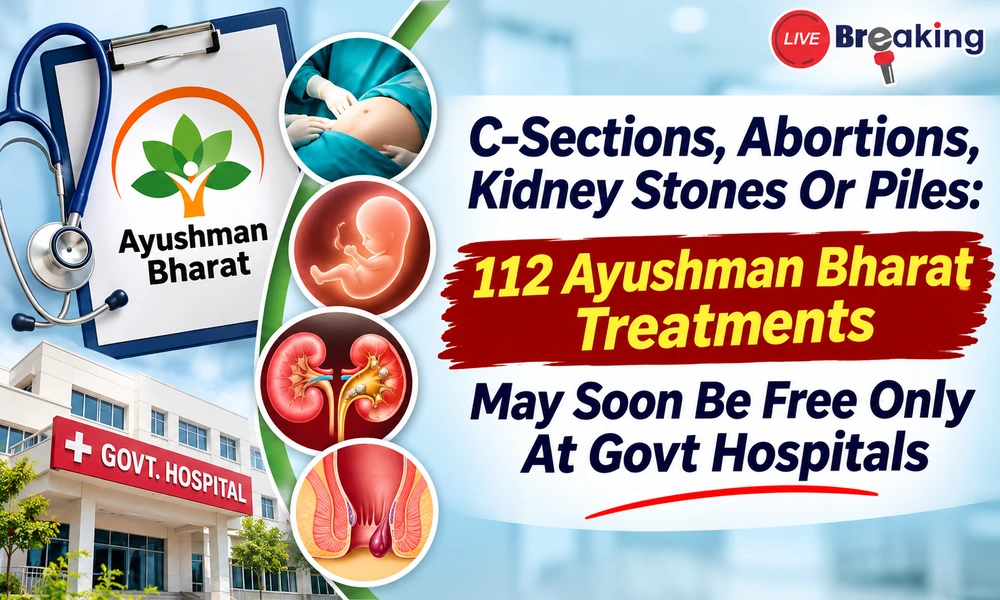
Ayushman Bharat: 112 Treatments May Be Govt Hospital Only
The National Health Authority has proposed a major change under Ayushman Bharat Pradhan Mantri Jan Arogya Yojana (AB-PMJAY), which could affect millions of beneficiaries across India. Under the proposal, 112 medical treatment packages may soon be reserved exclusively for government hospitals, potentially changing how patients access cashless healthcare at private hospitals.
India’s flagship health assurance scheme, Ayushman Bharat Pradhan Mantri Jan Arogya Yojana (PM-JAY), could soon witness an important policy change. The National Health Authority (NHA), which administers the scheme, has proposed increasing the number of medical treatment packages reserved for government hospitals from the existing 23 to 112.
The proposed list includes several commonly required medical procedures and treatments, such as Caesarean section deliveries, abortions, kidney stone treatment, piles surgery, hysterectomy and other healthcare services.
The development is particularly significant for families who depend on their Ayushman Bharat cards for cashless medical treatment at empanelled private hospitals.
According to reports, the expanded list could be integrated into the scheme’s Transaction Management System (TMS) from December 1, 2026. However, the proposal is still subject to state-level feedback and implementation decisions.
What Is The New Ayushman Bharat Proposal?
Under the existing PM-JAY arrangement, 23 treatment packages are reserved for government healthcare facilities. The National Health Authority has proposed expanding this number to 112.
This means 89 additional treatment packages could be added to the government-hospital-only category.
The proposal aims to encourage beneficiaries to access selected treatments at public healthcare facilities, including Community Health Centres (CHCs) and Sub-Divisional Hospitals (SDHs), wherever the required infrastructure and medical facilities are available.
The proposed expansion covers seven major medical specialities:
- General Medicine
- General Surgery
- Gynaecology
- Psychiatry
- Orthopaedics
- Ophthalmology
- Ear, Nose and Throat (ENT)
The move is intended to improve the utilisation of government healthcare infrastructure while directing additional scheme resources towards strengthening public hospitals.
Which 112 Treatments May Soon Be Available Only At Government Hospitals?
The proposed expansion includes several medical procedures and treatments that are commonly required by patients.
Some of the important treatments reportedly included in the proposed list are discussed below.
1. C-Section Deliveries And Maternity Treatments
One of the most significant aspects of the proposal concerns maternity and women’s healthcare services.
The proposed list includes:
- Caesarean section deliveries
- Assisted vaginal deliveries
- Medical Termination of Pregnancy (MTP)
- High-risk pregnancy care
- Hysterectomy procedures
These treatments are important for women who depend on Ayushman Bharat to manage pregnancy-related medical expenses.
If the proposed restrictions are adopted by a state, eligible beneficiaries may need to approach government hospitals for cashless coverage under the affected packages.
However, emergency medical decisions must always be taken by qualified doctors based on the patient’s condition. Patients should not delay necessary maternity care because of uncertainty about insurance coverage.
2. Kidney Stone Treatment And Piles Surgery
Kidney stones and piles are common health conditions that can require medical intervention or surgery.
The proposed expansion reportedly includes treatments such as:
- Kidney stone-related treatment
- Haemorrhoids or piles treatment
- Fistula treatment
- Cyst removal
- Medical biopsies
These procedures can involve diagnostic tests, specialist consultations and surgical facilities.
If the relevant packages become restricted to public hospitals in a particular state, Ayushman Bharat beneficiaries may have to seek treatment at government facilities to receive scheme benefits.
3. Eye Treatments And Ophthalmology Services
The proposed changes also cover selected eye-care procedures.
Reportedly included services involve cataract-related treatment, selected glaucoma services and screening for certain eye conditions.
This could increase the responsibility of government eye hospitals and public healthcare centres to provide affordable treatment to eligible patients.
Read More: H1N1 Cases Rise In Delhi: 5 Signs Your Cold May Not Be ‘Normal Viral’ Infection
The availability of ophthalmologists, diagnostic equipment and surgical facilities will be important for implementing these changes successfully.
4. General Medicine And Common Health Conditions
The proposal is not limited to surgical procedures. Several medical conditions are also reportedly included.
These include:
- Severe anaemia
- Malaria
- Acute bronchitis
- Diarrhoea and gastroenteritis
- Urinary tract infections
- Hepatitis
- Pancreatitis
- Certain diabetes-related complications
- Hypertension-related conditions
The objective is to make commonly required healthcare services available through public hospitals, particularly in areas where government medical facilities can provide appropriate treatment.
5. Mental Healthcare And Other Specialities
Selected mental healthcare services are also reportedly part of the proposed expansion.
These include treatment packages associated with anxiety-related conditions, mood disorders and attention-deficit/hyperactivity disorder (ADHD).
This is an important development because mental healthcare is increasingly recognised as an essential part of the country’s overall healthcare system.
The proposed coverage across multiple specialities indicates that the changes could affect patients with a wide range of medical needs.
Why Is The Government Planning To Reserve 112 Treatments For Public Hospitals?
The proposed expansion is aimed at strengthening India’s public healthcare infrastructure and improving the utilisation of government medical facilities.
One of the key objectives is to ensure that commonly required treatments can be provided closer to beneficiaries, particularly in rural and underserved areas.
Government hospitals, Community Health Centres and Sub-Divisional Hospitals already provide several essential healthcare services. The proposed policy could encourage greater use of these facilities.
Another important consideration is the management of public healthcare expenditure.
The authorities are also looking to improve monitoring of medical procedures and address concerns about unnecessary treatments and possible misuse of healthcare packages.
Read More: “The ‘Chai-Biscuit’ Bloat: Why Your Evening Routine Is Destroying Your Gut Barrier During The Rains
By reserving selected procedures for public hospitals, the government hopes to direct more resources towards strengthening public healthcare delivery.
However, successful implementation will depend on whether government facilities have sufficient doctors, nurses, equipment, operation theatres and hospital beds.
Will Ayushman Bharat Beneficiaries Still Get Free Treatment At Private Hospitals?
This is perhaps the biggest question for existing Ayushman Bharat cardholders.
The proposed changes do not mean that all private hospitals will stop accepting Ayushman Bharat beneficiaries.
Instead, the proposed restrictions concern specific treatment packages that may be reserved for government hospitals.
For example, if a particular state adopts the proposed restriction on a C-section package, beneficiaries may need to approach an eligible government hospital to receive cashless treatment under that package.
However, other eligible treatments that are not included in the reserved category may continue to be available at empanelled private hospitals, subject to applicable PM-JAY rules.
Therefore, beneficiaries should not assume that their Ayushman cards will become invalid at all private hospitals.
The actual availability of treatment will depend on the package, the state’s implementation decision and the hospital’s empanelment status.
When Will The New Ayushman Bharat Rules Come Into Effect?
According to reports, the National Health Authority has proposed implementing the expanded list through the scheme’s Transaction Management System from December 1, 2026.
State Health Authorities have been asked to examine the proposal and provide their feedback. States and Union Territories have been asked to submit suggestions by November 25, 2026.
Read More: Cough Syrup Rules Tighten Further: What Parents Of Children Under 4 Need To Know
The final implementation will depend on the feedback received and decisions taken by individual states.
This means the actual rules and availability of treatment packages could differ across states depending on healthcare infrastructure and local requirements.
Beneficiaries should therefore check the latest official announcements before making decisions about planned medical procedures.
How Could The Proposed Changes Affect Ordinary Families?
For families that rely on Ayushman Bharat, the proposed changes could influence where they seek treatment.
Many patients prefer private hospitals because of their location, specialist availability or perceived convenience. If a particular treatment becomes reserved for government hospitals, beneficiaries may need to change their preferred healthcare facility.
This could create challenges in areas where government hospitals have limited beds, doctors or specialised equipment.
For pregnant women, patients with kidney stones and people requiring surgery, access to timely medical care will remain particularly important.
At the same time, the proposal could benefit public hospitals by increasing their utilisation and directing more resources towards improving their facilities.
The key question will be whether government healthcare infrastructure can manage the additional patient load without compromising treatment quality or waiting times.
What Should Ayushman Bharat Cardholders Do Now?
Until the final state-specific implementation details are announced, beneficiaries should avoid making assumptions about their treatment eligibility.
Read More: Waking Up With A Headache? Warning Signs That Need Attention
Here are some practical steps to follow:
- Check the treatment package: Confirm whether the required procedure is covered under PM-JAY.
- Contact the hospital: Ask whether the hospital is empanelled and whether the specific treatment package is available there.
- Check state-level guidelines: The implementation may vary depending on the decisions taken by individual states.
- Verify cashless eligibility: Confirm the availability of the package before planned admission or surgery.
- Keep documents ready: Carry your Ayushman card and other identification and medical documents required by the hospital.
- Seek timely medical attention: Do not delay emergency treatment while waiting for clarification about scheme rules.
Beneficiaries can also seek assistance through the official PM-JAY helpline at 14555.
Ayushman Bharat: Old Rules Vs Proposed New Changes
| Particulars | Existing Arrangement | Proposed Change |
|---|---|---|
| Government-hospital-only packages | 23 | 112 |
| Additional packages | — | 89 |
| Medical specialities | Existing reserved packages | Seven major specialities covered by the proposed expansion |
| C-section treatment | Subject to existing package rules | Proposed for government-hospital reservation |
| Kidney stone treatment | Subject to existing package rules | Selected packages proposed for reservation |
| Piles surgery | Subject to existing package rules | Selected packages proposed for reservation |
| Private hospital access | Available for eligible packages | Could be restricted for reserved packages |
| Proposed implementation | Existing framework | December 1, 2026 |
| State-level decision | Applicable existing guidelines | Feedback and implementation decisions pending |
Conclusion
The proposed expansion of government-hospital-only treatment packages under Ayushman Bharat could bring a significant change to India’s public healthcare system.
With the National Health Authority proposing an increase from 23 to 112 reserved packages, treatments such as C-section deliveries, abortions, kidney stone procedures and piles surgery could become available under PM-JAY only at eligible government hospitals in states that implement the restrictions.
Read More: Can AI Personalise Menopause Care? The Future of Women’s Health
The proposal is aimed at strengthening public hospitals, improving healthcare utilisation and ensuring that essential treatments are accessible closer to people’s homes.
However, adequate medical infrastructure, trained healthcare professionals and timely access to treatment will be essential for the policy to achieve its intended objectives.
For now, Ayushman Bharat beneficiaries should remember that this is a proposed change, not a blanket ban on private hospitals. They should follow official state-level announcements and verify the availability of their specific treatment package before planning hospital admission.