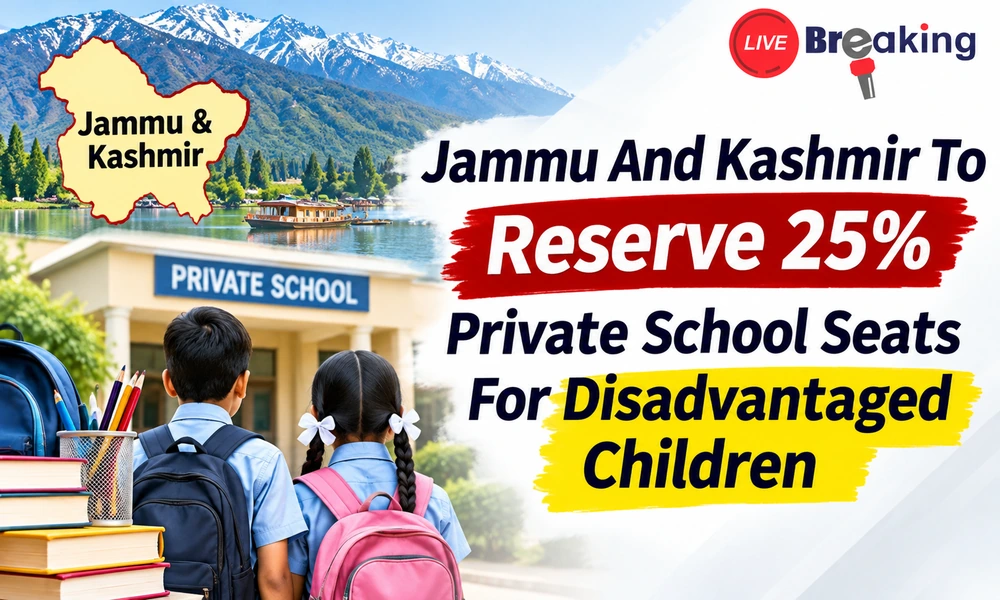
Jammu And Kashmir To Reserve 25% Private School Seats For Disadvantaged Children
In a significant development for the education sector, the Jammu and Kashmir government has announced plans to implement a 25 per cent reservation for children belonging to Economically Weaker Sections (EWS) and disadvantaged groups in private schools across the Union Territory.
The initiative is aimed at making quality education more accessible to children from financially weaker families. Under the proposed arrangement, eligible students will be able to secure admission to private schools through reserved seats, allowing them to study alongside children from different social and economic backgrounds.
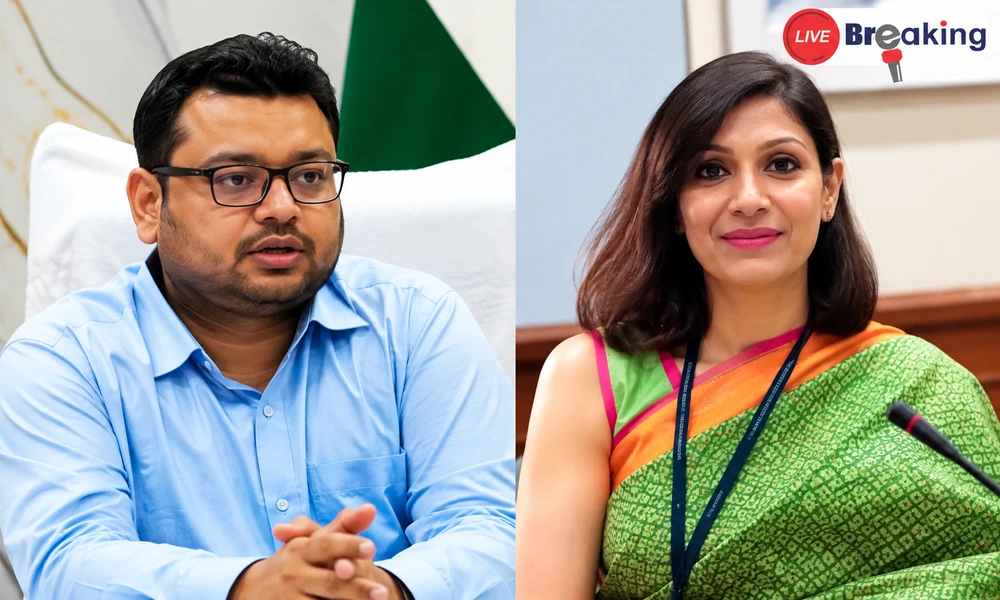
Education Minister Shamim Firdous announced the decision during a review meeting with senior officials of the School Education Department, representatives of private school associations, parents’ associations and members of civil society.
The government has indicated that the rules governing the implementation of the reservation provision are in the final stages of preparation and will be notified shortly.
What Is the 25% Reservation Policy for Private Schools in Jammu and Kashmir?
The proposed policy is linked to Section 12(1)(c) of the Right of Children to Free and Compulsory Education (RTE) Act, 2009.
This provision requires covered private unaided schools to reserve at least 25 per cent of their entry-level seats for children belonging to economically weaker sections and disadvantaged groups.
The objective is to ensure that children from underprivileged backgrounds are not denied educational opportunities because of their family’s financial circumstances.
Through this initiative, the Jammu and Kashmir administration aims to strengthen inclusive education and create opportunities for children who might otherwise find private school education financially inaccessible.
The reservation will apply to eligible children at the prescribed entry-level admission stage. Further details regarding eligibility, application procedures, documentation and admission timelines are expected through the government’s implementation rules.
Education Minister Shamim Firdous Announces the Decision
Education Minister Shamim Firdous announced the proposed implementation during a meeting focused on reviewing the functioning and development of the school education system in Jammu and Kashmir.
The meeting brought together government officials, private school representatives, parents’ associations and civil society members to discuss important issues affecting students and families.
During the discussion, the minister highlighted the importance of providing equitable educational opportunities and ensuring that children from economically weaker backgrounds receive access to quality schooling.
She also informed stakeholders that the rules for implementing Section 12(1)(c) of the RTE Act were in the final stage of notification.
The government has further indicated that private schools will receive reimbursement for admissible expenditure incurred on providing free and compulsory education to eligible students. The reimbursement will be governed by the applicable rules and procedures.
How Will the 25% Private School Reservation Benefit Students?
The proposed reservation could make a meaningful difference to families who wish to provide their children with better educational opportunities but face financial difficulties.
Private school education can involve several expenses, including tuition fees, admission charges, books, uniforms and other learning materials. For families with limited financial resources, these expenses can become a major obstacle.
The 25 per cent reservation provision aims to reduce this barrier by creating access to eligible entry-level seats in covered private schools.
Some major expected benefits include:
1. Better Access to Quality Education
Children from economically weaker families may receive an opportunity to study in private schools without facing the usual financial barriers associated with admission.
2. Equal Educational Opportunities
The initiative seeks to reduce the gap between children from different economic backgrounds by promoting a more inclusive classroom environment.
3. Financial Relief for Parents
Eligible families could benefit from free and compulsory education under the applicable RTE provisions, reducing the financial pressure associated with schooling.
4. Social Inclusion
Students from different communities and financial backgrounds will have opportunities to learn together, encouraging understanding, equality and social interaction.
5. Improved Educational Participation
Greater access to schooling may encourage more families to pursue formal education for their children and support long-term educational development.
Government to Reimburse Private Schools for Eligible Students
An important part of the proposed arrangement concerns financial reimbursement to participating schools.
According to the announcement, the Jammu and Kashmir government will reimburse private schools for admissible expenditure incurred while providing free and compulsory education to eligible children.
The reimbursement will be provided according to the applicable rules and procedures.
This arrangement is important because private schools will need a clearly defined mechanism for implementing the reservation policy while maintaining their educational operations.
Read More: Meet IAS Couple From 2018 Batch: From Different Cadres To One ‘Karmabhumi’
The detailed rules are expected to clarify the reimbursement process, eligibility conditions, documentation requirements and other administrative responsibilities.
The government’s decision to address reimbursement is also intended to encourage cooperation between private educational institutions and the administration.
Private Schools Asked to Follow JKBOSE Curriculum and Prescribed Textbooks
Apart from the reservation policy, the meeting also addressed concerns regarding textbooks and additional learning materials prescribed by private schools.
The government decided that private schools affiliated with the Jammu and Kashmir Board of School Education (JKBOSE) should follow the board’s curriculum and prescribe JKBOSE textbooks containing content aligned with the NCERT syllabus.
Schools have been directed to ensure that their prescribed books comply with the applicable academic framework.
The education minister also expressed concern about unnecessary additional and supplementary books being prescribed to students.
According to the minister, education should remain balanced, flexible and child-centred, in line with the principles of the National Education Policy (NEP) 2020.
Schools have been advised to avoid placing unnecessary academic and financial pressure on students and their parents.
Government Raises Concerns Over Expensive School Books
The issue of expensive textbooks and supplementary educational materials was also discussed during the review meeting.
Parents often face additional financial pressure when schools prescribe multiple books beyond the essential curriculum requirements.
Read More: CBSE Board Exam Timetable 2027 LIVE: Class 10th, 12th Date Sheet PDF Download
The minister took note of complaints regarding the alleged sale of books at excessive prices and stressed that such concerns must be addressed seriously.
She indicated that unnecessary and excessive prescription of books would not be tolerated.
Where supplementary learning resources are genuinely required, schools may consider providing access through:
- School libraries.
- Book banks.
- E-books and digital learning resources.
- Other accessible educational materials.
This approach could help students access additional learning resources without requiring parents to purchase multiple expensive books.
Parents to Get Freedom to Purchase School Uniforms and Stationery
Another important issue discussed during the meeting was the purchase of school uniforms, notebooks, writing materials and other educational supplies.
The education minister emphasised that parents should not be forced to purchase these items from specific shops or vendors associated with schools.
Families should have the freedom to purchase uniforms, books, notebooks and stationery from vendors of their choice.
The government has made it clear that unnecessary restrictions and financial pressure on parents should be avoided.
This direction is particularly important for families who need to manage their children’s educational expenses within limited household budgets.
Allowing parents to compare prices and choose vendors could provide greater flexibility and help reduce the overall cost of schooling.
What Should Parents Know About the New 25% Reservation Policy?
Parents interested in the proposed reservation should follow official announcements from the Jammu and Kashmir School Education Department.
Read More: Your Handwriting Has Changed: Could Your Brain Be Telling You Something?
Although the government has announced its intention to implement the provision, the detailed implementation rules are still awaiting notification.
Therefore, families should avoid relying on unverified claims about application dates, income limits, admission portals or required documents.
Once the official rules are published, parents should carefully check the eligibility criteria and admission procedure.
They should also verify which schools and entry-level classes are covered by the notification.
The final rules are expected to provide greater clarity about the admission process and the responsibilities of schools and applicants.
A Major Step Towards Inclusive Education in Jammu and Kashmir
The proposed 25 per cent reservation in private schools represents an important development in the education sector of Jammu and Kashmir.
The initiative reflects the broader objective of ensuring that educational opportunities are not limited by a child’s financial background.
However, the effectiveness of the policy will depend on its implementation. Clear admission guidelines, transparent eligibility criteria, timely reimbursement and proper monitoring will be essential.
The government will also need to ensure that eligible families receive accurate information and can access the admission process without unnecessary complications.
Alongside the reservation announcement, the directions concerning textbooks, school supplies and vendor freedom indicate a broader focus on reducing the financial burden of education.
If implemented effectively, these measures could support a more accessible, affordable and inclusive school education system across the Union Territory.
Read More: HP Board Registration 2026-27: Class 9, 10 Deadline Extended, Check New Dates
For now, parents and private educational institutions are awaiting the formal notification of the rules, which will provide clarity on how the reservation arrangement will operate.
Key Details at a Glance
| Particulars | Details |
|---|---|
| Union Territory | Jammu and Kashmir |
| Announced by | Education Minister Shamim Firdous |
| Reservation proposed | 25% |
| Beneficiaries | Economically Weaker Sections and disadvantaged groups |
| Applicable provision | Section 12(1)(c) of the RTE Act, 2009 |
| School category | Covered private unaided schools |
| Admission level | Prescribed entry-level classes |
| Education arrangement | Free and compulsory education for eligible children |
| Reimbursement | Government reimbursement for admissible expenditure |
| Current status | Implementation rules in final stage of notification |
| Additional measures | Textbook regulation and freedom to choose vendors |
Frequently Asked Questions (FAQs)
1. Will Jammu and Kashmir reserve 25% seats in private schools?
Yes. The Jammu and Kashmir government has announced plans to implement 25 per cent reservation in prescribed entry-level seats of covered private schools for eligible children belonging to economically weaker sections and disadvantaged groups.
2. Which law provides for the 25% reservation in private schools?
The reservation is based on Section 12(1)(c) of the Right of Children to Free and Compulsory Education Act, 2009. The provision requires covered private unaided schools to reserve at least 25 per cent of entry-level seats for eligible children.
3. Who will benefit from the new reservation policy?
Children belonging to Economically Weaker Sections (EWS) and disadvantaged groups will be eligible, subject to the conditions and documentation prescribed under the applicable government rules.
4. Has the Jammu and Kashmir government issued the implementation rules?
As of November 18, 2026, the government has stated that the rules are in the final stage of notification and will be issued shortly. The detailed admission procedure is therefore awaited.
Read More: Uttar Pradesh Board Exam 2027: Schools Can Correct Student Particulars Till November 12
5. Will private schools receive reimbursement from the government?
Yes. The government has indicated that private schools will receive reimbursement for admissible expenditure incurred on providing free and compulsory education to eligible children, according to the applicable rules and procedures.
6. Will parents have to purchase expensive additional books?
The education minister has advised private schools against prescribing unnecessary additional and supplementary books. Schools may provide supplementary resources through libraries, book banks and digital learning materials.
7. Can parents purchase school uniforms and books from any shop?
The minister has emphasised that parents should have the freedom to purchase uniforms, books, notebooks and writing materials from vendors of their choice instead of being restricted to specific shops.
8. When will the 25% reservation policy become effective?
The government has announced that the implementation rules are in the final stage of notification. The exact effective date and admission schedule should be confirmed through the official notification.
Conclusion
The proposed 25 per cent reservation in private schools could open new educational opportunities for economically weaker and disadvantaged children in Jammu and Kashmir. Along with measures to control unnecessary educational expenses, the initiative aims to make schooling more inclusive and affordable. Parents should follow official government notifications for final eligibility requirements and admission updates.