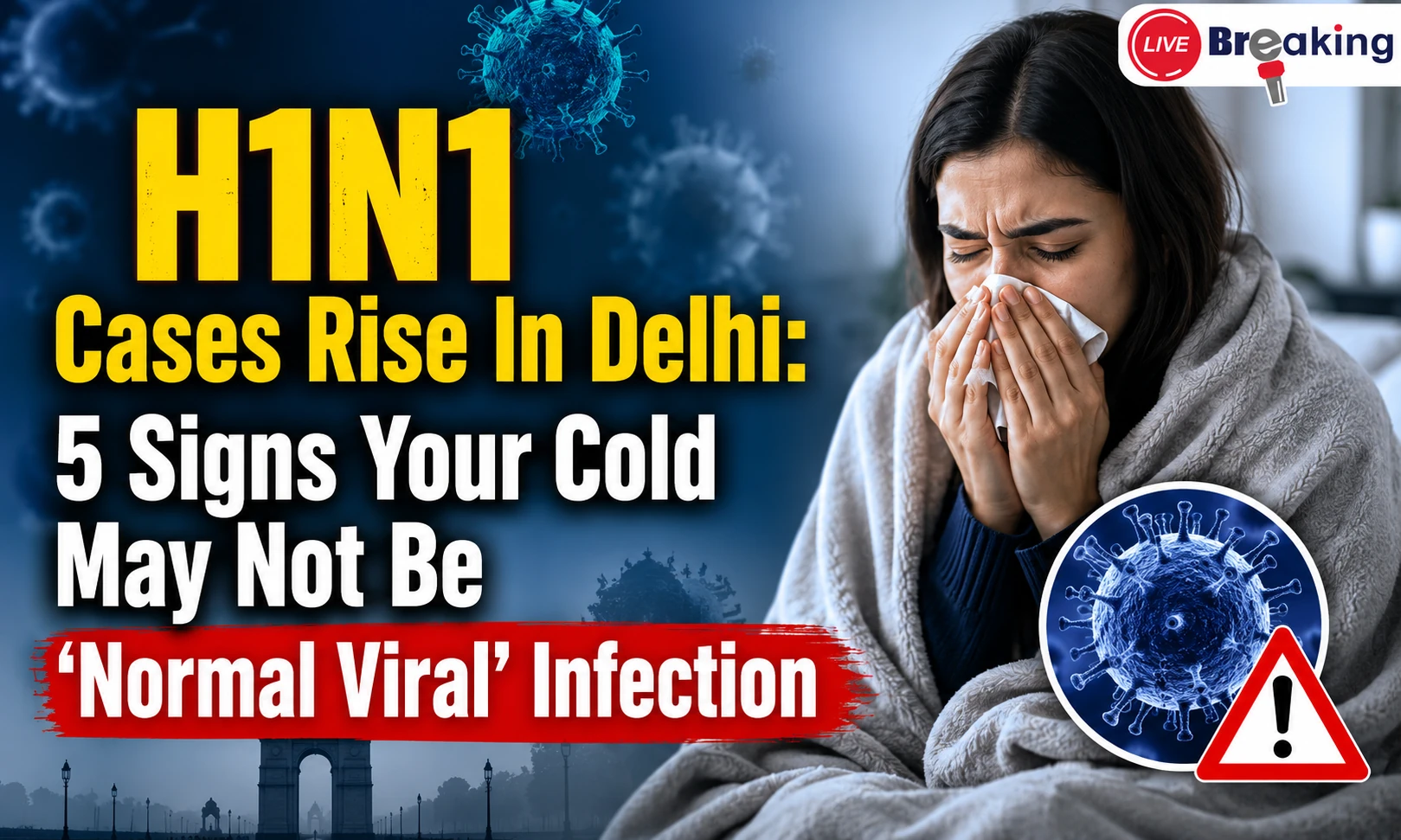
H1N1 Cases Rise In Delhi-NCR: 5 Signs Your Cold May Not Be A “Normal Viral” Infection
Delhi-NCR is seeing increased concern over seasonal influenza, including H1N1, as more people report fever, cough, cold, body aches and prolonged respiratory symptoms. Recent reports have highlighted a sharp rise in H1N1 infections in Delhi, with doctors also observing flu-like illness across different age groups.
The concern is understandable because the early symptoms of influenza can look similar to those of a routine cold or viral infection. A runny nose, sore throat, cough and mild fever do not automatically mean that a person has H1N1. At the same time, certain symptoms—particularly a sudden high fever, intense body aches, persistent cough or difficulty breathing—should not be ignored.
According to the World Health Organization (WHO), seasonal influenza commonly causes sudden fever, cough, headache, muscle and joint pain, severe tiredness, sore throat and a runny nose. Most people recover within about a week, although the cough can continue for two weeks or longer.
So, how can you tell when a seemingly ordinary cold deserves more attention?
What Is H1N1 Flu and Why Is It Different From a Common Cold?
H1N1 is a subtype of influenza A. The virus causes a respiratory infection and can spread from person to person through respiratory droplets and small particles released when an infected person coughs or sneezes.
Unlike a typical common cold, influenza often begins more suddenly and can make a person feel significantly unwell. Fever, headache, muscle pain and severe fatigue may appear together with respiratory symptoms. However, symptoms alone cannot reliably distinguish H1N1 from other respiratory viruses.
WHO notes that influenza, COVID-19 and other respiratory infections can have overlapping symptoms, and laboratory testing may be required when confirmation is clinically important.
India’s National Centre for Disease Control (NCDC) also maintains specific information and technical guidance on seasonal influenza, including H1N1, testing and patient management.
5 Signs Your Cold May Not Be a “Normal Viral” Infection
1. Sudden High Fever That Makes You Feel Extremely Unwell
One of the symptoms that can distinguish influenza from a mild cold is the sudden onset of fever.
A common cold may cause mild fever, particularly in children, but influenza can begin abruptly with fever accompanied by headache, body aches and significant fatigue. WHO lists sudden onset of fever among the characteristic symptoms of seasonal influenza.
If the fever is high, persistent or accompanied by worsening weakness, it is better to speak with a healthcare professional rather than assuming that it is simply another seasonal viral infection.
Important: Fever alone does not prove that you have H1N1. Other infections can produce similar symptoms.
2. Severe Body Ache, Headache and Extreme Fatigue
Feeling tired during a viral illness is common. However, influenza can cause pronounced fatigue and muscle or joint pain.
Some people describe flu as an illness that suddenly leaves them exhausted and unable to carry out their normal activities. Headache and body aches may accompany fever and cough.
WHO specifically identifies muscle and joint pain, headache and severe malaise among common influenza symptoms.
If your cold is accompanied by unusually severe body pain and exhaustion, especially when symptoms began suddenly, medical advice can help determine whether influenza or another infection may be responsible.
3. Cough That Becomes Persistent or Severe
A cough can accompany both a common cold and influenza, but a severe or persistent cough deserves attention.
Influenza can produce a dry cough that may continue even after other symptoms begin to improve. WHO notes that an influenza-related cough can last two weeks or longer.
A cough that becomes increasingly severe, interferes with sleep or is associated with chest discomfort or breathing problems should not simply be dismissed as a normal post-viral cough.
Persistent symptoms can sometimes indicate complications, including lower respiratory tract involvement or pneumonia, particularly in people at higher risk.
4. Difficulty Breathing, Chest Discomfort or Breathlessness
Breathing difficulty is one of the most important warning signs.
Read More: Papaya vs Pineapple for Glowing Skin: Which Fruit Truly Works Better?
A blocked nose or mild throat irritation can make breathing feel uncomfortable, but genuine breathlessness, rapid breathing, chest pain or difficulty getting enough air requires prompt medical evaluation.
Severe influenza can lead to complications such as pneumonia and, in serious cases, respiratory distress. WHO advises people with severe symptoms or underlying medical conditions to seek medical care.
Do not wait for the illness to “settle on its own” if breathing becomes difficult.
5. Symptoms Improve and Then Suddenly Become Worse
Another reason to pay attention is a relapse.
You may initially feel that the fever, cough or body aches are improving, only for symptoms to return or become significantly worse. A worsening cough, renewed fever, increasing weakness or breathing difficulty can signal a complication or another infection.
A prolonged illness does not automatically mean H1N1, but a worsening pattern is a reason to contact a doctor.
This is particularly important for young children, older adults, pregnant women and people with certain chronic health conditions because they have a greater risk of developing complications from influenza.
How Can You Tell H1N1 From a Normal Cold?
There is no reliable way to diagnose H1N1 based only on symptoms.
| Symptom/Feature | Common Cold | Influenza/H1N1 Can Cause |
|---|---|---|
| Onset | Often gradual | Often sudden |
| Fever | Usually mild or absent | Common, sometimes high |
| Body aches | Usually mild | Can be significant |
| Fatigue | Usually mild | Can be pronounced |
| Cough | Common | Often prominent and can be severe |
| Headache | Less common | Common |
| Sore throat | Common | Common |
| Runny nose | Common | Can occur |
| Breathlessness | Not typical | Warning sign if present |
| Recovery | Usually relatively quick | Fever often improves within about a week, but cough may last longer |
These patterns are general rather than diagnostic. Several respiratory viruses can produce similar symptoms, and testing may be needed to confirm influenza.
When Should You See a Doctor?
Medical advice is particularly important if symptoms are severe, rapidly worsening or occurring in someone at higher risk of complications.
Seek prompt medical attention for symptoms such as:
- Difficulty breathing or significant breathlessness
- Chest pain or pressure
- Severe or unusual weakness
- Persistent or worsening high fever
- Confusion or unusual drowsiness
- Symptoms that improve and then become significantly worse
- Signs of dehydration or inability to maintain fluids
- Severe symptoms in a young child, older adult or pregnant person
People with chronic medical conditions or weakened immunity should also seek medical advice earlier rather than waiting for symptoms to become severe.
Who Is More Vulnerable to Severe Influenza?
Influenza can affect anyone, but some groups have a higher risk of serious complications.
These include young children, adults aged 65 and above, pregnant women and people with certain chronic medical conditions or weakened immune systems. WHO recommends particular attention to these groups because influenza can worsen existing health conditions and can sometimes lead to severe complications.
If someone in a high-risk group develops flu-like symptoms, contacting a healthcare professional early is advisable.
What Should You Do If You Have Flu-Like Symptoms?
If symptoms are mild, staying home and avoiding close contact with others can help reduce transmission. Adequate rest and fluids are important while the body recovers.
Read More: World Lung Cancer Day 2026: Raising Awareness for Early Detection and Better Lung Health
WHO recommends that people with mild influenza symptoms stay home, rest, drink plenty of fluids and seek medical care if symptoms worsen.
Do not start antibiotics on your own simply because you have fever and cough. Influenza is caused by a virus, and antibiotics do not treat viral infections. Antiviral medicines may be appropriate for some people, particularly those at high risk or with severe illness, but they should be used under medical guidance.
Can H1N1 Be Prevented?
Vaccination remains one of the most effective ways to reduce the risk of influenza and, importantly, severe disease.
WHO recommends seasonal influenza vaccination, particularly for people at higher risk of complications. Other preventive steps include washing hands regularly, covering the mouth and nose when coughing or sneezing, avoiding close contact with people who are sick and staying home when unwell.
During periods of increased respiratory illness, crowded indoor environments can also increase opportunities for respiratory viruses to spread, making basic respiratory hygiene particularly important.
Don’t Assume Every Fever and Cold Is H1N1
The rise in reported H1N1 cases is a reason to stay alert, not a reason to panic.
Cold, influenza, COVID-19 and other respiratory infections can produce overlapping symptoms. A person cannot confirm H1N1 simply by looking at their symptoms. In situations where diagnosis is important, healthcare professionals may recommend appropriate testing.
The most useful approach is to monitor the pattern and severity of symptoms. Sudden high fever, severe body aches, extreme fatigue, persistent cough, breathing difficulty or a clear worsening after initial improvement should prompt medical attention.
Read More: Caffeine In Evening May Affect Quality Of Night-Time Sleep, Study Finds
FAQs
1. What are the symptoms of H1N1 flu?
Common H1N1/influenza symptoms can include sudden fever, cough, sore throat, headache, body aches, fatigue and a runny nose. Symptoms can overlap with other respiratory infections, so these signs alone cannot confirm H1N1.
2. Is H1N1 more serious than a normal cold?
Influenza can cause more severe illness than a typical cold, although many people recover without complications. The risk of severe disease is higher among young children, older adults, pregnant women and people with certain medical conditions.
3. How long does H1N1 flu last?
Many people recover from the main symptoms of influenza within about a week. However, coughing and tiredness can continue for longer. WHO notes that an influenza cough can last two weeks or more.
4. Can H1N1 cause breathing problems?
Yes. Severe influenza can affect the lower respiratory tract and can lead to complications such as pneumonia and respiratory distress. Difficulty breathing should therefore be treated as a warning sign requiring medical evaluation.
5. Should I get tested for H1N1 if I have a cold?
Not everyone with a cold-like illness needs influenza testing. The decision depends on symptoms, risk factors, local circulation and clinical circumstances. Because several respiratory viruses can cause similar symptoms, a healthcare professional can determine whether testing is appropriate.
6. Can antibiotics cure H1N1?
No. H1N1 is an influenza virus, so antibiotics do not treat the viral infection itself. Doctors may prescribe antiviral treatment for appropriate patients, particularly those at higher risk or with severe illness.
Read More: “The ‘Chai-Biscuit’ Bloat: Why Your Evening Routine Is Destroying Your Gut Barrier During The Rains
7. Who is most at risk from influenza?
Young children, older adults, pregnant women and people with certain chronic medical conditions or weakened immune systems are among those at increased risk of severe influenza complications.
Conclusion
With H1N1 and other respiratory infections being reported in Delhi-NCR, a cough or fever should not automatically be dismissed as an ordinary seasonal viral infection. At the same time, having a cold does not mean that you necessarily have H1N1.
The key is to watch for warning signs: sudden high fever, severe body aches and fatigue, a persistent or worsening cough, breathing difficulty and symptoms that return or worsen after initial improvement.
If symptoms are severe, rapidly worsening or affecting someone in a high-risk group, timely medical evaluation is the safest approach. Good respiratory hygiene, staying home when sick and appropriate seasonal influenza vaccination can also help reduce the risk of illness and transmission.
Like this post?