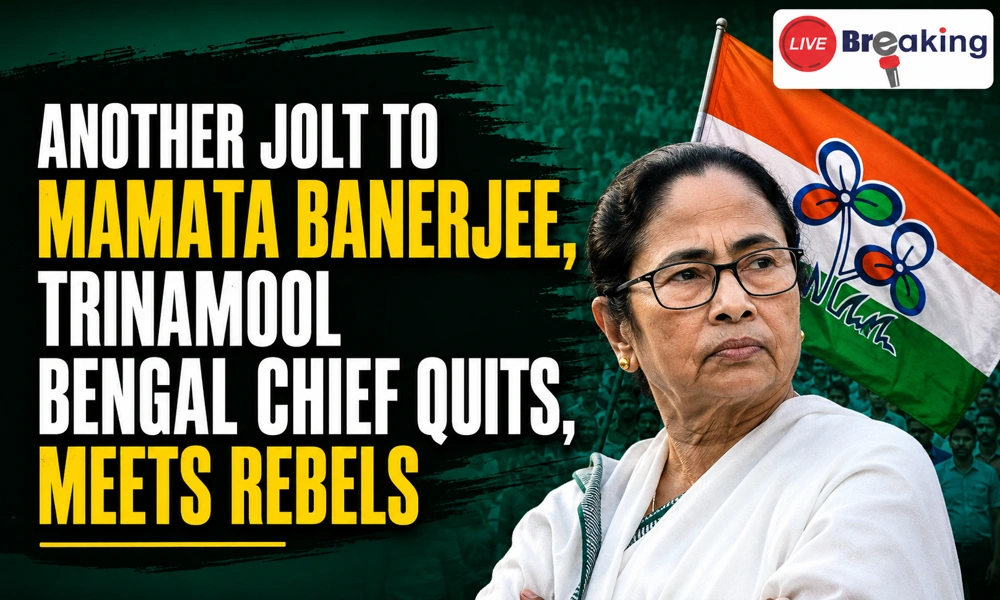
Another Jolt To Mamata Banerjee: Trinamool Bengal Chief Chandrima Bhattacharya Quits All Party Posts Amid Internal Crisis
The political crisis within the Trinamool Congress (TMC) has deepened further after senior leader Chandrima Bhattacharya resigned from all party positions, delivering another major setback to party chief Mamata Banerjee. The resignation comes at a time when the party is already battling an unprecedented internal rebellion led by dissident leaders challenging the current leadership.
Bhattacharya, who had recently been appointed as the West Bengal state president following the party’s disappointing Assembly election performance, announced that she was stepping down from every organizational responsibility. She also withdrew herself as the authorised signatory for party accounts and relinquished her role as the party’s representative before the Election Commission.
Despite her resignation, Bhattacharya refrained from making any criticism of Mamata Banerjee, instead expressing gratitude for the opportunities she received within the party over the years.
Her exit comes during one of the most turbulent phases in the history of the Trinamool Congress.
Why Chandrima Bhattacharya’s Resignation Is Significant
Chandrima Bhattacharya has long been regarded as one of Mamata Banerjee’s most trusted political associates. Over the years, she handled several important responsibilities in the West Bengal government and played a crucial organizational role inside the Trinamool Congress.
Following the party’s electoral setback, Mamata Banerjee dissolved several organizational committees and initiated a restructuring exercise. As part of that overhaul, Bhattacharya replaced veteran leader Subrata Bakshi as the Bengal state president.
However, her tenure lasted only a short period before she decided to resign.
Her departure carries symbolic importance because it signals that dissatisfaction within the party is extending beyond rebel legislators to senior organizational leaders as well.
The Growing Internal Crisis Within Trinamool Congress
The resignation comes against the backdrop of a widening internal conflict inside the Trinamool Congress.
A rebel faction led by Ritabrata Banerjee has openly challenged the existing leadership, claiming support from a significant section of party members. The dissident group has demanded organizational reforms and has even approached the Election Commission regarding claims over the party’s official symbol and finances.
The confrontation has intensified over recent days, with reports of the rebel faction taking control of parts of the party’s organizational headquarters and escalating the political battle beyond internal meetings.
Read More: How Sister’s Suspicion Helped Unravel Ketan Agarwal Murder Plot By Fiancee
The developments indicate that the party’s internal differences have now evolved into a full-fledged leadership struggle.
Bhattacharya Maintains Respect for Mamata Banerjee
Interestingly, Chandrima Bhattacharya avoided launching any direct attack against Mamata Banerjee while announcing her resignation.
Political observers note that although she stepped down from every official position, her public statements remained respectful toward the party supremo.
This suggests that her resignation may have been driven by organizational circumstances rather than a personal fallout with Mamata Banerjee.
Nevertheless, her exit is likely to add further pressure on the Trinamool leadership, which is already attempting to manage multiple political and organizational challenges.
Political Impact on West Bengal
The resignation is expected to have important political consequences in West Bengal.
Read More: Videos Show Panic, Damage In Venezuela After 2 Earthquakes 39 Seconds Apart
Several analysts believe that:
- The Trinamool Congress may witness further resignations if the internal conflict remains unresolved.
- Opposition parties could attempt to capitalize on the visible divisions.
- Organizational rebuilding may become increasingly difficult before future elections.
- The leadership may need to quickly appoint a new state president capable of restoring unity.
Political stability within the party will largely depend on whether the leadership can negotiate with dissatisfied members or whether the rebellion continues to expand.
Timeline of Recent Developments
| Date | Development |
|---|---|
| After Assembly election defeat | TMC begins organizational restructuring |
| June 2026 | Mamata Banerjee dissolves several party committees |
| Chandrima Bhattacharya appointed | Replaces Subrata Bakshi as Bengal president |
| Recent weeks | Rebel faction intensifies campaign against leadership |
| July 2026 | Chandrima Bhattacharya resigns from all party posts |
What Happens Next?
Several developments are now expected over the coming weeks.
The Trinamool Congress leadership will likely focus on:
- Selecting a new West Bengal state president.
- Addressing demands raised by the rebel faction.
- Protecting organizational unity.
- Responding to legal and Election Commission-related challenges regarding party control.
- Preparing a political strategy to regain public confidence.
Meanwhile, political observers will closely watch whether more senior leaders choose to resign or publicly support either side in the ongoing dispute.
Read More: WhatsApp Username Feature: What It Is, How It Works, And Why It Matters
The coming weeks could prove decisive in determining the future direction of the Trinamool Congress.
Conclusion
Chandrima Bhattacharya’s resignation represents another serious challenge for Mamata Banerjee and the Trinamool Congress. At a time when the party is already facing internal rebellion and organizational uncertainty, losing a senior and trusted leader further complicates efforts to restore stability.
Although Bhattacharya has chosen not to criticize Mamata Banerjee publicly, her decision to resign from every party position sends a strong political message about the seriousness of the ongoing crisis.
Whether the Trinamool Congress can overcome these internal divisions or faces further fragmentation will become clearer in the days ahead. For now, the resignation marks another significant chapter in West Bengal’s rapidly evolving political landscape.
Frequently Asked Questions (FAQs)
Q1. Why did Chandrima Bhattacharya resign from the Trinamool Congress?
She resigned from all party positions, including her role as the Bengal state president. While she did not publicly criticize the leadership, the resignation comes amid ongoing organizational turmoil within the party.
Q2. Who is Chandrima Bhattacharya?
Chandrima Bhattacharya is a senior Trinamool Congress leader and was recently appointed as the party’s West Bengal state president following the Assembly election setback.
Read More: Ram Mandir Donation Theft: First Picture Of Accused Inside Counting Centre
Q3. What is the current crisis within the Trinamool Congress?
The party is facing an internal rebellion led by a dissident faction challenging the existing leadership and staking claims over organizational control and party assets.
Q4. Did Chandrima Bhattacharya criticize Mamata Banerjee?
No. While resigning, she maintained respect for Mamata Banerjee and avoided making any direct criticism.
Q5. What could happen next in the Trinamool Congress?
The party is expected to appoint a new state president, address internal disputes, and attempt to restore organizational unity while responding to challenges from the rebel faction.