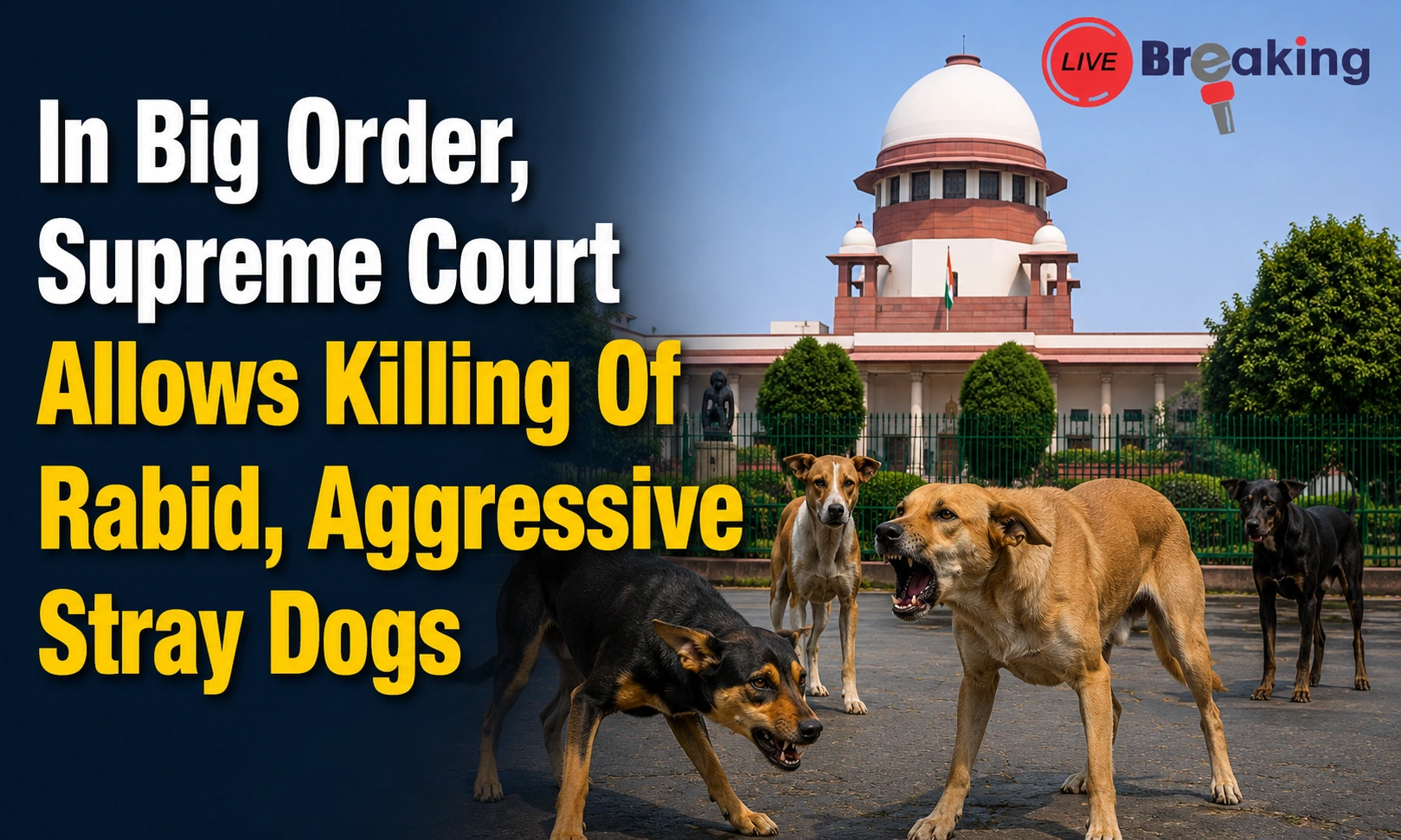
Supreme Court Allows Euthanasia of Rabid, Aggressive Stray Dogs: What the Landmark Order Means for India
In a major and highly debated ruling, the Supreme Court of India has allowed authorities to euthanise rabid and aggressive stray dogs as part of a broader effort to tackle rising dog attacks and rabies-related concerns across the country. The order comes amid growing public anxiety over increasing incidents of stray dog bites, especially involving children and elderly citizens.
The verdict was delivered while hearing petitions related to the management and relocation of stray dogs. The top court clarified that while healthy stray dogs may continue to be sterilised, vaccinated, and released, dogs suffering from rabies or displaying dangerous aggressive behaviour can be put down under legal and veterinary supervision.
The decision has sparked intense reactions from civic authorities, animal rights groups, legal experts, and residents affected by stray dog attacks.
Why Did The Supreme Court Pass This Order?
The court’s decision comes against the backdrop of increasing dog bite cases across India. In recent years, several tragic incidents involving stray dog attacks have drawn nationwide attention.
According to earlier observations by the court, India witnessed lakhs of dog bite cases annually, along with suspected rabies deaths. The judiciary noted that public safety cannot be ignored while framing animal welfare policies.
The latest ruling specifically permits euthanasia in cases where dogs are:
- Confirmed rabid
- Suspected to be carrying rabies
- Extremely aggressive and dangerous to public safety
The bench observed that authorities must strike a balance between compassion for animals and the right of citizens to live safely without fear of attacks.
What Exactly Did The Supreme Court Say?
The court stated that aggressive or rabid stray dogs cannot simply be released back into public spaces after sterilisation. Instead, authorities are empowered to isolate or euthanise such animals according to veterinary norms and public safety requirements.
However, the ruling also maintained that healthy stray dogs should continue to undergo:
- Sterilisation
- Vaccination
- Deworming
- Medical care
After treatment, non-aggressive dogs may still be released into their original areas as per Animal Birth Control (ABC) Rules.
The court further stressed that civic authorities and municipal bodies must create proper shelters, feeding zones, and monitoring systems.
Background Of The Stray Dog Debate In India
India has long struggled with the issue of stray dog management. Animal welfare activists argue that sterilisation and vaccination are the only humane and scientifically effective solutions. On the other hand, residents in several cities have complained about attacks, noise, and hygiene concerns linked to growing stray dog populations.
Read More: VD Satheesan: The Man Who Saved Congress – And Yet Almost Got Ignored For It
The debate intensified after multiple cases involving severe injuries and deaths caused by stray dog attacks surfaced in different states. One such shocking case involved a 9-year-old girl in Rajasthan who was mauled to death by stray dogs earlier this year.
Earlier in 2025, the Supreme Court had ordered stray dogs in Delhi-NCR to be shifted to shelters. Later, the court modified the order, allowing sterilised and vaccinated dogs to return to the streets, except those with rabies or violent behaviour.
The latest verdict now provides stronger legal backing for euthanasia in extreme cases.
Animal Rights Groups Raise Concerns
Several animal welfare organisations have reacted cautiously to the order. Activists fear that vague definitions of “aggressive behaviour” could lead to misuse by local authorities.
Former Union Minister and animal rights advocate Maneka Gandhi had earlier questioned how authorities would determine whether a dog is genuinely aggressive.
Read More: Oil Shock Coming? Why Petrol And Diesel Prices In India May Rise Soon Amid Global Crude Crisis
Many activists insist that:
- Human cruelty often provokes aggression in street dogs
- Proper vaccination and sterilisation programmes remain underfunded
- Municipal authorities frequently fail to implement existing ABC rules properly
Animal welfare groups are expected to closely monitor how the ruling is implemented on the ground.
Public Safety vs Animal Welfare: The Bigger Debate
The Supreme Court’s order once again highlights the complex balance between animal rights and human safety.
Supporters of the ruling argue that:
- Rabid dogs pose a deadly public health threat
- Children and elderly citizens are especially vulnerable
- Authorities need legal clarity to act quickly in dangerous situations
Critics, however, believe:
- Mass misuse of euthanasia powers could occur
- Lack of scientific assessment may result in wrongful killing of animals
- Long-term solutions require better waste management and sterilisation drives
Experts say the real challenge will be implementation. Without strong veterinary oversight and accountability, the order may trigger fresh legal and ethical disputes.
How Will The Order Impact Cities And Municipal Bodies?
The ruling places greater responsibility on municipal corporations and local administrations. Civic authorities are now expected to:
| Key Area | Expected Action |
|---|---|
| Rabid Dogs | Immediate isolation and euthanasia if necessary |
| Aggressive Dogs | Medical evaluation and controlled action |
| Healthy Strays | Vaccination and sterilisation |
| Public Feeding | Regulated feeding zones |
| Shelters | Expansion of dog shelters and monitoring systems |
Municipal bodies may also face pressure to improve:
- Animal healthcare infrastructure
- Rabies testing facilities
- Complaint response systems
- Public awareness campaigns
The court has repeatedly emphasised that merely relocating dogs without proper systems is not a sustainable solution.
What Happens Next?
Legal experts believe the ruling could influence stray animal policies across India. States and municipal corporations may now revise local guidelines regarding:
- Rabies management
- Animal birth control programmes
- Public feeding regulations
- Shelter operations
At the same time, animal welfare groups may seek clearer legal definitions for “aggressive behaviour” to prevent misuse.
Read More: Major Policy Shift In West Bengal, No More Welfare Funds For Imams, Temple Priests
The debate is far from over, but the verdict marks one of the strongest judicial interventions yet in India’s ongoing stray dog crisis.
FAQ
Q1. What did the Supreme Court allow in its latest stray dog order?
The Supreme Court allowed authorities to euthanise rabid and aggressive stray dogs in the interest of public safety.
Q2. Will all stray dogs be killed after this order?
No. Healthy stray dogs are still expected to be sterilised, vaccinated, and released under existing rules.
Q3. Why is the order controversial?
Animal rights activists fear misuse of the term “aggressive” and possible wrongful killing of stray dogs.
Q4. What happens to rabid dogs under the ruling?
Rabid dogs can be isolated and euthanised according to veterinary and legal protocols.
Read More: Pakistan, Mediator For Iran, Deploys Thousands Of Troops, Jets In Saudi: Report
Q5. Does the order ban feeding stray dogs?
The court has earlier directed that feeding should happen only in designated zones created by civic authorities.
Conclusion
The Supreme Court’s latest ruling on rabid and aggressive stray dogs has reignited one of India’s most emotional and complex public debates. While many citizens see the order as necessary for public safety, animal welfare groups continue to warn against possible misuse and lack of implementation safeguards.
Ultimately, the success of the order will depend not only on enforcement but also on whether governments invest in humane, scientific, and sustainable stray animal management systems.