

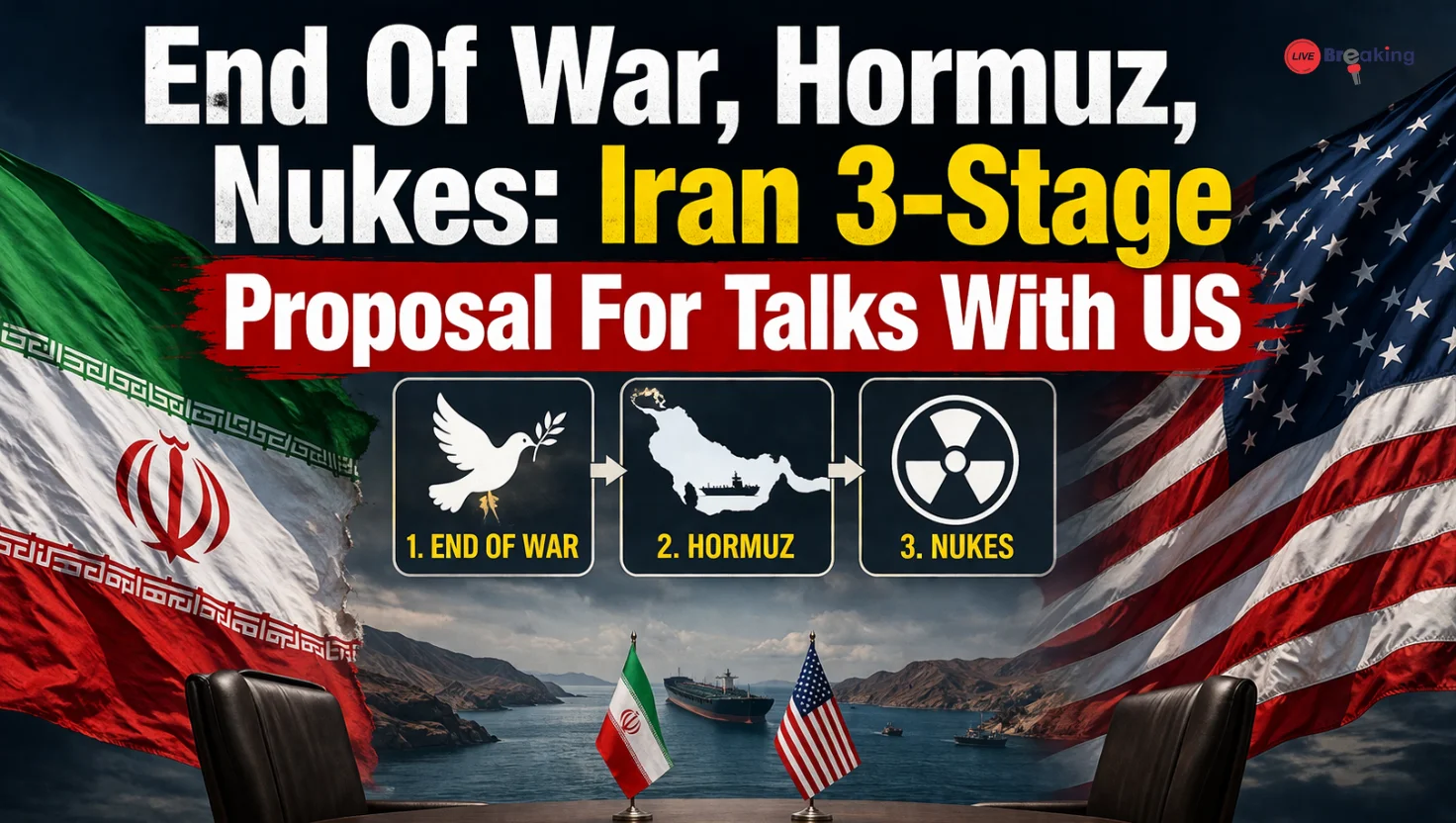
Iran 3-Stage Proposal to US Explained: War End, Hormuz & Nuclear Talks
Amid escalating tensions and a prolonged conflict between Iran and the United States, Tehran has introduced a strategic three-stage proposal aimed at de-escalating the situation and reopening critical global trade routes. The proposal comes at a time when diplomatic negotiations have stalled, and economic as well as geopolitical pressures are intensifying worldwide.
The plan focuses on three key pillars: ending the war, addressing the Strait of Hormuz crisis, and postponing discussions on Iran’s nuclear program. This phased approach signals Iran’s attempt to separate immediate conflict resolution from more complex long-term issues.
Background – Why This Proposal Matters
The ongoing conflict has disrupted global oil supply chains, primarily due to tensions surrounding the Strait of Hormuz, one of the world’s most critical maritime chokepoints. The closure and militarization of this route have caused economic ripple effects globally.
According to recent reports, mediation efforts led by Pakistan have attempted to bridge the gap between Washington and Tehran, but disagreements—especially over nuclear issues—have repeatedly stalled progress.
Iran’s latest proposal appears to be a tactical shift aimed at breaking this deadlock.
Iran’s 3-Stage Proposal – Detailed Breakdown
Stage 1 – Complete End of War
The first and most crucial step in Iran’s proposal is a full cessation of hostilities.
- Iran demands a complete end to military actions.
- It seeks guarantees that attacks will not resume against Iran and its regional allies, including Lebanon.
- This stage is designed to build immediate trust and stabilize the region.
This phase reflects Tehran’s priority: securing peace before engaging in further negotiations.
Stage 2 – Strait of Hormuz Negotiations
Once a ceasefire is firmly established, the second stage focuses on the Strait of Hormuz.
- Discussions would center on the management and security of the waterway.
- The goal is to ensure safe navigation and restore global oil flow.
- Reopening the strait is critical for stabilizing global energy markets.
This step highlights the strategic importance of maritime trade and energy security.
Read More: “China, India Or Some Other Hell-Hole…”: Trump Reposts Anti-India Rant Over Birthright Citizenship
Stage 3 – Nuclear Talks (Deferred)
The final stage addresses the most contentious issue: Iran’s nuclear program.
- Nuclear negotiations will only begin after progress in the first two stages.
- Iran insists on delaying these talks due to deep disagreements with the US.
- This approach separates political and security issues from nuclear diplomacy.
By postponing nuclear discussions, Iran aims to avoid early breakdowns in negotiations.
Key Objectives Behind Iran’s Strategy
Iran’s phased proposal reflects several strategic goals:
- De-escalation First: Prioritize ending conflict to reduce immediate risks.
- Economic Stability: Reopen vital trade routes to ease global economic pressure.
- Negotiation Leverage: Delay nuclear talks to strengthen bargaining power.
- International Support: Present a reasonable diplomatic stance to the global community.
This layered approach indicates a calculated diplomatic maneuver rather than a simple peace offer.
Read More: Was Bengal’s 92.8% Voter Turnout Shaped By 90.8 Lakh Voter Purge?
Global Impact of the Proposal
The implications of this proposal extend far beyond the Middle East:
- Oil Markets: Reopening the Strait of Hormuz could stabilize global oil prices.
- Geopolitics: A successful agreement may reshape alliances and regional dynamics.
- Security: Reduced tensions could lower the risk of wider regional conflict.
- Diplomacy: It may set a precedent for phased conflict resolution strategies.
However, the proposal’s success depends heavily on the US response and mutual willingness to compromise.
Challenges and Roadblocks
Despite its structured approach, several challenges remain:
- US Demands: Washington insists on addressing nuclear issues early.
- Trust Deficit: Years of conflict have eroded mutual trust.
- Regional Factors: Involvement of other nations and proxy groups complicates negotiations.
- Internal Politics: Both countries face domestic pressures that may limit flexibility.
Read More: Trump Vindicated? Iran Crisis Turning US Crude Into World’s Safe Bet
These obstacles make the path to peace uncertain.
Table – Summary of Iran’s 3-Stage Proposal
| Stage | Focus Area | Key Actions | Objective |
|---|---|---|---|
| Stage 1 | War End | Ceasefire, no future attacks | Immediate peace |
| Stage 2 | Hormuz | Maritime security talks | Restore oil flow |
| Stage 3 | Nuclear | Delayed negotiations | Long-term resolution |
What Happens Next?
The proposal has been conveyed through mediators, and discussions are ongoing. While it signals a potential breakthrough, analysts remain cautious.
The United States has maintained a firm stance on preventing Iran from acquiring nuclear weapons, which could complicate acceptance of the phased approach. Meanwhile, global stakeholders are closely watching developments, given the high stakes involved.
Conclusion
Iran’s 3-stage proposal represents a significant diplomatic effort to resolve one of the most complex geopolitical conflicts in recent times. By prioritizing peace and economic stability before addressing nuclear concerns, Tehran is attempting to reshape the negotiation framework.
Read More: “Kabhi India Aa Ke Dekho”: Iran’s “Cultural Detox” Jibe At Donald Trump Over “Hell-Hole” Remark
Whether this approach succeeds will depend on mutual compromise, international mediation, and the ability of both nations to move beyond entrenched positions.
FAQs
Q1: What is Iran’s 3-stage proposal to the US?
Iran has proposed a phased plan: first ending the war, then discussing the Strait of Hormuz, and finally addressing nuclear issues.
Q2: Why is the Strait of Hormuz important?
It is a critical global oil shipping route, and disruptions can impact worldwide energy prices.
Read More: US-Iran Talks in Pakistan: Agenda, Ceasefire Stakes & Key Issues Explained
Q3: Why are nuclear talks delayed in the proposal?
Iran wants to resolve immediate conflict and economic issues before tackling complex nuclear negotiations.
Q4: Who is mediating between Iran and the US?
Pakistan is playing a key role as a mediator in ongoing discussions.
Q5: Will the US accept the proposal?
It remains uncertain, as the US insists on including nuclear issues in early negotiations.