

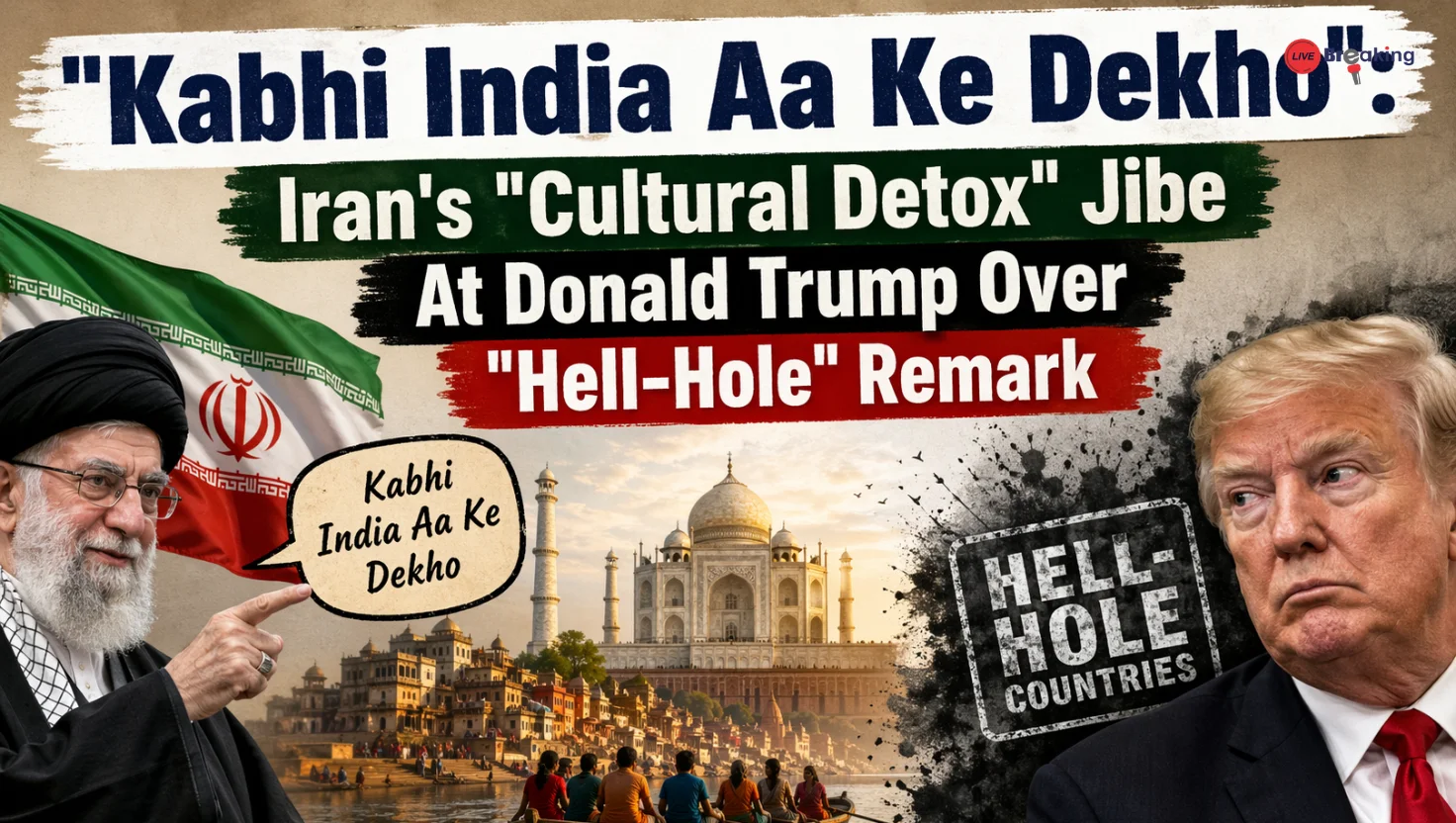
Iran’s “Kabhi India Aa Ke Dekho” Remark to Donald Trump Sparks Global Debate
The controversy began after Donald Trump reportedly referred to certain nations using harsh language, allegedly calling them “hell-holes.” While such rhetoric has surfaced in past speeches and political commentary, this particular instance reignited tensions on the global stage.
Trump’s remarks, often criticized for being blunt and polarizing, have historically triggered diplomatic reactions. This time, however, the response came with a cultural twist that caught widespread attention.
Iran’s Response – “Kabhi India Aa Ke Dekho”
Officials and commentators linked to Iran responded sharply, using the phrase “Kabhi India aa ke dekho” (translated: “Come visit India sometime”).
This remark was not just a casual statement—it carried layered meaning:
- A critique of Western perceptions of developing nations
- A cultural defense of countries often stereotyped
- A subtle diplomatic jab wrapped in humor
By referencing India, Iran highlighted the diversity, cultural richness, and rapid development of nations often misunderstood in global political narratives.
Why India Was Mentioned in the Exchange
India’s mention in this context is significant. As one of the world’s fastest-growing economies and a cultural powerhouse, India represents:
- Economic resilience
- Cultural diversity
- Democratic strength
Iran’s statement suggests that labels like “hell-hole” fail to capture the complexity of nations like India. Instead, such remarks oversimplify and reinforce outdated stereotypes.
Cultural Diplomacy vs Political Rhetoric
This incident highlights a growing divide between:
| Aspect | Political Rhetoric | Cultural Diplomacy |
|---|---|---|
| Tone | Aggressive | Nuanced |
| Purpose | Influence domestic audience | Build global understanding |
| Impact | Short-term controversy | Long-term perception shift |
| Approach | Simplification | Contextual depth |
Iran’s response leaned heavily into cultural diplomacy—using humor and relatability rather than direct confrontation.
Global Reactions and Social Media Buzz
The phrase “Kabhi India aa ke dekho” quickly went viral across platforms. Users from India and beyond responded with:
Read More: Iran Shuts Hormuz Again, Accuses US Of Violating Deal To Reopen It
- Pride in cultural identity
- Criticism of Western narratives
- Memes and humorous takes
The exchange also sparked debates about how global leaders communicate and the consequences of their words in a digitally connected world.
Media Coverage and Amplification
The media framing emphasized:
- The unusual tone of Iran’s response
- India’s symbolic role in the remark
- The broader implications for international diplomacy
India’s Position in Global Narratives
India often finds itself at the crossroads of global discussions—sometimes praised, sometimes misunderstood.
Read More: Pahalgam Attack: The Photograph That Shook India and Its Deeper Impact
This incident reinforces:
- India’s rising geopolitical importance
- Its role as a cultural reference point
- Its influence in shaping global conversations
Rather than being directly involved, India became a symbolic centerpiece in a larger debate about perception and respect.
Diplomatic Implications
While the exchange may appear humorous on the surface, it carries deeper diplomatic undertones:
- Reinforces tensions between the U.S. and Iran
- Highlights sensitivity around national identity
- Shows the power of cultural references in diplomacy
Such remarks, even indirect ones, can influence bilateral relations and global perceptions.
Read More: “China, India Or Some Other Hell-Hole…”: Trump Reposts Anti-India Rant Over Birthright Citizenship
The Power of Words in International Politics
Language plays a crucial role in diplomacy. Statements made by influential leaders can:
- Shape global narratives
- Influence public opinion
- Trigger diplomatic responses
This incident serves as a reminder that even a single phrase can spark international discourse.
Conclusion
The “Kabhi India aa ke dekho” remark is more than just a witty comeback—it represents a shift in how countries respond to criticism.
Instead of escalating tensions through direct confrontation, Iran chose a culturally grounded response that resonated globally.
Read More: Was Bengal’s 92.8% Voter Turnout Shaped By 90.8 Lakh Voter Purge?
At the same time, it highlights the importance of responsible communication in international politics, where every word carries weight.
FAQs
Q1: What does “Kabhi India aa ke dekho” mean?
It translates to “Come visit India sometime.” The phrase was used to challenge negative perceptions and highlight cultural richness.
Q2: Why did Iran mention India in its response?
India symbolizes diversity, growth, and cultural depth, making it an effective reference point against stereotypes.
Q3: What was Donald Trump’s “hell-hole” remark about?
He allegedly used the term to describe certain countries, which sparked criticism and diplomatic reactions.
Read More: Trump Vindicated? Iran Crisis Turning US Crude Into World’s Safe Bet
Q4: How did people react on social media?
The phrase went viral, generating pride, humor, and debate across platforms.
Q5: Does this incident affect international relations?
While not a major diplomatic crisis, it reflects underlying tensions and the importance of language in global politics.