

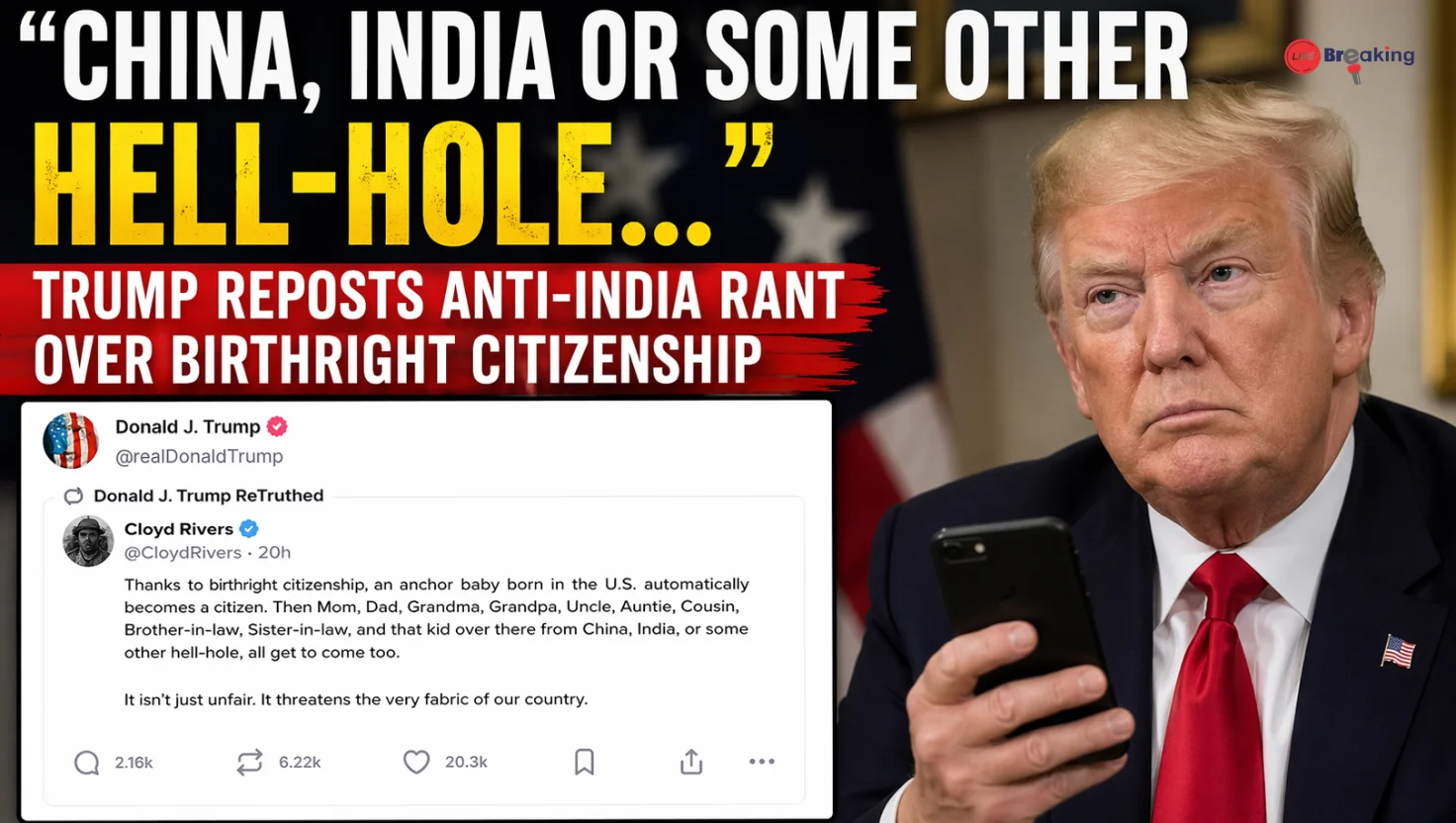
Trump Sparks Outrage After Reposting Anti-India Remark on Birthright Citizenship Debate
Former U.S. President Donald Trump has once again ignited international controversy after reposting a social media message that described countries like India and China as “hell-holes.” The repost came in the context of an ongoing debate around birthright citizenship in the United States.
The original message, which Trump amplified, criticized immigration policies and suggested that individuals from countries such as India and China were taking advantage of U.S. birthright citizenship laws. The phrasing quickly drew sharp criticism for being derogatory and offensive, particularly given the global influence of both nations.
The incident has triggered a fresh wave of backlash across political circles, international communities, and social media platforms.
Understanding the Birthright Citizenship Debate
Birthright citizenship refers to the legal right of anyone born in a country to automatically receive citizenship of that country. In the United States, this principle is rooted in the 14th Amendment of the Constitution.
Trump has long opposed this policy, arguing that it is being misused by immigrants. His critics, however, argue that the policy is fundamental to American values and equality.
The recent controversy adds fuel to an already heated debate, bringing global attention to how immigration rhetoric can influence diplomatic relations.
Why India Was Specifically Mentioned
India has become one of the largest contributors to immigration into the United States, especially in sectors like technology, healthcare, and education. Many Indian professionals enter the U.S. on H-1B visas and eventually seek permanent residency.
Read More: No Supreme Court Relief for Bengal Voters Deleted in SIR Process – Key Updates & Impact
The inclusion of India in the controversial remark has raised concerns among Indian communities worldwide. Critics argue that such statements ignore the positive contributions made by Indian immigrants to the U.S. economy and society.
Global Reaction and Diplomatic Sensitivity
The reaction to Trump’s repost has been swift and widespread. Political leaders, commentators, and citizens across multiple countries have condemned the language used.
India, as a key strategic partner of the United States, shares strong ties in trade, defense, and technology. Statements perceived as offensive risk straining diplomatic goodwill.
Similarly, China, despite its complex relationship with the U.S., remains a major global power whose mention in such contexts can escalate geopolitical tensions.
Media Coverage and Public Response
The story gained traction after being reported by NDTV and other international outlets. Social media platforms were flooded with reactions ranging from outrage to political defense.
Read More: 1 War, 3 Bills: UAE’s Bailout, Iran’s $270 Billion, Trump’s Off-Ramp Search
Many users highlighted the dangers of normalizing such language, especially from influential public figures. Others viewed the repost as consistent with Trump’s previous stance on immigration and foreign policy.
Impact on U.S. Politics and Elections
As Trump continues to remain a central figure in U.S. politics, incidents like these could have significant implications for upcoming elections.
While his supporters may see this as a firm stance on immigration, critics argue it alienates key voter groups, including immigrants and minorities.
The controversy also raises broader questions about political discourse, freedom of speech, and the responsibilities of public figures.
Read More: Iran Shuts Hormuz Again, Accuses US Of Violating Deal To Reopen It
Key Facts Summary
| Topic | Details |
|---|---|
| Person Involved | Donald Trump |
| Issue | Reposted anti-India and China comment |
| Context | Birthright citizenship debate |
| Countries Mentioned | India, China |
| Public Reaction | Widespread criticism |
| Media Coverage | Global, including NDTV |
| Political Impact | Potential election implications |
Broader Implications of the Controversy
This incident goes beyond a single repost—it highlights how language used by influential figures can shape global perceptions and relationships.
In an increasingly interconnected world, statements made in one country can quickly resonate worldwide. For countries like India, which have large diaspora populations, such rhetoric can affect not just diplomacy but also the experiences of individuals abroad.
It also underscores the importance of responsible communication in politics, especially when addressing sensitive issues like immigration and nationality.
Read More: Pahalgam Attack: The Photograph That Shook India and Its Deeper Impact
FAQs
Q1: What did Donald Trump say about India?
Trump reposted a message that referred to India and China as “hell-holes” while discussing birthright citizenship, sparking backlash globally.
Q2: What is birthright citizenship?
Birthright citizenship is the right to obtain citizenship by being born in a country, regardless of parents’ nationality.
Q3: Why is this statement controversial?
The language used is considered offensive and derogatory toward entire nations, raising diplomatic and ethical concerns.
Q4: How did people react to Trump’s repost?
Reactions ranged from strong criticism by political leaders and citizens to support from some of Trump’s followers.
Read More: Trump Vindicated? Iran Crisis Turning US Crude Into World’s Safe Bet
Q5: Could this impact U.S.-India relations?
While unlikely to cause major policy changes, such remarks can strain public sentiment and diplomatic tone.
Conclusion
The controversy surrounding Donald Trump’s repost serves as a reminder of the power of words in global politics. At a time when international cooperation is crucial, statements that appear dismissive or offensive toward entire nations can have far-reaching consequences.
As debates around immigration and citizenship continue, the focus remains not just on policy but also on how those discussions are framed. Respectful dialogue, especially from influential leaders, plays a critical role in maintaining both domestic harmony and international relations.