

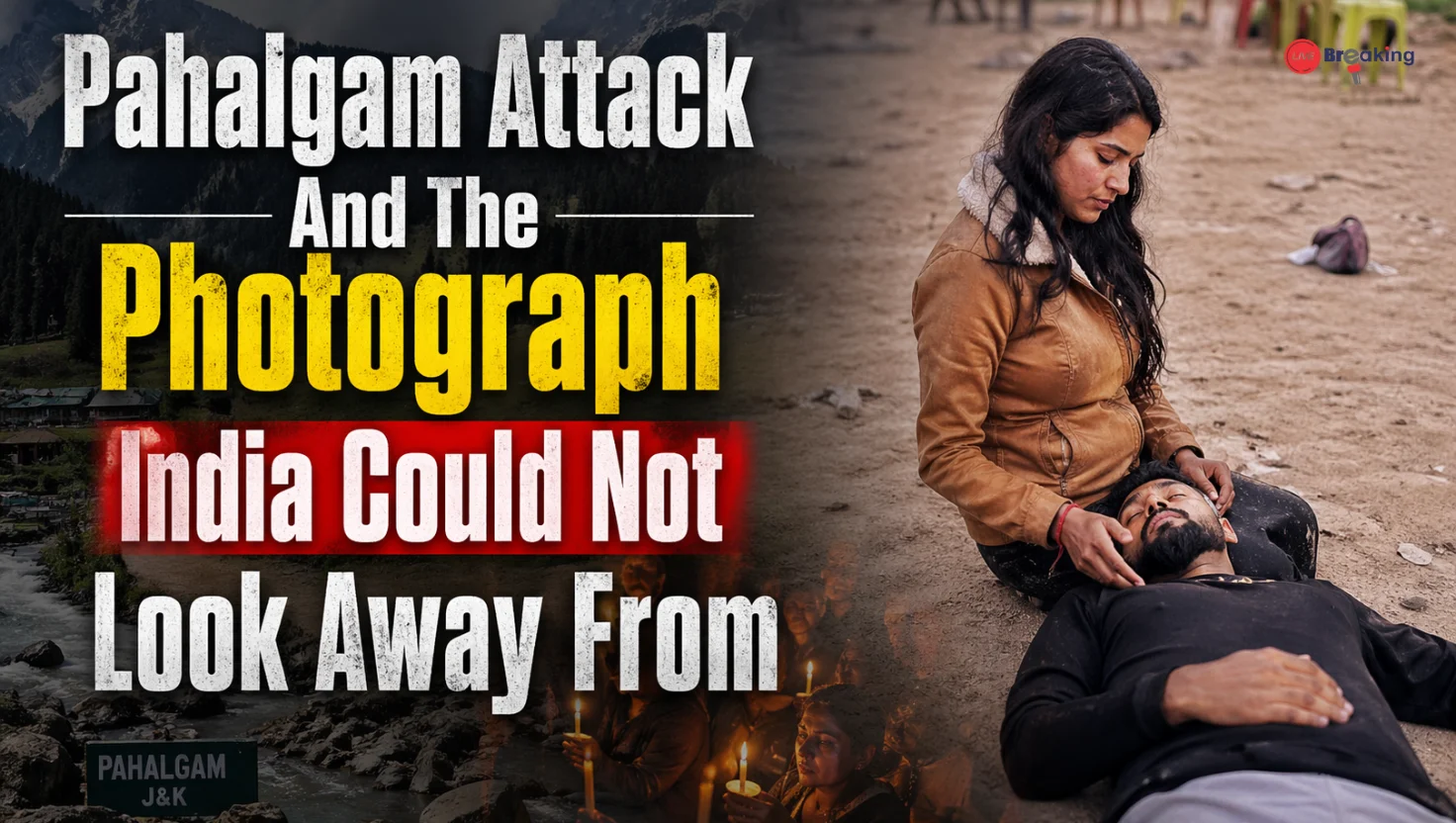
Pahalgam Attack And The Photograph India Could Not Look Away From
Pahalgam Attack: The serene valleys of Pahalgam—often associated with tourism, tranquility, and spiritual journeys—were recently shaken by a tragic terror attack that has left the entire country in shock. While such incidents unfortunately are not new in conflict-sensitive regions like Jammu and Kashmir, what made this incident stand apart was a single photograph—an image so powerful that it gripped the collective conscience of India.
What Happened in Pahalgam?
The attack took place in the Baisaran area, a scenic meadow often referred to as “Mini Switzerland.” Known for its breathtaking views and tourist footfall, the region became the site of chaos when terrorists targeted civilians.
Initial reports suggest that the attackers struck without warning, leaving behind casualties and panic among visitors and locals alike. Security forces were immediately deployed, and operations were launched to neutralize the threat.
While investigations are ongoing, the attack has once again raised serious concerns about security preparedness in high-tourism zones within sensitive regions.
The Photograph That Stopped a Nation
At the heart of this tragedy lies an image—captured in a fleeting yet devastating moment—that has since gone viral. The photograph reportedly features a woman, later identified in media reports as Himanshi Narwal, in a state of visible distress, embodying shock and grief in its rawest form.
This was not just another news image. It became:
- A symbol of civilian vulnerability
- A reminder of the unpredictability of terror
- A reflection of emotional trauma beyond statistics
Unlike numbers or headlines, the photograph humanized the tragedy. It forced people to confront the reality of what such attacks do—not just physically, but emotionally.
Why This Image Resonated So Deeply
1. Human Emotion Over Statistics
In an age where news is often reduced to numbers, this image brought back the human element. It wasn’t about how many were injured or killed—it was about how it felt.
2. Relatability
The subject in the image could have been anyone—a tourist, a friend, a family member. This relatability made the impact even stronger.
3. Visual Storytelling Power
Photographs have historically shaped public perception—from war zones to humanitarian crises. This image joins that legacy, becoming a defining visual of the incident.
Read More: Trump May Attend Iran-US Talks in Pakistan, Peace Deal Updates 2026
Security Concerns in Tourist Zones
The Pahalgam attack raises critical questions:
| Concern Area | Key Issue | Impact |
|---|---|---|
| Tourist Safety | Lack of visible security presence | Reduced tourist confidence |
| Intelligence | Possible gaps in threat detection | Increased vulnerability |
| Emergency Response | Reaction time and coordination | Casualty management challenges |
| Infrastructure | Limited evacuation routes | Panic escalation |
Tourism is a major economic driver for Jammu and Kashmir. Incidents like these risk not only lives but also long-term economic stability.
Government and Public Response
Authorities have strongly condemned the attack and assured strict action against those responsible. Security has been intensified across the region, especially in tourist hotspots.
Public reaction has been equally strong:
- Social media flooded with tributes and outrage
- Calls for stronger anti-terror measures
- Solidarity messages for victims and families
The photograph, in particular, became a rallying point—shared widely as a reminder of what is at stake.
The Psychological Impact of Such Incidents
Beyond physical damage, terror attacks leave deep psychological scars:
Read More: No Supreme Court Relief for Bengal Voters Deleted in SIR Process – Key Updates & Impact
For Victims and Witnesses
- Post-traumatic stress
- Anxiety and fear
- Long-term emotional distress
For the Public
- Increased fear of travel
- Distrust in safety systems
- Emotional fatigue from repeated exposure to violence
The viral photograph intensified these emotions, making the trauma more immediate and personal.
Media Ethics and Responsibility
While the image played a powerful role in raising awareness, it also brings up an important debate:
- Should such distressing images be widely circulated?
- Where is the line between awareness and exploitation?
- How can media balance sensitivity with storytelling?
Read More: 1 War, 3 Bills: UAE’s Bailout, Iran’s $270 Billion, Trump’s Off-Ramp Search
Responsible reporting must ensure dignity for victims while still conveying the gravity of events.
A Broader Reflection: The Cost of Conflict
The Pahalgam attack is not an isolated incident—it is part of a larger, ongoing conflict that continues to affect lives in Jammu and Kashmir.
This tragedy highlights:
- The fragility of peace in sensitive regions
- The urgent need for sustainable security strategies
- The importance of empathy in public discourse
The photograph, in this context, becomes more than just an image—it is a call to reflect, act, and prevent.
Conclusion: An Image That Will Not Fade
Some images pass through the news cycle and are forgotten. Others stay—etched into memory as symbols of a moment in history.
The photograph from the Pahalgam attack belongs to the latter.
It reminds us that behind every headline is a human story. Behind every statistic is a life changed forever. And behind every act of violence is a ripple effect that touches an entire nation.
Read More: Iran Shuts Hormuz Again, Accuses US Of Violating Deal To Reopen It
India may eventually move forward from this tragedy—but this image will remain a powerful reminder of what must never be ignored.
FAQs
Q1: Where did the Pahalgam attack occur?
The attack took place in Baisaran, a popular tourist meadow near Pahalgam in Jammu and Kashmir.
Q2: Why did the photograph gain so much attention?
The image captured raw human emotion and became a symbol of the tragedy, making the impact more personal and relatable.
Q3: Is Pahalgam safe for tourists now?
Security has been increased following the attack, but travelers should always check official advisories before planning visits.
Read More: Behind Trump’s “Unstable, Insulting” Strategy To End The Iran War
Q4: What actions have authorities taken?
Security forces have launched operations to track down attackers, and safety measures have been intensified in the region.
Q5: How do such incidents affect tourism?
They significantly impact tourist confidence, leading to reduced footfall and economic challenges for local communities.