

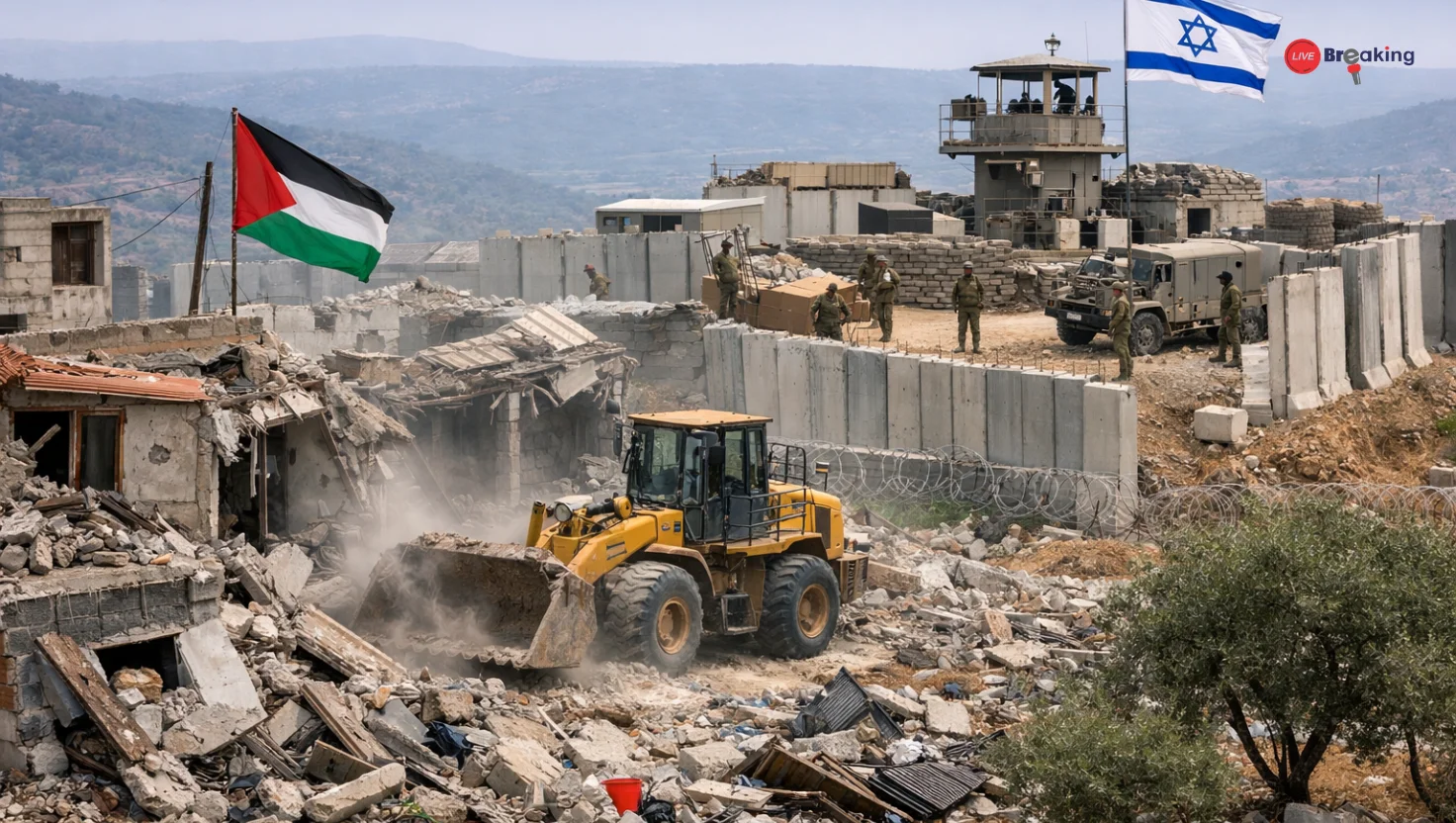
Israel Gaza Playbook in Lebanon: Village Demolitions, Buffer Zones & War Strategy Explained
The ongoing conflict between Israel and Hezbollah in Lebanon has taken a dramatic and controversial turn. Reports suggest that Israel is replicating tactics previously used in Gaza—often referred to as the “Gaza playbook”—in southern Lebanon. This strategy involves large-scale destruction of villages, forced displacement, and the creation of buffer zones aimed at neutralizing militant threats.
Recent developments, international media, indicate that entire Lebanese villages have been demolished, raising global concern over humanitarian consequences and legal implications.
Israel’s ‘Gaza Playbook’ in Lebanon: Bulldozed Villages and Expanding Buffer Zones
What Is the ‘Gaza Playbook’?
The term “Gaza playbook” refers to a set of military strategies Israel has used in Gaza, now reportedly being replicated in Lebanon. These tactics include:
- Large-scale demolition of civilian infrastructure
- Targeting suspected militant strongholds embedded in residential areas
- Forced evacuations and displacement of civilians
- Establishing long-term military buffer zones
In Gaza, these strategies were aimed at weakening Hamas. In Lebanon, the same approach is being used against Hezbollah, an Iran-backed militant group.
Villages Reduced to Rubble
Recent reports indicate that entire villages in southern Lebanon have been systematically destroyed.
- Israeli forces reportedly used remote-controlled explosives to demolish homes.
- Villages like Taybeh and Naqoura were flattened in large-scale detonations.
- Thousands of civilians have been displaced, losing homes, livelihoods, and infrastructure.
Residents describe scenes of complete devastation, with some stating that “everything is gone.”
The Buffer Zone Strategy
A key element of this strategy is the creation of a “security zone” extending into southern Lebanon.
Why is Israel doing this?
- To push Hezbollah forces further away from its northern border
- To prevent cross-border rocket attacks
- To establish long-term strategic depth
Reports suggest Israel aims to extend this zone up to the Litani River, significantly altering the geography of control.
This mirrors similar buffer zones previously established in Gaza and Syria.
Humanitarian Crisis and Civilian Impact
The consequences for civilians have been severe:
- Over 2,000 deaths reported in Lebanon amid the conflict
- Children and non-combatants among the casualties
- Mass displacement affecting hundreds of thousands
Entire communities have been uprooted, with limited access to food, shelter, and medical care.
Read more: US Pushed Pakistan to Broker Iran Ceasefire: Inside the Diplomatic Strategy
Human rights organizations have raised alarms, arguing that such widespread destruction may violate international law if not strictly justified by military necessity.
Global Reactions and Legal Concerns
The international community is deeply divided:
Critics argue:
- The destruction may amount to collective punishment
- Civilian infrastructure is being disproportionately targeted
- Possible violations of the laws of war
Israel’s stance:
- Claims operations target Hezbollah infrastructure hidden within civilian areas
- Argues actions are necessary for national security
This debate echoes similar controversies from the Gaza conflict, where urban warfare blurred the line between military and civilian targets.
Read More: Noida Workers Protest: 300 Arrested, Wage Hike Announced, Pakistan Link Under Probe
Diplomatic Efforts Amid Escalation
Despite the escalating violence, diplomatic efforts are underway:
- Historic talks between Israel and Lebanon have resumed after decades
- The United States is mediating efforts to reduce Hezbollah’s influence
- However, Hezbollah has rejected these negotiations
The situation remains fragile, with ongoing airstrikes and retaliatory attacks threatening any potential ceasefire.
Key Facts at a Glance
| Category | Details |
|---|---|
| Strategy | Gaza-style military tactics |
| Target | Hezbollah infrastructure |
| Key Action | Village demolitions |
| Buffer Zone | Up to Litani River |
| Civilian Impact | Mass displacement, casualties |
| Global Response | Divided opinions, legal concerns |
| Diplomatic Status | Ongoing but fragile |
Frequently Asked Questions (FAQs)
What is the ‘Gaza playbook’?
It refers to Israeli military tactics used in Gaza—such as large-scale destruction, displacement, and buffer zones—now reportedly applied in Lebanon.
Read More: MP Woman Kills Husband After Affair Row: ‘Tum Kaale Ho’ Remark Sparks Shocking Crime
Why is Israel destroying villages in Lebanon?
Israel claims the villages contain Hezbollah infrastructure and that demolitions are necessary for national security.
What is a buffer zone?
A buffer zone is a controlled area created to separate hostile forces and prevent attacks, often involving military occupation.
How many people have been affected?
Thousands have been killed or injured, and hundreds of thousands displaced due to the ongoing conflict.
Is this legal under international law?
It depends on whether the destruction is deemed militarily necessary. Critics argue some actions may violate humanitarian laws.
Read More: No Supreme Court Relief for Bengal Voters Deleted in SIR Process – Key Updates & Impact
Conclusion
The extension of Israel’s “Gaza playbook” into Lebanon marks a significant shift in regional military strategy. While Israel frames these actions as necessary for security, the humanitarian cost is immense and continues to grow.
As villages are reduced to rubble and buffer zones expand, the conflict risks becoming more entrenched—raising urgent questions about legality, morality, and the prospects for peace in the region.