

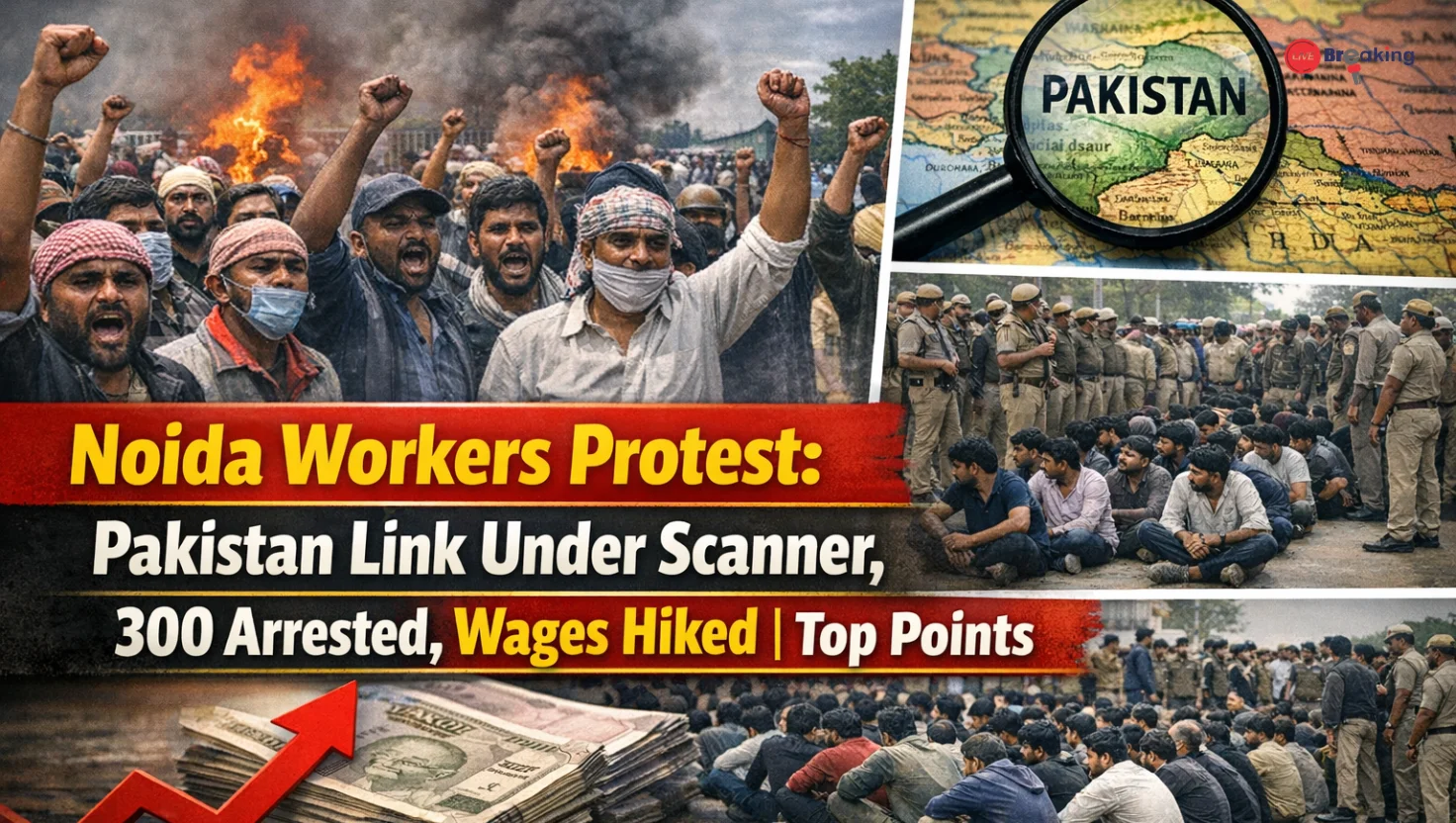
Noida Workers Protest: Pakistan Link Under Scanner, 300 Arrested, Wages Hiked | Top Points
Noida Workers Protest: A major labor unrest in Uttar Pradesh’s industrial hub Noida has grabbed national attention after thousands of workers took to the streets demanding better wages and working conditions. The protest turned intense, leading to the arrest of over 300 individuals. Amid the chaos, authorities have also initiated an investigation into a possible link to Pakistan, adding a geopolitical angle to the issue.
The situation has since seen partial resolution with the announcement of wage hikes, but several questions remain unanswered.
What Triggered the Noida Workers Protest?
The protest was primarily fueled by dissatisfaction among industrial workers regarding:
- Low wages amid rising inflation
- Delayed salary payments
- Poor working conditions in factories
- Lack of job security
Workers from multiple factories across Noida’s industrial sectors gathered in large numbers, demanding immediate reforms.
Key Causes at a Glance
| Issue | Description |
|---|---|
| Low Wages | Workers claimed wages were insufficient for rising living costs |
| Payment Delays | Several employees reported delayed salaries |
| Unsafe Conditions | Complaints about lack of safety measures |
| Job Insecurity | Fear of sudden layoffs without compensation |
Protest Escalation and Police Action
What began as a peaceful demonstration soon escalated into a tense situation. Protesters reportedly blocked roads, disrupted industrial operations, and clashed with law enforcement.
Authorities responded by deploying a heavy police force across sensitive areas in Noida.
Key Developments:
- Over 300 workers were arrested during the protest
- Section 144 was imposed in certain areas
- Police used mild force to disperse crowds
- Several protest leaders were detained
Officials stated that the arrests were necessary to maintain law and order, while workers alleged excessive use of force.
Wage Hike Announcement: A Partial Victory
Following negotiations between worker representatives, factory management, and local administration, a wage hike was announced.
Read more: US Pushed Pakistan to Broker Iran Ceasefire: Inside the Diplomatic Strategy
Highlights of the Wage Revision:
| Category | Previous Wage | Revised Wage | Increase |
|---|---|---|---|
| Entry-Level Workers | ₹10,000 | ₹12,500 | ₹2,500 |
| Skilled Workers | ₹14,000 | ₹17,000 | ₹3,000 |
| Contract Workers | ₹9,000 | ₹11,000 | ₹2,000 |
The move has been welcomed by some workers, but others argue that it still falls short of their demands.
Pakistan Link Under Investigation
One of the most controversial aspects of the protest is the alleged involvement of external elements.
Authorities have indicated that:
- Certain digital communications are being examined
- Social media activity linked to the protest is under scrutiny
- Possible foreign influence, including a connection to Pakistan, is being probed
Officials have not yet confirmed any concrete evidence but stated that the investigation is ongoing.
This angle has raised concerns about national security and the potential misuse of labor movements for political or disruptive purposes.
Government and Administrative Response
The local administration and state government have taken a multi-pronged approach:
Read more: Plane and Truck Collision at LaGuardia Airport: Multiple Injuries Reported in New York
- Initiated dialogue with worker unions
- Ordered inspection of factory conditions
- Promised stricter labor law enforcement
- Set up a committee to monitor wage implementation
Officials emphasized that while workers’ rights are important, maintaining peace and order is equally critical.
Impact on Industry and Economy
Noida is a major industrial hub, housing electronics, manufacturing, and export units. The protest has had a ripple effect:
- Temporary shutdown of several factories
- Disruption in supply chains
- Financial losses for businesses
- Concerns among investors
Experts warn that prolonged unrest could impact the region’s industrial reputation.
Workers’ Perspective
Despite the arrests and partial concessions, many workers remain dissatisfied.
Read More: US Fighter Jets Hit Over Iran: 2 Pilots Rescued, 1 Missing Amid Rising Tensions
Common sentiments include:
- Wage hike is insufficient
- No long-term job security guarantees
- Fear of retaliation from employers
- Demand for union recognition
Workers have hinted at further protests if demands are not fully met.
What Happens Next?
The situation remains sensitive. Key factors to watch:
- Outcome of the Pakistan link investigation
- Implementation of wage hikes
- Possible legal proceedings against arrested workers
- Future negotiations between stakeholders
Authorities are closely monitoring the situation to prevent further escalation.
Read More: MP Woman Kills Husband After Affair Row: ‘Tum Kaale Ho’ Remark Sparks Shocking Crime
FAQs
1. Why did the Noida workers protest happen?
The protest was driven by low wages, delayed payments, poor working conditions, and lack of job security.
2. How many people were arrested during the protest?
Over 300 workers were arrested as the protest escalated and disrupted public order.
3. What is the wage hike announced?
The government announced a wage increase ranging from ₹2,000 to ₹3,000 depending on worker categories.
4. Is there really a Pakistan link to the protest?
Authorities are investigating a possible link, but no confirmed evidence has been publicly disclosed yet.
5. Has the protest ended?
While tensions have reduced after the wage hike announcement, dissatisfaction among workers persists.
Read More: No Supreme Court Relief for Bengal Voters Deleted in SIR Process – Key Updates & Impact
Conclusion
The Noida workers protest highlights deep-rooted issues within India’s industrial labor ecosystem. While the wage hike offers temporary relief, long-term solutions will require systemic reforms, better enforcement of labor laws, and continuous dialogue between workers and employers.
The added dimension of a possible Pakistan link makes the situation more complex, blending labor unrest with national security concerns. As investigations continue, all eyes remain on how authorities balance justice, security, and economic stability.