Delhi–Manchester IndiGo Flight Makes U-Turn After 7 Hours Amid Iran War, Aviation Disruption Explained
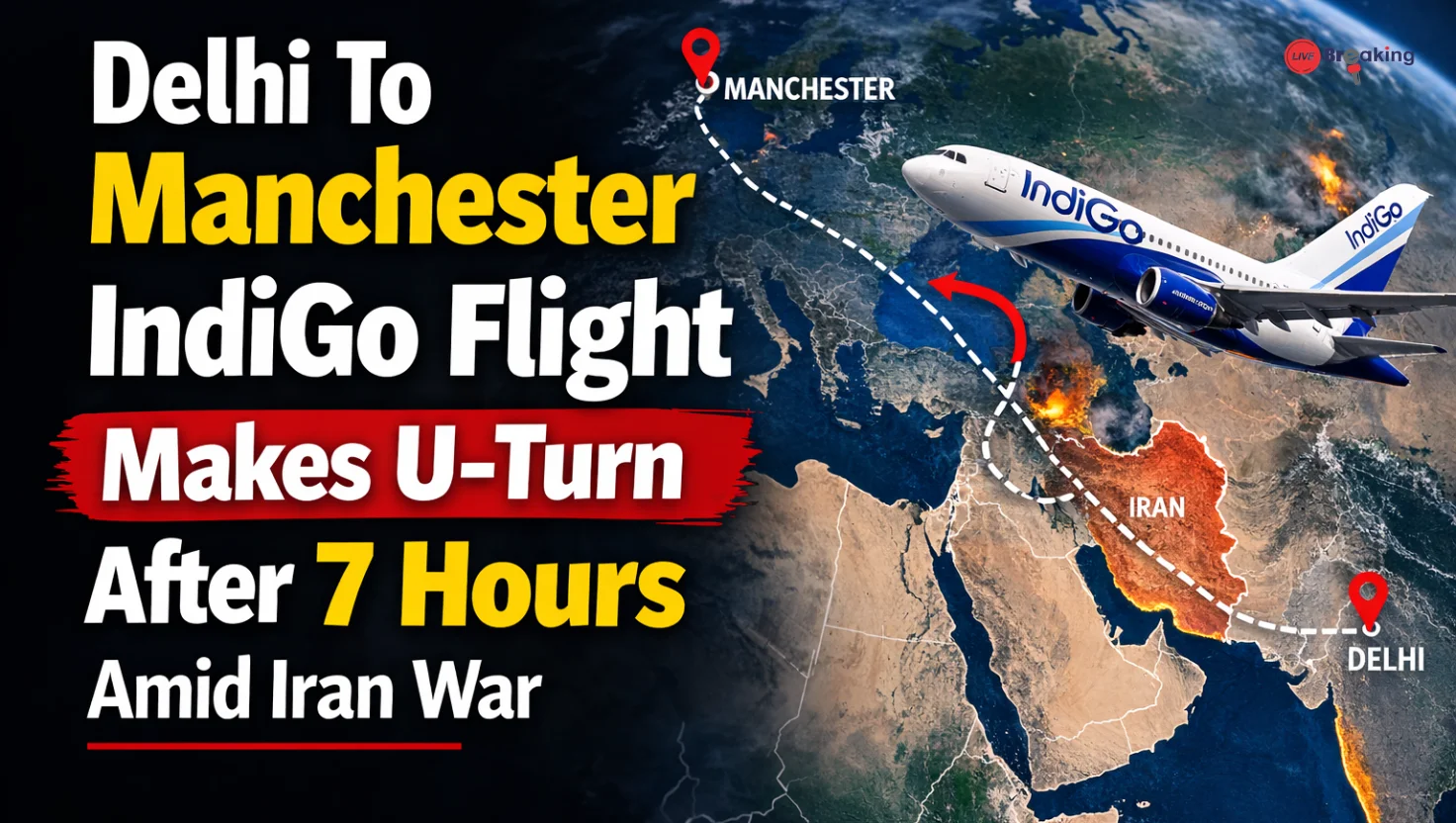
A long-haul IndiGo flight from Delhi to Manchester was forced to turn back mid-air after flying for nearly seven hours, following sudden airspace restrictions triggered by escalating tensions in the Middle East linked to the ongoing Iran conflict. The unexpected diversion has once again highlighted how geopolitical conflicts can significantly disrupt global aviation routes and passenger travel plans.
The incident occurred when flight 6E 033, which had departed from Indira Gandhi International Airport in Delhi, was en route to the United Kingdom but had to abandon its journey and return to its origin airport after authorities issued last-minute airspace restrictions across parts of West Asia.
Although the flight returned safely and no passengers were harmed, the event has sparked discussions about aviation safety, flight route planning, and the wider impact of geopolitical tensions on international travel.
What Happened to the Delhi–Manchester IndiGo Flight?
According to airline officials, the aircraft had already been airborne for several hours when the airline received urgent notifications about restricted airspace along the planned flight path.
Due to the rapidly evolving situation in the region, aviation authorities implemented sudden restrictions over certain Middle Eastern airspaces, making it unsafe or impossible for the flight to continue its journey.
Rather than attempting risky rerouting or extended detours, the airline decided to turn the aircraft back to Delhi as a precautionary safety measure.
Passengers onboard experienced a long flight but eventually landed safely back in India.
Why the Flight Had to Return
The primary reason behind the U-turn was the ongoing conflict in the Middle East involving Iran, which has caused several countries to restrict or monitor their airspace.
When geopolitical tensions escalate, governments often:
-
Close parts of their airspace
-
Issue NOTAMs (Notices to Airmen) restricting flights
-
Divert international aircraft to avoid conflict zones
These restrictions are implemented to protect civilian aviation from potential military activity or missile threats.
As a result, airlines must quickly adapt their routes or suspend operations altogether.
Impact of Iran Conflict on Global Aviation
The Iran conflict has created ripple effects across the global aviation industry.
Several international carriers have already:
-
Cancelled or rerouted flights
-
Suspended services temporarily
-
Increased flight times due to detours
Airlines operating between Europe, Asia, and the Middle East are particularly affected because many of these routes pass through the region.
| Impact Area | Details |
|---|---|
| Airspace Restrictions | Several West Asian routes restricted |
| Flight Diversions | Airlines rerouting via longer paths |
| Higher Fuel Costs | Longer routes increase operating costs |
| Passenger Delays | Schedule disruptions worldwide |
| Safety Measures | Continuous monitoring of conflict zones |
Airlines constantly monitor real-time updates from global aviation authorities to ensure passenger safety.
Read more: Trump Alienation of India Called ‘Biggest Mistake’ by Former Australia PM Tony Abbott
Why Airspace Closures Affect Long-Haul Flights
International flights rely on optimized flight corridors that reduce travel time and fuel consumption. When a conflict occurs:
-
Key corridors become inaccessible
-
Airlines must fly longer detours
-
Fuel calculations change mid-journey
-
Crew duty limits may be exceeded
If a safe alternative route cannot be found quickly, the safest decision is often to return to the departure airport, which appears to have happened in this case.
IndiGo’s Response to the Incident
Following the incident, IndiGo issued a statement confirming that the flight had returned due to last-minute airspace restrictions linked to the evolving situation in the Middle East.
The airline also warned passengers that:
-
Further diversions or delays may occur
-
Flight routes may change depending on the situation
-
Travelers should regularly check flight status updates
The airline emphasized that passenger safety remains the highest priority.
Increasing Disruptions in Global Air Travel
The Delhi-Manchester incident is not an isolated case.
Read More: After Iran Ship Sunk By US, S Jaishankar Explains “Reality Of Indian Ocean”
Recent weeks have seen several aviation disruptions across the world due to:
-
Middle East tensions
-
Airspace closures
-
Military operations
-
Security advisories
Indian airlines such as IndiGo and Air India have already adjusted schedules and added contingency plans for passengers traveling through affected regions.
These disruptions demonstrate how sensitive international aviation is to geopolitical conflicts.
Safety Protocols Airlines Follow in Such Situations
Airlines follow strict international aviation safety protocols whenever conflicts threaten flight paths.
Key safety measures include:
1. Real-Time Airspace Monitoring
Airlines track military activity and government advisories constantly.
2. Alternate Route Planning
Flight dispatch teams evaluate alternative routes if airspace becomes restricted.
3. Immediate Pilot Communication
Pilots receive instructions from airline operations and air traffic control.
4. Passenger Safety First
If safe routing cannot be ensured, aircraft return to the departure airport or divert to another safe airport.
Read more: How Mossad Spies & Hacked Traffic Cameras Led to Khamenei Assassination – Deep Intel Report
These protocols help prevent potential risks to passengers and crew.
What Passengers Should Do During Flight Disruptions
Travelers flying internationally during geopolitical tensions should follow a few important steps:
-
Check flight status before leaving for the airport
-
Enable airline SMS/email alerts
-
Keep travel insurance updated
-
Monitor government travel advisories
Passengers should also expect possible delays, rerouting, or rescheduling.
FAQs
Why did the Delhi–Manchester IndiGo flight turn back?
The flight returned because of sudden airspace restrictions linked to the Iran conflict, which made the planned route unsafe for continuation.
How long was the flight in the air before returning?
The aircraft reportedly flew for around seven hours before turning back to Delhi.
Were passengers in danger?
No. The flight returned as a precautionary safety measure, and passengers landed safely.
Are other flights affected by the Iran conflict?
Yes. Several international airlines have adjusted routes, cancelled flights, or rerouted aircraft due to airspace restrictions.
Read more: Iran Enters Survival Mode After Assassination Of Supreme Leader Khamenei
Can flights be diverted mid-air often?
Yes, but it usually happens only in cases of weather issues, technical problems, or sudden airspace closures.
Conclusion
The Delhi to Manchester IndiGo flight U-turn highlights how global aviation can be directly affected by geopolitical tensions. Even when flights depart normally, rapidly changing airspace restrictions can force airlines to make difficult decisions mid-journey.
While such incidents may cause inconvenience to passengers, they also demonstrate the aviation industry’s commitment to prioritizing safety above everything else.
As long as the conflict situation in the Middle East remains unstable, travelers may continue to see route diversions, longer flight durations, and occasional cancellations across international routes.