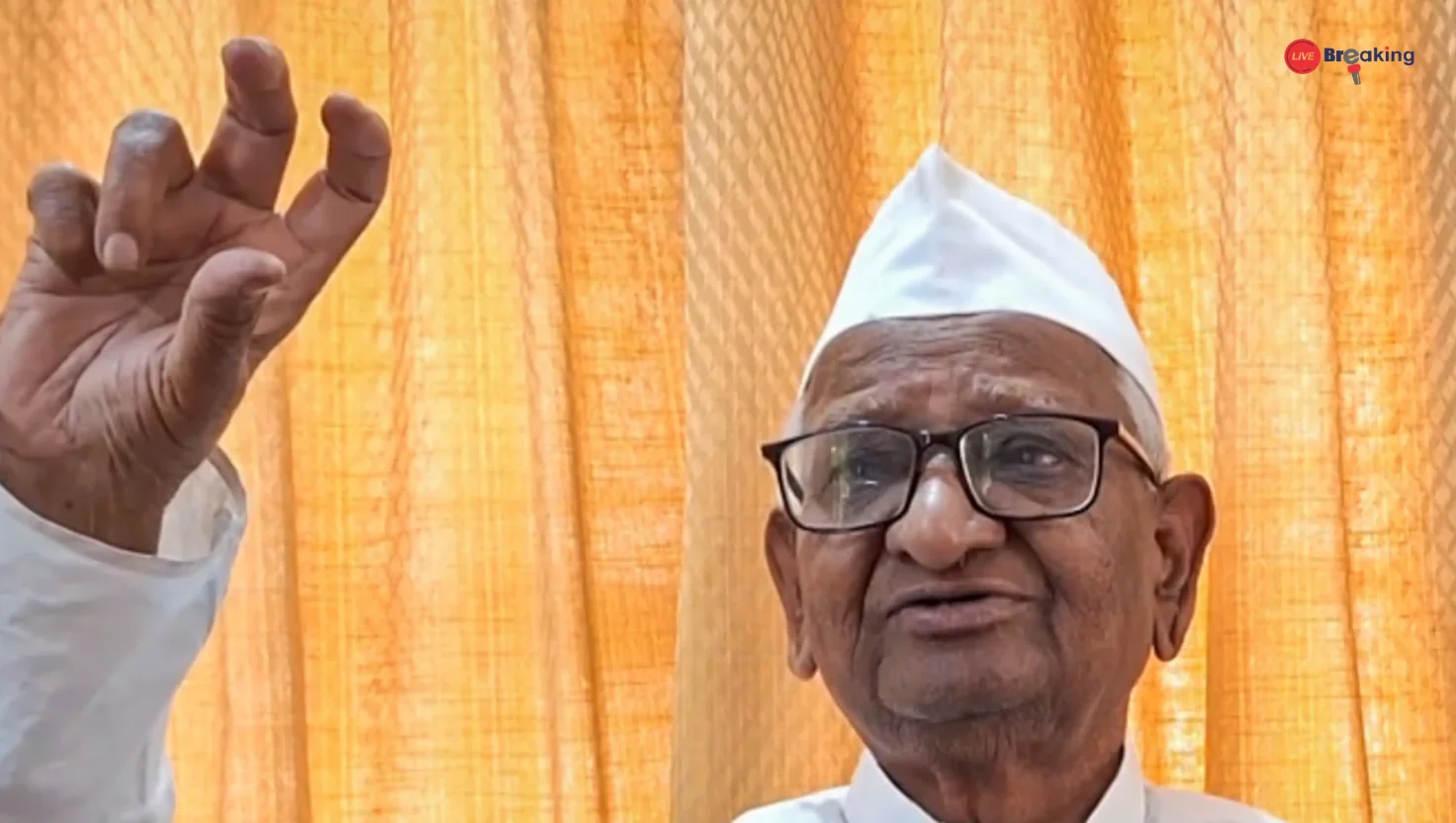
What Anna Hazare Said on Arvind Kejriwal’s Discharge in Delhi Liquor Policy Case
The discharge of Delhi Chief Minister Arvind Kejriwal in the much-debated Delhi liquor policy case has triggered strong reactions across the political spectrum. Among the voices that drew significant attention was that of veteran social activist Anna Hazare, whose anti-corruption movement in 2011 had once propelled Kejriwal into national prominence.
Hazare’s reaction carries symbolic weight. After all, Kejriwal emerged as a key face of the anti-corruption campaign led by Hazare before launching the Aam Aadmi Party (AAP). Over the years, however, their relationship has seen visible strain, especially when governance decisions appeared to diverge from the ideals of the original movement.
This article explores what Anna Hazare said regarding Kejriwal’s discharge, the broader political context, and what this development means for the Delhi liquor policy controversy.
Background: The Delhi Liquor Policy Case
Before understanding Hazare’s remarks, it’s essential to briefly revisit the controversy.
The Delhi liquor policy case revolves around allegations related to irregularities in the formulation and implementation of the excise policy introduced by the Delhi government. Critics claimed that the policy benefited certain private entities, while the AAP leadership maintained that it aimed to modernize and streamline liquor sales in the national capital.
Investigations were initiated, and the case gained national attention due to the involvement of high-profile political figures. Kejriwal’s discharge in one aspect of the case was therefore viewed as a significant legal development.
What Anna Hazare Said
Anna Hazare responded to Kejriwal’s discharge with measured but pointed remarks. While he acknowledged the court’s decision, he emphasized that public life demands higher standards of transparency and moral responsibility.
Hazare reiterated that anyone in public office must uphold ethical governance. He suggested that legal discharge does not automatically erase broader concerns about governance models or policy decisions that may raise public questions.
His reaction reflected three key themes:
1. Respect for Judicial Process
Hazare acknowledged that the court’s decision must be respected. In a democracy, judicial rulings carry final authority, and legal discharge implies insufficient grounds to proceed in that particular matter.
2. Emphasis on Moral Accountability
Even while recognizing the legal relief, Hazare highlighted that political leaders must remain morally accountable. He has long advocated that politics should operate beyond mere legal compliance — it should embody ethical governance.
3. Reaffirmation of Anti-Corruption Ideals
Hazare reiterated the foundational principles of the anti-corruption movement. His comments appeared to subtly remind political leaders of the promises made during the movement that captured national imagination over a decade ago.
Anna Hazare and Arvind Kejriwal: A Complicated Relationship
The relationship between Hazare and Kejriwal has evolved significantly since the days of the anti-corruption agitation.
| Aspect | Then (2011 Movement) | Now (Post-Liquor Policy Case) |
|---|---|---|
| Association | Close collaboration | Public differences |
| Focus | Lokpal and anti-corruption | Governance and policy debates |
| Public Messaging | Unified platform | Independent positions |
| Political Role | Hazare – Activist | Kejriwal – Chief Minister |
During the 2011 movement, Kejriwal was a prominent organizer and strategist. However, Hazare chose to remain politically neutral, while Kejriwal entered electoral politics. Over time, policy decisions taken by the Delhi government occasionally drew Hazare’s criticism.
Read more: ‘I Would Intervene But…’: Trump On Pakistan-Afghanistan “Open War”
The liquor policy controversy further highlighted ideological differences regarding governance style and policy transparency.
Political Reactions Beyond Hazare
The discharge in the case also prompted reactions from opposition parties and political observers. Supporters of Kejriwal described the decision as vindication, arguing that allegations were politically motivated. Critics maintained that questions surrounding the policy’s implementation still deserve scrutiny.
The case has been closely watched because it intersects with larger themes of political accountability, federal investigative agencies, and the evolving dynamics of Indian politics.
Why Hazare’s Remarks Matter
Even though Hazare does not hold political office, his voice continues to resonate among citizens who followed the anti-corruption movement.
Here’s why his reaction carries weight:
-
He symbolizes the moral foundation of the anti-corruption agitation.
-
He was once closely associated with Kejriwal’s political rise.
-
His comments often frame public discourse in ethical rather than partisan terms.
By emphasizing moral standards alongside legal outcomes, Hazare positioned his response above immediate political celebration or criticism.
Broader Implications for Delhi Politics
The discharge provides temporary relief for Kejriwal in this particular legal context. However, the larger excise policy debate continues to influence Delhi’s political climate.
For the ruling AAP government, the focus may now shift toward reinforcing its governance credentials. For opposition parties, the controversy remains a point of political attack.
Read more: Arvind Kejriwal, Manish Sisodia Cleared In Liquor Policy Case, Court Raps CBI
Meanwhile, Hazare’s comments subtly remind political actors that legal clearance does not automatically settle public perception debates.
FAQs
What did Anna Hazare say about Arvind Kejriwal’s discharge?
Anna Hazare acknowledged the court’s decision but emphasized that public leaders must uphold moral accountability beyond legal compliance.
What is the Delhi liquor policy case about?
The case concerns alleged irregularities in the Delhi government’s excise policy related to the sale and distribution of liquor in the capital.
Was Arvind Kejriwal fully cleared of all allegations?
The discharge relates to specific proceedings in the case. Legal matters may involve multiple aspects and stages.
Why is Anna Hazare’s opinion significant?
Hazare led the 2011 anti-corruption movement that played a key role in Kejriwal’s political rise, giving his remarks symbolic importance.
Read more: YouTuber In Hyderabad Sends Mother In Kuwait “I Love You” Text, Then Kills Self
Has Hazare criticized Kejriwal before?
Yes, over the years Hazare has occasionally expressed concerns about governance decisions taken by the Delhi government.
Conclusion
The discharge of Arvind Kejriwal in the Delhi liquor policy case marks an important legal development, but it has also reignited discussions about ethics in governance. Anna Hazare’s reaction reflects a nuanced position — respecting judicial authority while underscoring moral responsibility.
As Indian politics continues to evolve, episodes like this highlight the ongoing tension between legal outcomes, public perception, and ethical expectations from elected leaders.
Whether this development strengthens Kejriwal politically or keeps the debate alive remains to be seen. What is clear, however, is that the anti-corruption ideals that once united Hazare and Kejriwal still shape public expectations today.