US Attacks Iran Bandar Abbas, Trump Warns Over Uranium Stockpile Amid Ceasefire Talks
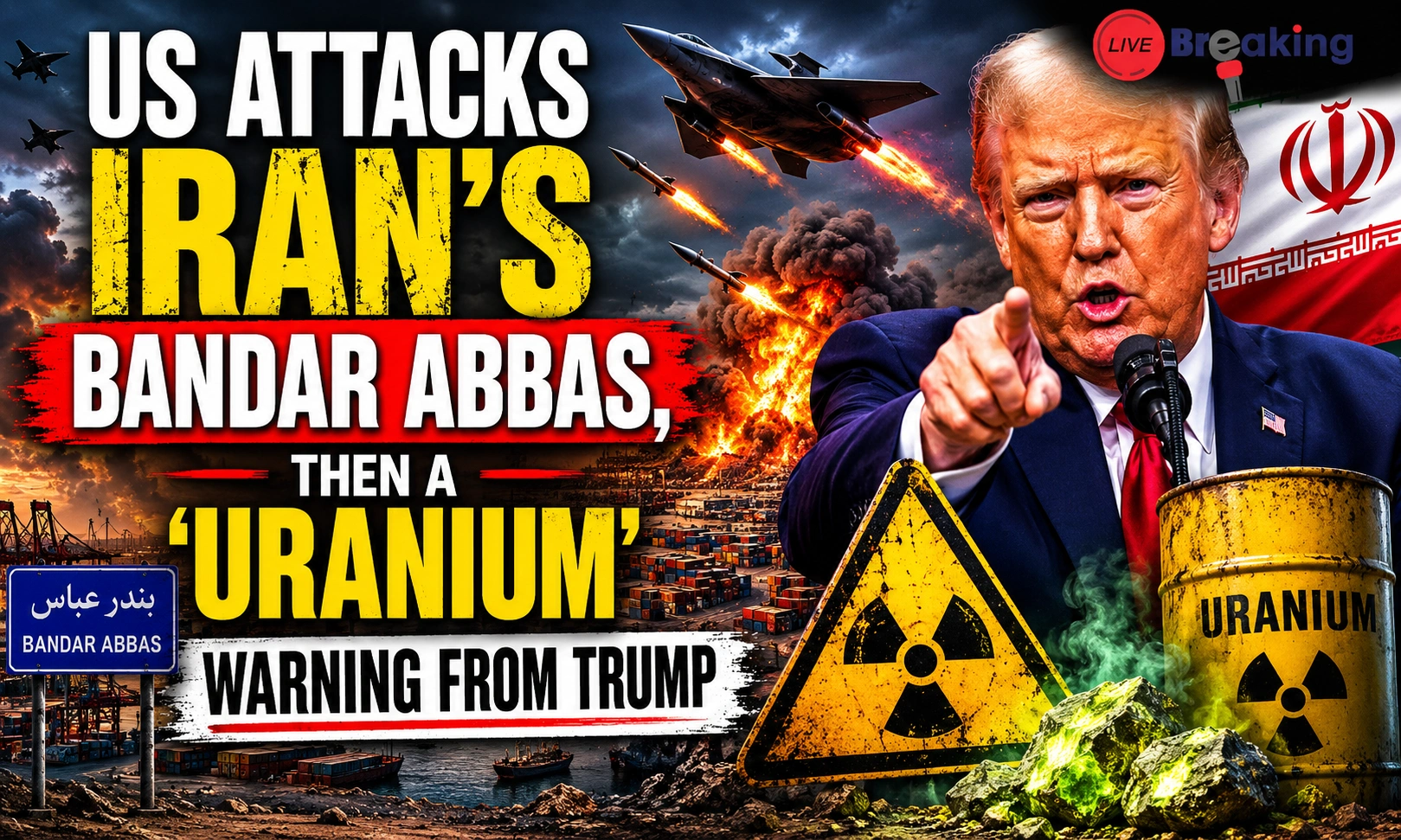
The Middle East witnessed another dramatic escalation after the US launched fresh military strikes near Iran’s strategic port city of Bandar Abbas. The attacks reportedly targeted missile-launch facilities and Iranian boats allegedly involved in laying naval mines near the Strait of Hormuz — one of the world’s most important oil shipping routes.
The military action came at a sensitive moment, as Washington and Tehran were simultaneously engaged in behind-the-scenes diplomatic talks aimed at preventing a broader regional conflict. However, shortly after the strikes, former US President Donald Trump intensified tensions further by issuing a stern warning regarding Iran’s enriched uranium stockpile.
Trump stated that Iran must surrender or destroy its uranium reserves, warning that the United States would not allow Tehran to move closer to developing nuclear weapons capabilities.
The latest developments have raised fresh fears about instability in the Gulf region, disruptions to global oil supplies, and the possible collapse of ongoing peace negotiations.
Why Bandar Abbas Is Strategically Important
The Gateway to the Strait of Hormuz
Bandar Abbas is one of Iran’s most critical naval and commercial hubs. Located near the Strait of Hormuz, the port city plays a central role in Iran’s maritime operations and regional defense strategy.
Nearly one-fifth of the world’s oil passes through the Strait of Hormuz every day. Any military escalation in this region immediately impacts global energy markets and international trade.
According to US Central Command (CENTCOM), the strikes were carried out in “self-defense” after intelligence indicated threats to American military assets and commercial shipping lanes.
The US reportedly destroyed:
- Missile-launch infrastructure
- Iranian Revolutionary Guard-linked mine-laying vessels
- Surface-to-air missile systems near Bandar Abbas
Iran has strongly condemned the operation and described it as a violation of international law.
Trump’s ‘Uranium’ Warning Sparks Global Attention
What Did Trump Say?
Donald Trump’s comments on Iran’s uranium stockpile became one of the biggest talking points following the strikes.
Trump reportedly declared that Iran’s enriched uranium must either:
- Be surrendered to international authorities
- Be destroyed under supervision
- Or be removed entirely from Iranian control
He also suggested that the US could oversee the destruction process if a peace agreement moves forward.
The remarks indicate that Washington continues to prioritize Iran’s nuclear capabilities as the central issue in negotiations.
Understanding Iran’s Uranium Controversy
Why Is Enriched Uranium a Major Concern?
Enriched uranium can be used for civilian nuclear energy purposes, but highly enriched uranium also raises fears about potential nuclear weapon development.
Read More: Video: PM Modi Cashes In On Internet Memes With Melody Gift For Meloni
International watchdogs have previously expressed concerns about Iran’s stockpile levels and enrichment percentages. Reports suggest Iran possesses uranium enriched to around 60%, which is significantly higher than levels required for civilian energy production.
Western nations, especially the United States and Israel, fear that such enrichment levels could eventually enable Tehran to produce nuclear weapons.
Iran, however, has consistently denied pursuing nuclear arms and insists its nuclear program is intended for peaceful purposes only.
Ceasefire Talks Continue Despite Escalation
Diplomatic Talks in Qatar
Interestingly, the military strikes occurred while diplomatic negotiations were underway in Doha, Qatar.
Officials from both sides are reportedly trying to establish:
Read More: Tamil Nadu Congress MLA Mentions Rahul Gandhi During Oath, Governor Objects
- A temporary ceasefire
- Safe commercial navigation through the Strait of Hormuz
- A framework for future nuclear negotiations
US Secretary of State Marco Rubio expressed hope that diplomacy could still succeed despite the latest military action.
However, analysts believe the attacks may complicate trust-building efforts between Washington and Tehran.
Global Oil Markets React to Gulf Tensions
Fear of Supply Disruption
The Strait of Hormuz remains one of the most sensitive chokepoints in global energy trade. Any conflict near the region often pushes oil prices upward.
Read More: Shashi Tharoor Advice To Opposition Amid ‘Cockroach Janata Party’ Rage
Following reports of the US strikes:
- Oil traders closely monitored shipping activity
- Energy markets reacted nervously
- Concerns grew about possible Iranian retaliation
Several shipping companies are also reviewing maritime security measures as tensions continue to rise.
Timeline of Key Events
| Event | Details |
|---|---|
| US Military Action | Strikes launched near Bandar Abbas |
| Targets Hit | Missile sites and mine-laying boats |
| US Position | Described operation as “self-defense” |
| Trump Warning | Iran must surrender or destroy uranium |
| Peace Talks | Ongoing discussions in Qatar |
| Main Concern | Nuclear enrichment and Strait security |
International Reactions
Mixed Global Response
The latest escalation has drawn reactions from around the world.
United States
Washington maintains the strikes were defensive and necessary to protect American forces and shipping routes.
Read More: How Urban India Weekend Obsession Became A $50 Million Market
Iran
Tehran condemned the attacks and accused the US of escalating tensions during sensitive diplomatic discussions.
Gulf Nations
Several Gulf countries are reportedly urging restraint to avoid a larger regional conflict that could damage trade and energy exports.
Israel
Israeli officials continue supporting stronger international pressure on Iran’s nuclear activities.
Could This Trigger a Larger Conflict?
Rising Risks in the Middle East
Experts warn that repeated military confrontations in the Gulf could spiral into a broader regional crisis.
The biggest concerns include:
- Retaliatory attacks
- Disruption to oil transportation
- Collapse of ceasefire negotiations
- Increased military deployments in the Gulf
Read More: In Twisha Sharma Case, Supreme Court’s Big ‘Narrative As Accused Ex-Judge’ Remark
Despite the current tensions, diplomatic channels remain open, offering a possible path toward de-escalation.
FAQs
Why did the US attack Bandar Abbas?
The US said the strikes targeted missile-launch sites and mine-laying boats threatening American forces and commercial shipping in the Strait of Hormuz.
What did Trump say about Iran’s uranium?
Trump warned that Iran must surrender or destroy its enriched uranium stockpile to prevent future nuclear weapon development.
Why is the Strait of Hormuz important?
The Strait of Hormuz is a vital global shipping route through which a significant portion of the world’s oil supply passes daily.
Is Iran developing nuclear weapons?
Iran denies pursuing nuclear weapons and says its nuclear program is for peaceful civilian purposes.
Read More: China New Export Rules: Will Curbs Short Circuit India $120 Billion Electronics Dream?
Are peace talks still happening?
Yes. Despite the military escalation, negotiations between US and Iranian representatives are reportedly continuing in Qatar.
Conclusion
The US strikes near Bandar Abbas and Donald Trump’s renewed uranium warning have once again pushed Middle East tensions into the global spotlight. While diplomatic talks continue behind closed doors, the situation remains highly volatile.
With the Strait of Hormuz at the center of the crisis and nuclear concerns dominating negotiations, the coming days could prove critical for regional stability, global oil markets, and international diplomacy.
Whether the current tensions lead to a diplomatic breakthrough or a deeper confrontation now depends on how both Washington and Tehran respond in the aftermath of the latest escalation.