

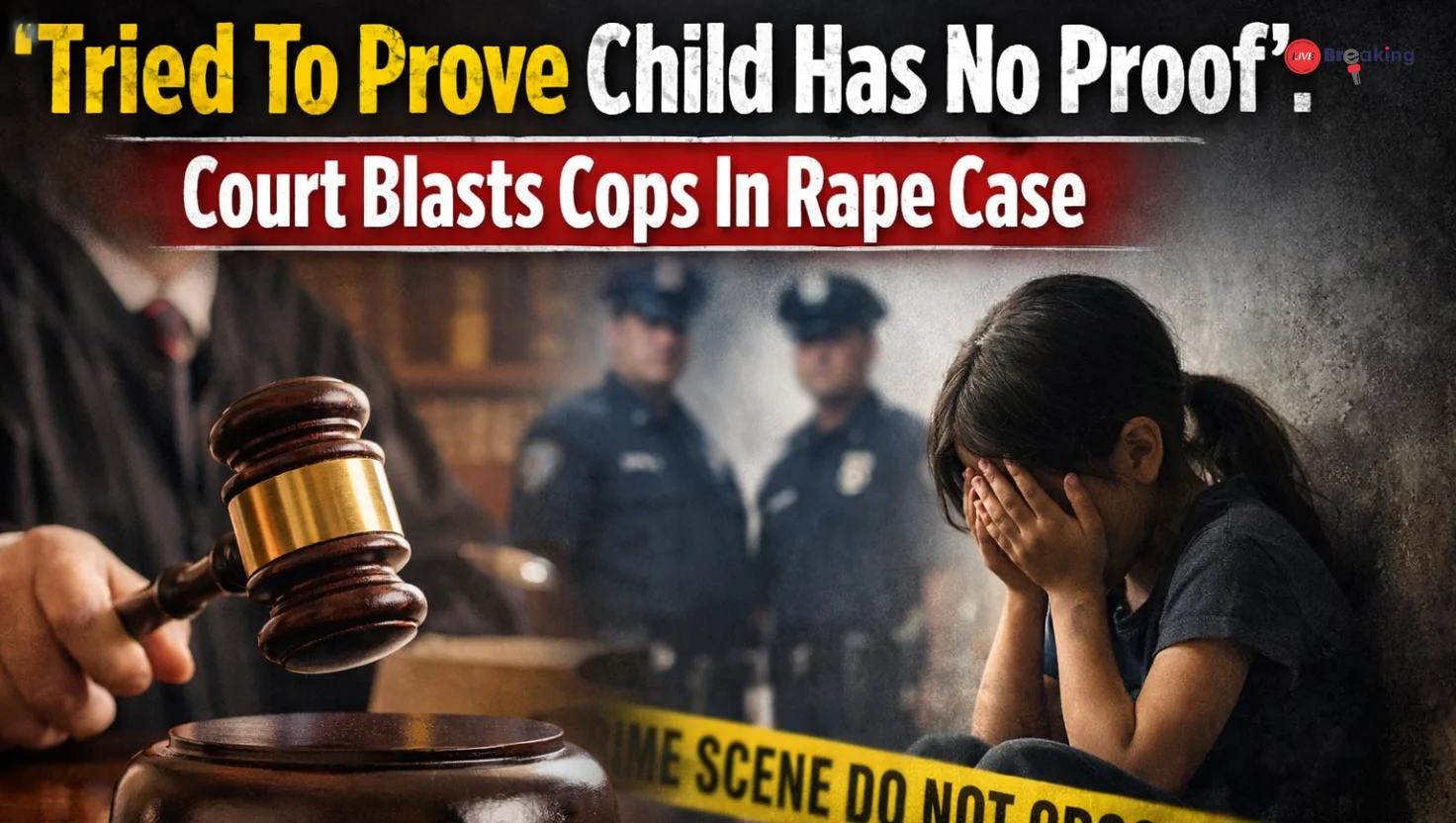
‘Tried To Prove Child Has No Proof’: Supreme Court Blasts Cops In Rape Case
In a deeply disturbing development, the Supreme Court of India has strongly reprimanded the Gurugram Police for their handling of a rape case involving a 4-year-old child. The court’s sharp remarks — “Is this how you treat a 4-year-old child?” — reflect not only judicial anger but also a broader concern about systemic failures in dealing with sensitive crimes against minors.
The case has triggered nationwide outrage, bringing attention to the gaps in law enforcement, especially when it comes to protecting the most vulnerable members of society.
Supreme Court’s Strong Observations
During the hearing, the Supreme Court expressed serious dissatisfaction with the conduct of the police investigation. The bench criticized the authorities for attempting to discredit the victim rather than focusing on gathering credible evidence.
Key Remarks by the Court
- Questioned the police approach toward a minor victim
- Highlighted lack of sensitivity in handling child abuse cases
- Condemned attempts to “prove the child has no proof”
- Raised concerns about procedural lapses
The court emphasized that such an approach is not only legally flawed but also morally unacceptable.
What Went Wrong in the Investigation?
The case exposed several shortcomings in the police investigation process. Instead of prioritizing evidence collection and victim protection, the focus appeared misplaced.
Major Issues Identified
| Issue | Description |
|---|---|
| Lack of Sensitivity | Authorities allegedly failed to treat the child with care |
| Weak Evidence Handling | Insufficient or improper evidence collection |
| Victim Blaming | Attempts to question credibility of the minor |
| Procedural Errors | Failure to follow child protection protocols |
These lapses have raised serious concerns about whether law enforcement agencies are adequately trained to handle crimes involving children.
Legal and Social Implications
The Supreme Court’s intervention underscores the importance of accountability in cases involving minors. Laws such as the Protection of Children from Sexual Offences (POCSO) Act are designed to ensure child-friendly procedures, yet their implementation often falls short.
Why This Case Matters
- Reinforces need for child-sensitive policing
- Highlights gaps in implementation of POCSO Act
- Sends strong message to law enforcement agencies
- Encourages judicial oversight in sensitive cases
This case could become a landmark in shaping future protocols for handling crimes against children.
The Bigger Picture – Crimes Against Children in India
India continues to face alarming rates of crimes against children. According to recent reports, thousands of cases are registered annually, yet conviction rates remain inconsistent.
Key Concerns
- Underreporting of cases
- Delayed investigations
- Lack of forensic support
- Social stigma and fear
The Gurugram case is a stark reminder that legal frameworks alone are not enough — proper execution is equally critical.
Need for Police Reforms and Training
Experts argue that specialized training is essential for handling cases involving minors. Police officers must be equipped not only with investigative skills but also with psychological sensitivity.
Recommended Measures
- Mandatory child protection training for officers
- Strict adherence to POCSO guidelines
- Faster forensic and medical processes
- Accountability mechanisms for negligence
Such reforms could significantly improve how sensitive cases are handled in the future.
Public Reaction and Demand for Justice
The case has sparked widespread public anger, with citizens demanding stricter accountability and justice for the victim. Social media platforms are flooded with calls for reform and support for the child.
FAQs
Q1: What did the Supreme Court say about the case?
The Supreme Court strongly criticized the Gurugram Police, questioning their handling of the case and highlighting lack of sensitivity toward a 4-year-old victim.
Q2: What is the POCSO Act?
The Protection of Children from Sexual Offences (POCSO) Act is a law designed to protect children from sexual abuse and ensure child-friendly legal procedures.
Q3: Why is this case significant?
It exposes serious flaws in police investigation methods and reinforces the need for accountability and reform in handling child abuse cases.
Q4: What actions can be taken to prevent such failures?
Improved police training, strict adherence to legal protocols, and faster judicial processes can help prevent such failures.
Q5: How does this impact future cases?
The Supreme Court’s strong stance may lead to stricter scrutiny and better handling of similar cases in the future.
Conclusion
The Supreme Court’s sharp rebuke of the Gurugram Police serves as a wake-up call for India’s law enforcement system. When institutions meant to protect fail, especially in cases involving children, the consequences are devastating.
This case is not just about one incident — it represents a larger systemic issue that demands urgent attention. Justice for the victim must go hand in hand with reforms that ensure such failures are never repeated.