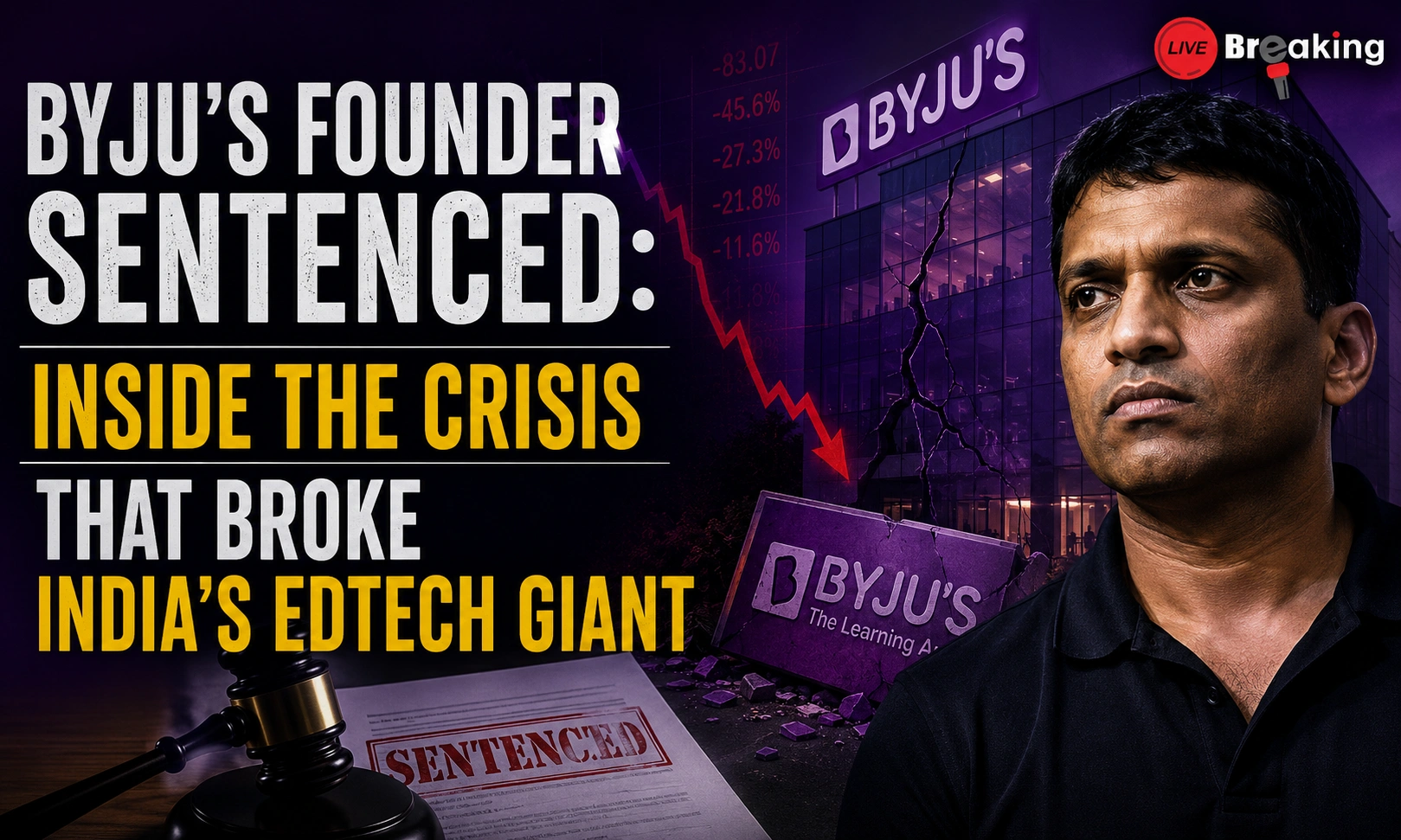
Byju Founder Sentenced: Inside The Crisis That Broke India’s Edtech Giant
India’s edtech industry once celebrated BYJU as a symbol of startup success. Founded by Byju Raveendran, the company transformed online learning in India and became one of the country’s most valuable startups during the pandemic boom. However, the company’s rapid expansion, aggressive acquisitions, mounting debt, and legal troubles eventually pushed it into one of the biggest corporate crises in Indian startup history.
The latest shock came after reports that Byju Raveendran was sentenced by a Singapore court in connection with ongoing legal and financial disputes linked to the company’s restructuring and insolvency proceedings. The development has reignited concerns about governance failures, investor confidence, and the future of India’s startup ecosystem.
The Rise of BYJU’S: From Classroom Coaching to Global Edtech Giant
Founded in 2011, BYJU’S began as an online education platform aimed at helping Indian students prepare for competitive exams. The company quickly gained popularity due to its engaging video-based learning model and mobile-first strategy.
During the COVID-19 pandemic, online learning witnessed explosive demand. Schools were shut, millions of students shifted online, and edtech companies became the center of investor attention. BYJU’S used this opportunity to expand aggressively.
The company acquired multiple startups including:
| Acquisition | Purpose |
|---|---|
| Aakash Educational Services | Offline coaching expansion |
| WhiteHat Jr | Coding education |
| Toppr | Competitive exam preparation |
| Great Learning | Professional education |
| Epic | International expansion |
At its peak, BYJU’S was valued at nearly $22 billion and was considered India’s most valuable startup.
What Triggered BYJU’S Financial Crisis?
Despite rapid growth, several warning signs started appearing behind the scenes.
Aggressive Expansion and Overspending
BYJU’S spent billions on acquisitions within a short period. While these acquisitions increased market presence, they also added financial pressure. Integrating multiple businesses proved difficult and expensive.
The company reportedly relied heavily on borrowed money and external funding. As global investment slowed after the pandemic, maintaining growth became increasingly challenging.
Delayed Financial Reporting
One of the biggest red flags was the delay in filing audited financial statements. Investors and regulators raised concerns about transparency and accounting practices.
Questions emerged regarding:
- Revenue recognition
- Sales practices
- Employee pressure tactics
- Cash flow management
- Loan repayment capabilities
The delays severely damaged investor trust.
Read More: Video: PM Modi Cashes In On Internet Memes With Melody Gift For Meloni
Layoffs and Cost-Cutting Measures
As losses mounted, BYJU’S began laying off thousands of employees. Teams across sales, operations, and marketing were affected.
The layoffs reflected deeper operational issues within the company. Several former employees also alleged toxic work culture and unrealistic sales targets.
Legal Battles and Investor Disputes Intensify
BYJU’S troubles escalated further when lenders and investors initiated legal proceedings over unpaid dues and governance concerns.
Major investors reportedly questioned company leadership and financial decisions. Several board members resigned, increasing uncertainty around the company’s future.
The company also faced scrutiny over:
- Loan defaults
- Insolvency proceedings
- Vendor payment delays
- Regulatory investigations
- Disputes with lenders in international courts
Singapore emerged as a key legal battleground because certain financial and restructuring matters involving the company were tied to jurisdictions there.
Read More: Shashi Tharoor Advice To Opposition Amid ‘Cockroach Janata Party’ Rage
Singapore Court Sentencing: Why It Matters
The sentencing of founder Byju Raveendran by a Singapore court marks a major turning point in the ongoing crisis.
While legal experts continue analyzing the implications, the development sends a strong signal regarding corporate governance accountability in global startup ecosystems.
The case highlights how rapidly scaling startups can face serious consequences if governance standards fail to keep pace with expansion.
For India’s startup ecosystem, the incident has become a cautionary tale about:
- Excessive fundraising dependence
- Weak financial oversight
- Poor compliance systems
- Unsustainable growth strategies
Investors are now placing greater emphasis on profitability, governance, and transparency rather than growth alone.
Impact on India’s Edtech Industry
The downfall of BYJU’S has affected the broader Indian edtech sector significantly.
Read More: How Urban India Weekend Obsession Became A $50 Million Market
Investor Confidence Declines
Investors have become more cautious while funding edtech startups. Companies are now expected to demonstrate sustainable revenue models rather than focusing solely on user growth.
Shift Toward Profitability
The era of “growth at any cost” is fading. Edtech firms are now prioritizing:
- Cost control
- Retention strategies
- Operational efficiency
- Better governance practices
Parents and Students Become More Careful
Consumers are also more cautious about long-term subscription plans and expensive educational packages after reports of aggressive sales tactics by some edtech companies.
Can BYJU’S Recover From This Crisis?
Despite its severe challenges, BYJU’S still possesses strong brand recognition and a large user base. However, recovery will depend on multiple factors.
Read More: In Twisha Sharma Case, Supreme Court’s Big ‘Narrative As Accused Ex-Judge’ Remark
Key Challenges Ahead:
| Challenge | Impact |
|---|---|
| Debt obligations | Financial pressure |
| Investor disputes | Delayed restructuring |
| Legal proceedings | Reputation damage |
| Operational restructuring | Workforce uncertainty |
| Market competition | Declining dominance |
Experts believe the company would require:
- Strong leadership restructuring
- Transparent financial reporting
- Debt resolution agreements
- Focus on core educational services
- Investor confidence rebuilding
Without these measures, recovery could remain difficult.
Lessons Startups Can Learn From BYJU’S Collapse
The BYJU’S crisis offers several important lessons for startups and entrepreneurs.
Read More: ‘Twisha Sharma Bipolar, Relationship Troubled’: CBI To Decode Husband’s Claims
Key Takeaways:
- Growth must be sustainable.
- Governance matters as much as valuation.
- Transparency builds investor trust.
- Rapid acquisitions can create integration risks.
- Profitability cannot be ignored forever.
The startup ecosystem is increasingly moving toward balanced growth models where financial discipline is equally important as expansion.
FAQs
What happened to BYJU’S founder?
Reports indicate that founder Byju Raveendran faced sentencing from a Singapore court linked to ongoing legal and financial disputes involving the company.
Why did BYJU’S collapse?
The company faced financial stress due to aggressive expansion, delayed financial reporting, investor disputes, rising debt, and operational challenges.
Was BYJU’S once India’s biggest startup?
Yes. BYJU’S was once India’s most valuable startup with a valuation reportedly reaching around $22 billion.
How did BYJU’S affect the edtech industry?
The crisis reduced investor confidence in edtech companies and shifted focus toward profitability and governance.
Read More: In Big Win For Election Commission, Supreme Court Says “SIR Breathes Life Into Constitution”
Can BYJU’S recover?
Recovery is possible but depends on debt restructuring, operational reforms, leadership stability, and rebuilding investor trust.
Conclusion
The story of BYJU’S reflects both the incredible rise and dramatic fall of India’s startup boom era. What began as an inspiring educational platform eventually became entangled in financial stress, governance controversies, and global legal disputes.
The sentencing of Byju Raveendran in Singapore represents more than just a legal development — it symbolizes the growing demand for accountability in the startup world.
As India’s tech ecosystem matures, the BYJU’S crisis may ultimately serve as a defining lesson about sustainable growth, financial discipline, and responsible leadership.