

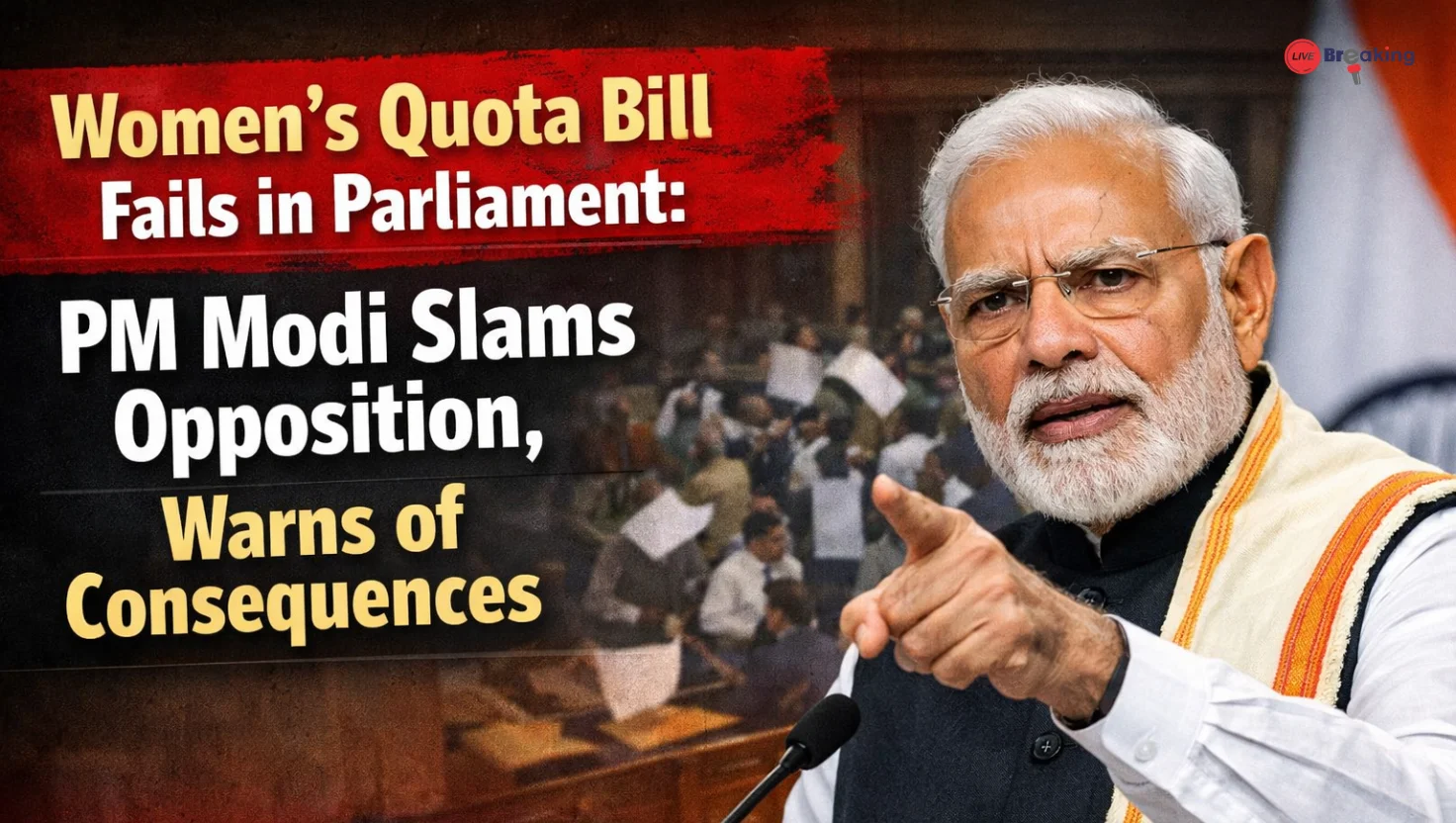
‘Opposition Made A Mistake, Will Face Consequences’: PM Modi On Women Quota Bill Failing Parliament Test
India witnessed a dramatic political development as the proposed Women Reservation Bill failed to pass in the Lok Sabha, triggering sharp reactions across the political spectrum. PM Modi criticized opposition parties, stating they had made a “mistake” by not supporting the bill and would “face consequences” for their decision.
The bill aimed to reserve 33% of seats in Parliament and state assemblies for women, a long-debated reform intended to boost female representation in Indian politics. However, despite significant support, it failed to secure the required two-thirds majority in the Lok Sabha.
What Was the Women’s Quota Bill?
The Constitution (131st Amendment) Bill, 2026 sought to fast-track women’s reservation by linking it to delimitation and expansion of parliamentary seats. It proposed increasing Lok Sabha seats and allocating one-third of them to women.
Key Features of the Bill
| Feature | Details |
|---|---|
| Reservation | 33% seats for women |
| Coverage | Lok Sabha & State Assemblies |
| Linked Reform | Delimitation (redrawing constituencies) |
| Voting Outcome | 298 in favour, 230 against |
| Requirement | Two-thirds majority (not achieved) |
Despite its ambitious goal, the bill could not pass due to political disagreements, especially over its linkage with delimitation.
Why Did the Bill Fail?
The failure of the Women’s Quota Bill was not due to opposition to women’s reservation itself, but rather the method proposed by the government.
1. Delimitation Controversy
Opposition parties argued that linking reservation with delimitation could distort electoral representation and favor certain regions.
2. Political Distrust
Critics claimed the government was using women’s empowerment as a cover for electoral restructuring.
3. Regional Concerns
Southern states feared losing representation due to population-based seat redistribution.
4. Lack of Consensus
Even though there was broad agreement on women’s reservation, the lack of cross-party consensus on implementation led to the bill’s defeat.
Read more: US Pushed Pakistan to Broker Iran Ceasefire: Inside the Diplomatic Strategy
PM Modi’s Strong Reaction
Following the bill’s failure, Prime Minister Narendra Modi reportedly expressed strong disappointment during a cabinet meeting. He stated that opposition parties had “let down the women of the country” and must answer to them.
He emphasized that the issue should be communicated across the nation, suggesting that the political consequences could be significant in upcoming elections.
The government also maintained that it would continue pushing for women’s reservation, indicating that the issue remains a priority despite the setback.
Opposition’s Stand
Opposition leaders clarified that they support women’s reservation but opposed the structure of the bill.
Key objections included:
- Linking reservation with delimitation
- Lack of clarity on implementation
- Concerns over political manipulation
Read More: MP Woman Kills Husband After Affair Row: ‘Tum Kaale Ho’ Remark Sparks Shocking Crime
Some leaders described the bill as “unconstitutional” and accused the government of attempting to reshape electoral boundaries for political gain.
Why Women’s Reservation Matters
India has historically struggled with gender imbalance in political representation.
- Women currently make up only around 14% of Lok Sabha members.
- State legislatures have even lower representation, averaging about 10%.
The Women’s Reservation Bill was seen as a major step toward correcting this imbalance and ensuring greater participation of women in policymaking.
Read More: A Missile On One Soldier’s Shoulder Could Ground The US Air War In Iran
Political Impact of the Bill’s Failure
The rejection of the bill marks a rare legislative setback for the Modi government and could have far-reaching political implications.
Key Impacts
- Government Setback: One of the few major bills that failed under the current administration
- Opposition Boost: A symbolic victory for opposition unity
- Election Narrative: Women’s empowerment likely to become a key electoral issue
- Policy Delay: Reservation implementation pushed further into the future
Experts believe this issue may play a crucial role in shaping the narrative ahead of the next general elections.
What Happens Next?
Although the bill failed, the conversation around women’s representation is far from over.
Possible next steps include:
- Reintroducing a revised version of the bill
- Decoupling reservation from delimitation
- Building broader political consensus
Read More: No Supreme Court Relief for Bengal Voters Deleted in SIR Process – Key Updates & Impact
The government has indicated that it remains committed to the idea, suggesting that another attempt could be made in the future.
Conclusion
The failure of the Women’s Reservation Bill highlights the complexities of Indian politics, where consensus is crucial for constitutional reforms. While the intent of empowering women received widespread support, disagreements over implementation derailed the effort.
Prime Minister Narendra Modi’s strong remarks against the opposition underscore the political stakes involved. As the debate continues, the issue of women’s representation is likely to remain central to India’s political discourse.
FAQ
Q1: What is the Women’s Reservation Bill?
It is a proposed law to reserve 33% of seats in Parliament and state assemblies for women.
Q2: Why did the bill fail?
It failed due to lack of a two-thirds majority and opposition concerns over delimitation.
Q3: What did PM Modi say?
He said the opposition made a mistake and would face consequences for not supporting the bill.
Read More: Nashik TCS ‘Conversion’ Accused Nida Khan Claims She’s Pregnant, Wants Court Relief
Q4: Do opposition parties support women’s reservation?
Yes, but they opposed the way the bill was structured and implemented.
Q5: What happens next?
The government may bring a revised bill or seek broader consensus in future sessions.