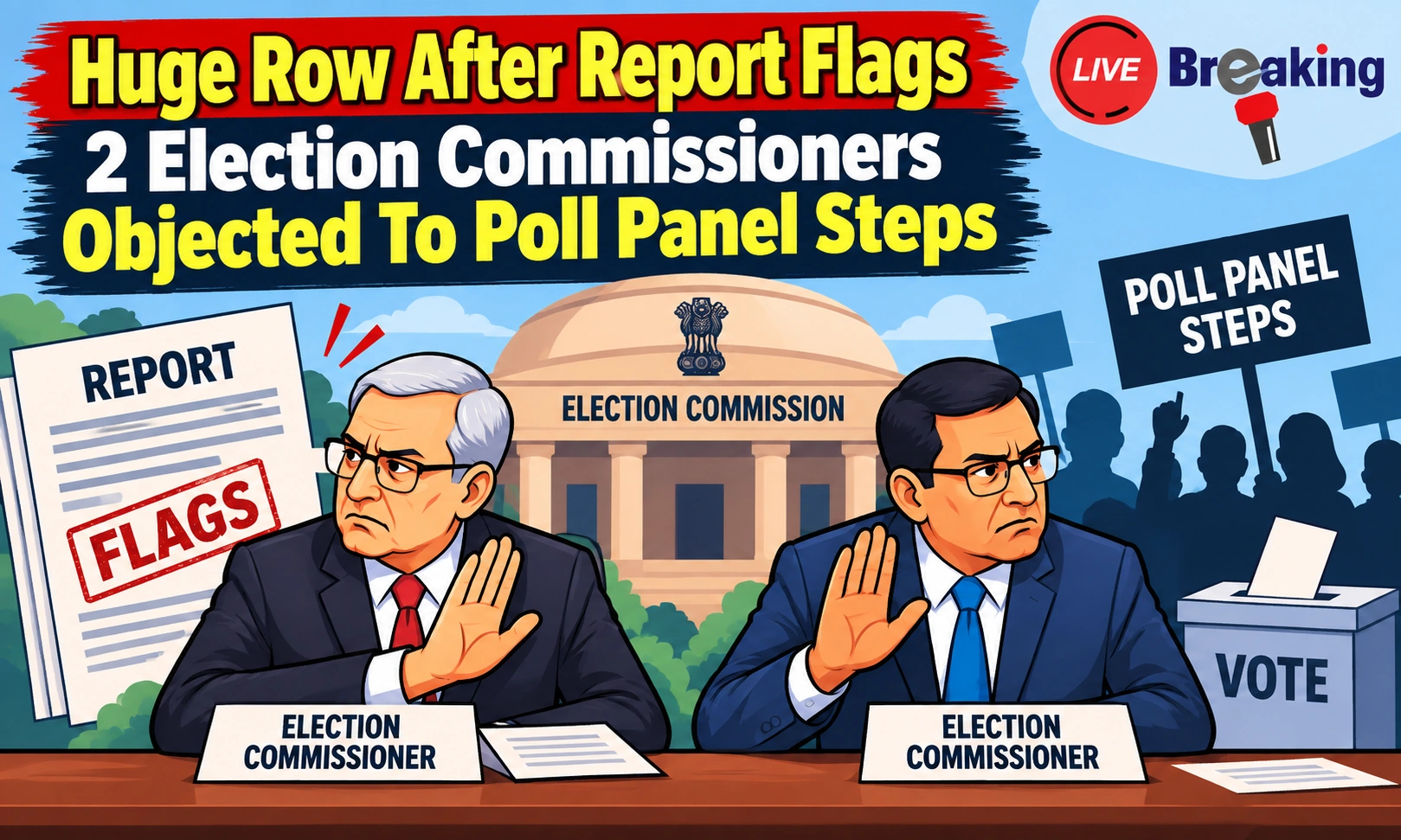
Election Commission Row: 2 Commissioners Objected to Poll Panel Steps
The report, published by The Indian Express on September 23, said Election Commissioners Sukhbir Singh Sandhu and Vivek Joshi had raised objections on multiple occasions over issues connected with voter registration, deletion and restoration of names, electoral-roll data and changes to Form 6.
There was no formal dissent by any Election Commissioner. The two commissioners had made observations on certain matters, and the Election Commission considered those observations before taking decisions. The sources also said that decisions of the three-member poll panel carried the signatures of Chief Election Commissioner Gyanesh Kumar and both Election Commissioners.
The conflicting accounts have triggered a political controversy, particularly at a time when the Election Commission’s Special Intensive Revision (SIR) of electoral rolls is already under intense scrutiny.
What Did The Report Claim?
According to The Indian Express, Sandhu and Joshi had objected at least 14 times over a period of 10 months to decisions or actions concerning electoral-roll management. The report said the objections covered several areas, including the addition of new voters, deletion and restoration of names and the handling of the Election Commission’s electoral-roll database.
One of the reported disputes concerned changes to Form 6, which is used for registering new voters. The report said the revised process introduced a question linked to whether an applicant or their relatives appeared in an earlier electoral roll.
The report further stated that concerns were raised over the legal basis for making changes to the statutory form and that one objection described the move as “unauthorised” and “illegal”. These are descriptions attributed to the reported correspondence and should not be treated as an independent judicial finding.
Another area of concern reportedly involved the management and access of electoral-roll technology and databases.
The Indian Express also reported that the two commissioners separately wrote to Cabinet Secretary T V Somanathan over changes concerning administrative responsibility and oversight of the technology infrastructure connected with electoral rolls.
Election Commission Sources Reject ‘Dissent’ Characterisation
The Election Commission’s side of the controversy differs significantly from the interpretation presented in the report.
The commissioners’ observations did not amount to formal dissent. They said the issues raised by the commissioners were considered by the poll panel.
The sources also said that all Election Commission decisions, including those connected with SIR, were unanimous and approved by all three members.
The Election Commission’s decision-making framework also allows a majority view to prevail when consensus is not reached.
Read More: Bihar Teacher’s Unique Teaching Method Earns Her State Teacher Award
This distinction between raising an objection or observation and recording formal dissent is central to the current dispute.
Why Has The Issue Become A Major Political Controversy?
The controversy comes against the backdrop of the Election Commission’s Special Intensive Revision of electoral rolls, or SIR.
The exercise has generated political debate over the process of verifying voters and updating electoral rolls. Opposition parties have repeatedly raised concerns about the possible deletion or exclusion of eligible voters, while the Election Commission has defended the electoral-roll revision process.
The latest report has added another dimension to that debate because the alleged internal objections involve precisely the areas that are central to voter-list management.
Several Opposition leaders criticised the Election Commission and Chief Election Commissioner Gyanesh Kumar after the Indian Express report was published. Some Opposition leaders called for action against the CEC, while others questioned the credibility of the poll panel. These are political statements made by individual leaders and do not establish the allegations contained in the report.
Form 6 Dispute Explained
Form 6 is an important document in India’s electoral system because it is used by eligible citizens seeking inclusion in the electoral roll.
The reported disagreement over the form concerns a change that required applicants to provide additional information connected with previous electoral rolls.
According to the Indian Express report, concerns were raised about whether such a change could be introduced administratively without corresponding changes to the relevant electoral rules.
The issue is significant because voter-registration procedures need to balance two objectives: ensuring that eligible citizens are included while maintaining accurate electoral rolls.
Read More: Bihar Teacher’s Unique Teaching Method Earns Her State Teacher Award
Any changes to registration procedures can therefore attract scrutiny from political parties, civil society groups and election observers.
What Is The Special Intensive Revision?
The Special Intensive Revision, commonly referred to as SIR, is an exercise aimed at reviewing and updating electoral rolls.
The process has become one of the most closely watched electoral issues in India, particularly because the revision involves verification of voter information and can result in names being added, retained, deleted or restored depending on the applicable process.
The Indian Express reported that the SIR exercise, which began in Bihar in 2025, subsequently expanded across multiple states and Union Territories.
The scale of the exercise has made the accuracy and transparency of the process especially important.
Delhi Voter Roll Issue Adds To Debate
The controversy is also unfolding alongside scrutiny of the electoral-roll revision in Delhi.
More than 97 lakh names appeared in the draft electoral roll published on August 31, while around 33.13 lakh electors had been identified for notices over discrepancies in their enumeration forms.
The notice process has attracted attention because several prominent names were reportedly included among those facing notices over discrepancies.
Read More: Eiffel Tower Shuts After Women Staff “Sidelined” For Hindu Group’s Visit
Being included on such a notice list does not by itself establish that an individual is ineligible to vote. It indicates that the electoral authorities have identified a discrepancy requiring examination under the relevant process.
What Happens Next?
The immediate issue is likely to remain focused on the difference between the two descriptions of events.
The Indian Express report presents the correspondence of the two Election Commissioners as repeated objections to actions taken by the poll panel. Citing people familiar with the matter, reports that the commissioners made observations but did not formally dissent and that the decisions were ultimately approved by all three members.
The controversy therefore raises several factual questions: What exactly did the commissioners write in their communications? How were those concerns addressed? Were the disputed measures subsequently changed or retained? And were all final decisions formally approved by the three members?
Answers to those questions will be important in assessing the competing accounts.
Election Commission Row: Key Points At A Glance
| Issue | What Has Been Reported |
|---|---|
| Commissioners involved | Sukhbir Singh Sandhu and Vivek Joshi |
| Chief Election Commissioner | Gyanesh Kumar |
| Reported objections | At least 14 over 10 months, according to The Indian Express |
| Major issues | Voter registration, deletions, restoration, Form 6 and electoral-roll data |
| EC sources’ position | No formal dissent; observations were considered |
| Decision-making | EC sources say decisions were approved by all three members |
| Broader issue | Special Intensive Revision of electoral rolls |
| Political reaction | Opposition leaders have criticised the poll panel and demanded greater scrutiny |
FAQs
What is the current Election Commission controversy?
The controversy follows a report stating that Election Commissioners Sukhbir Singh Sandhu and Vivek Joshi raised objections on several Election Commission decisions. EC sources cited by NDTV dispute the description of these objections as formal dissent and say the commissioners’ observations were considered.
Did the two Election Commissioners formally dissent?
No Election Commissioner formally dissented. The sources said the commissioners made observations on certain issues and that the Election Commission considered them.
What were the reported objections about?
The Indian Express reported objections concerning voter registration, deletion and restoration of names, changes to Form 6 and the handling of electoral-roll data and technology.
What is Form 6?
Form 6 is used in the electoral-registration process by eligible citizens seeking inclusion in the electoral roll. The reported controversy concerns changes made to the information requested through the form.
What is SIR?
SIR stands for Special Intensive Revision. It is an electoral-roll revision exercise involving verification and updating of voter records.
Read More: Gurugram Hit-And-Run Accused Kalyan Bainsla Detained, ‘Attempt To Murder’ Invoked
Why are Opposition parties criticising the Election Commission?
Opposition leaders have raised broader concerns about the electoral-roll revision process and, following the latest report, have questioned the Election Commission’s internal decision-making. Their statements represent political positions and allegations, rather than independent findings.
Conclusion
The latest Election Commission controversy centres on competing descriptions of internal communications between its three members. A report by The Indian Express says two Election Commissioners raised objections repeatedly over several poll-panel decisions. However, say there was no formal dissent and that the issues raised were considered before decisions were approved.
With the Special Intensive Revision of electoral rolls already attracting significant public and political attention, the dispute is likely to keep the Election Commission’s decision-making process under scrutiny. The clearest understanding of the matter will depend on the full record of the communications, the responses to those objections and the final decisions taken by the poll panel.