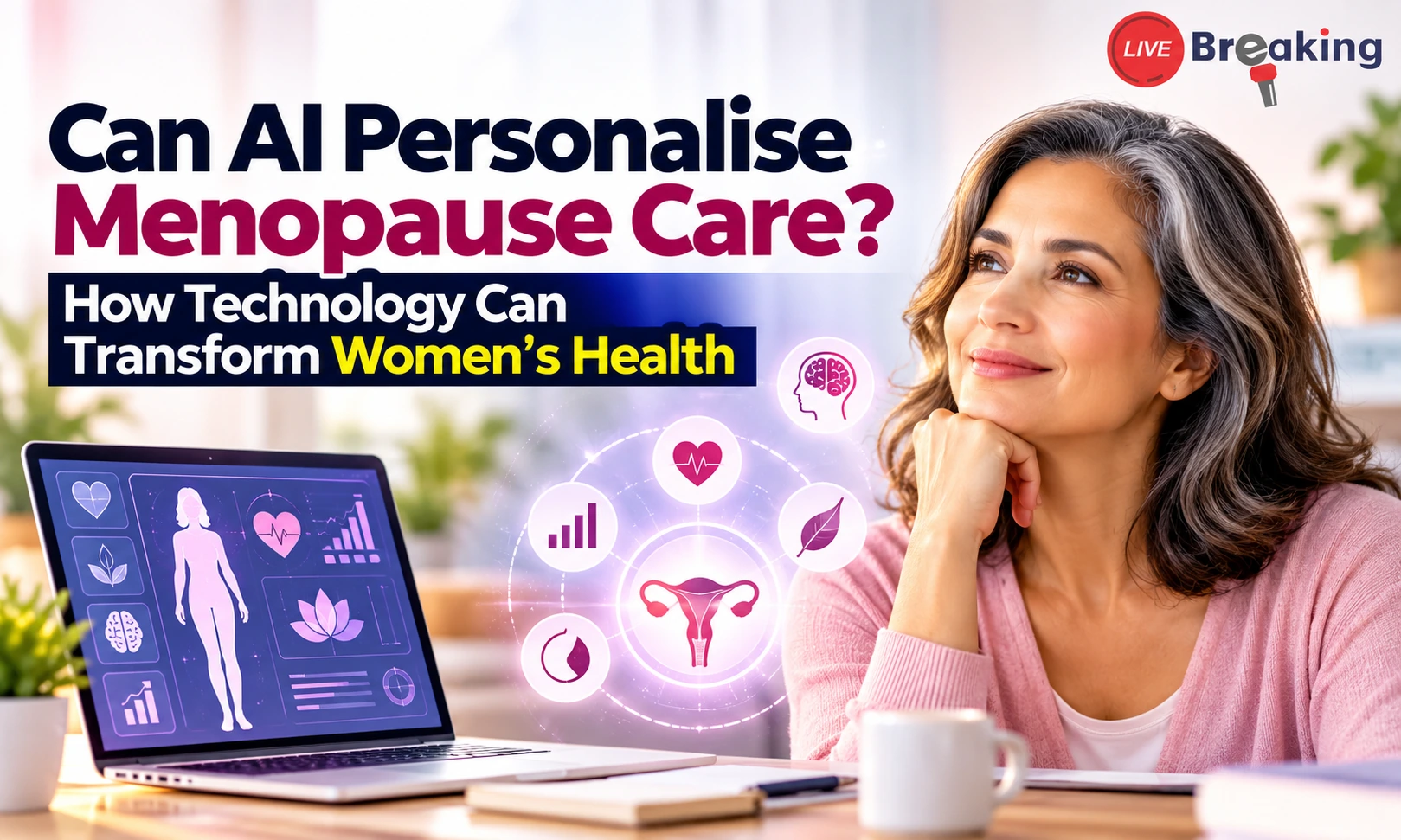
Can AI Personalise Menopause Care? How Technology Can Transform Women’s Health
Menopause is a natural stage of life, but the experience can be different for every woman. While some experience relatively mild changes, others face hot flashes, night sweats, sleep disturbances, mood changes, joint discomfort and difficulty concentrating. Despite its widespread impact, menopause care has historically received less attention than many other areas of healthcare.
Artificial intelligence (AI), wearable devices and digital health platforms could help change this situation by making menopause care more personalised, accessible and responsive to individual needs. These technologies can help organise symptom records, identify patterns and support conversations between women and healthcare professionals.
A 2026 review published in Current Obstetrics and Gynecology Reports highlights the potential of AI in menopause management while warning that limited clinical data and unequal representation in research remain significant challenges. The message is clear: technology offers opportunities, but its benefits depend on reliable evidence and appropriate medical oversight.
Why Does Menopause Care Need a More Personalised Approach?
Menopause is commonly identified after 12 consecutive months without a menstrual period, when the absence of menstruation is not explained by another cause. The transition leading up to menopause, known as perimenopause, can involve fluctuating symptoms that change over time.
Some women primarily experience hot flashes and night sweats, while others struggle with anxiety, low mood, vaginal dryness, fatigue or disrupted sleep. Symptoms may overlap with other health conditions, making an individual assessment important.
A standardised approach may not address every woman’s concerns equally well. Personalised care considers symptom severity, medical history, lifestyle, personal preferences and individual risk factors before discussing suitable management options.
Technology could support this process by helping women record symptoms consistently and giving clinicians a clearer picture of how their health changes over weeks or months.
How Can Artificial Intelligence Improve Menopause Management?
AI systems can analyse information from multiple sources and identify patterns that may be difficult to recognise from occasional observations alone. In menopause care, these sources could include symptom diaries, sleep records, activity levels, relevant medical history and clinician-provided test results.
1. Tracking Symptoms and Identifying Patterns
Digital menopause applications can help users record the frequency and intensity of hot flashes, night sweats, mood changes and sleep difficulties.
AI-assisted analysis could compare these records over time and highlight possible associations with stress, physical activity, sleep schedules or environmental conditions.
For example, a woman experiencing frequent night sweats may notice that her sleep quality declines on the same nights. A digital tool could help organise these observations for discussion during a medical appointment.
Such findings should be treated as patterns worth exploring, rather than proof that one factor causes another.
2. Supporting More Individualised Treatment Discussions
Menopause management may involve lifestyle changes, psychological support, hormone therapy or non-hormonal medicines, depending on symptoms and individual circumstances.
Read More: Caffeine In Evening May Affect Quality Of Night-Time Sleep, Study Finds
AI could help clinicians review symptom histories and treatment responses, making follow-up appointments more focused. Over time, these tools might also help researchers identify which approaches are associated with better outcomes for particular patient groups.
However, AI should not independently prescribe medication or recommend starting, stopping or changing hormone therapy. Decisions about treatment require a qualified healthcare professional who can assess benefits, risks, contraindications and personal preferences.
3. Helping Women Prepare for Medical Appointments
Menopause consultations can involve several concerns, and patients may find it difficult to remember every symptom or explain how frequently it occurs.
Digital tools can summarise symptom diaries, list questions and organise relevant health information before an appointment.
This can help women communicate their concerns more confidently and give clinicians useful context for assessment.
The goal is not to replace the patient-clinician relationship. It is to make that relationship more informed and productive.
The Role of Wearable Technology in Menopause Care
Wearable devices, including smartwatches and health-monitoring rings, are becoming increasingly relevant to women’s health.
Depending on the device, these products may record sleep duration, movement, heart rate and temperature-related measurements. Researchers are also exploring sensors that could help detect physiological changes associated with hot flashes.
Monitoring Sleep and Night Sweats
Sleep disruption is a common concern during the menopausal transition. Wearable devices may help identify changes in sleep patterns and provide a record of activity or physiological measurements during the night.
Read More: H1N1 Cases Rise In Delhi: 5 Signs Your Cold May Not Be ‘Normal Viral’ Infection
When combined with a symptom diary, these records could help women and clinicians investigate whether sleep problems coincide with night sweats, stress or other reported symptoms.
Nevertheless, consumer wearables cannot reliably diagnose menopause or determine the cause of every sleep disturbance.
Understanding Long-Term Health Patterns
Midlife health involves more than managing immediate symptoms. Bone health, cardiovascular risk, mental wellbeing and other age-related concerns may also require attention.
Digital health tools could help individuals keep track of relevant measurements and attend scheduled follow-ups. AI may eventually help clinicians interpret combinations of longitudinal data, provided the methods are clinically validated.
These tools should complement established preventive healthcare rather than replace medical examinations or recommended screening.
Telehealth Could Make Menopause Support More Accessible
Access to menopause specialists varies considerably by location. Women in rural communities, smaller towns or areas with limited specialist services may face difficulties obtaining timely advice.
Telehealth can provide remote consultations, follow-up appointments and access to healthcare professionals without requiring every visit to take place in person.
When combined with digital symptom tracking, remote consultations may allow clinicians to review changes between appointments and discuss whether further assessment is necessary.
In India, digital menopause services could be particularly useful for women who face geographical, financial or social barriers to discussing menopause openly. However, accessibility will depend on affordability, language support, internet connectivity and the availability of qualified professionals.
Benefits and Limitations of AI-Powered Menopause Care
AI-supported menopause care offers promising possibilities, but it is important to distinguish potential benefits from capabilities that have already been clinically established.
| Technology | Potential benefit | Important limitation |
|---|---|---|
| AI symptom analysis | Identifies patterns in symptom records | Patterns may be inaccurate or misleading |
| Wearable devices | Tracks selected sleep and physiological measures | Measurements do not establish a diagnosis |
| Digital health applications | Helps organise symptoms and treatment history | Quality varies between applications |
| Telehealth platforms | Improves access to remote consultations | Cannot replace every physical examination |
| AI-assisted clinical support | Helps organise information for treatment discussions | Requires clinical validation and professional oversight |
| Digital reminders | Supports follow-ups and health routines | Depends on consistent use and reliable information |
The most effective approach is likely to combine useful technology with individual assessment, medical expertise and ongoing communication.
What Are the Risks of Using AI for Menopause Care?
Accuracy and Medical Reliability
AI-generated health advice can be incomplete, outdated or incorrect. Menopause symptoms may overlap with thyroid disorders, anaemia, mental health conditions and other medical concerns.
Read More: “The ‘Chai-Biscuit’ Bloat: Why Your Evening Routine Is Destroying Your Gut Barrier During The Rains
A digital tool should not automatically attribute every new symptom to menopause. Concerning, persistent or unusual symptoms deserve appropriate medical assessment.
Data Privacy and Security
Menopause applications may collect sensitive information about menstrual history, symptoms, sleep and other aspects of health.
Before using a platform, individuals should review its privacy policy, data-sharing practices, security measures and options for deleting their information. Health data should be handled transparently and responsibly.
Bias and Unequal Access
AI systems learn from the data used to develop and test them. If research datasets underrepresent particular populations, the resulting tools may perform less reliably for those groups.
A 2026 review of AI in menopause care identifies incomplete clinical records and underrepresentation of women in research as important obstacles to equitable care.
Developers need diverse datasets, rigorous testing and ongoing monitoring to ensure these tools work appropriately across different populations.
What Does the Future Hold for AI in Women’s Health?
The future of menopause care may involve a more connected approach that combines digital symptom records, wearable measurements, telehealth and clinician-led treatment planning.
Instead of relying entirely on a patient’s recollection during occasional appointments, healthcare professionals could have access to a more detailed record of symptom changes and treatment responses, where patients choose to share that information.
Researchers may also explore whether carefully validated AI models can help identify patterns in sleep disruption, symptom severity and individual responses to treatment.
However, the availability of data does not automatically translate into better healthcare. More research is needed to establish which tools improve clinical outcomes, which measurements are meaningful and how benefits can be delivered fairly.
Read More: Cough Syrup Rules Tighten Further: What Parents Of Children Under 4 Need To Know
The priority should be practical, evidence-based innovation rather than technology for its own sake.
Conclusion: Can AI Make Menopause Care More Personalised?
AI has the potential to support a more individualised approach to menopause care by helping women monitor symptoms, organise health information and communicate more effectively with clinicians. Wearable devices and telehealth platforms may further improve monitoring and access to professional support.
However, these technologies are not a substitute for medical expertise. Their value depends on accuracy, privacy, clinical validation and the inclusion of diverse patient populations.
The future of menopause care will not be defined by artificial intelligence alone. It will depend on how effectively technology supports women’s individual needs, strengthens clinical decision-making and ensures that every woman can access respectful, evidence-based care.
Frequently Asked Questions (FAQs)
1. Can AI help personalise menopause care?
AI may help personalise menopause support by analysing symptom records, identifying patterns and organising health information for medical consultations. However, its clinical effectiveness depends on the quality of the data and validation of the tool. Treatment decisions should remain under the supervision of qualified healthcare professionals.
2. Can wearable devices detect menopause?
Wearables can track certain measurements, such as sleep, movement, heart rate and temperature-related changes. Researchers are investigating their potential for monitoring menopause-associated symptoms. These devices cannot independently confirm menopause, and their measurements should be interpreted in context.
Read More: Waking Up With A Headache? Warning Signs That Need Attention
3. Can AI recommend menopause hormone therapy?
AI may support clinicians by organising relevant information, but it should not independently prescribe hormone therapy or determine whether it is suitable for an individual. A qualified healthcare professional must assess medical history, symptoms, potential benefits, risks and treatment preferences.
4. How can technology help women manage hot flashes and night sweats?
Symptom-tracking applications and selected wearable devices may help women record when hot flashes or night sweats occur and examine associated sleep patterns. These observations can support discussions with a healthcare professional about appropriate management options.
5. Is AI-based menopause care safe?
AI-based tools may be useful for education and symptom monitoring, but their accuracy and safety vary. Users should choose reputable platforms, protect their health information and avoid relying on AI for diagnosis or treatment decisions without professional guidance.
6. Will AI replace menopause specialists?
AI is more likely to serve as a support tool than a replacement for menopause specialists. Clinicians provide medical assessment, interpret complex symptoms, discuss treatment options and monitor outcomes—responsibilities that require professional judgement and patient-centred care.