Nepal Floods Raise Alarm: Could A Similar Disaster Hit Bengal?
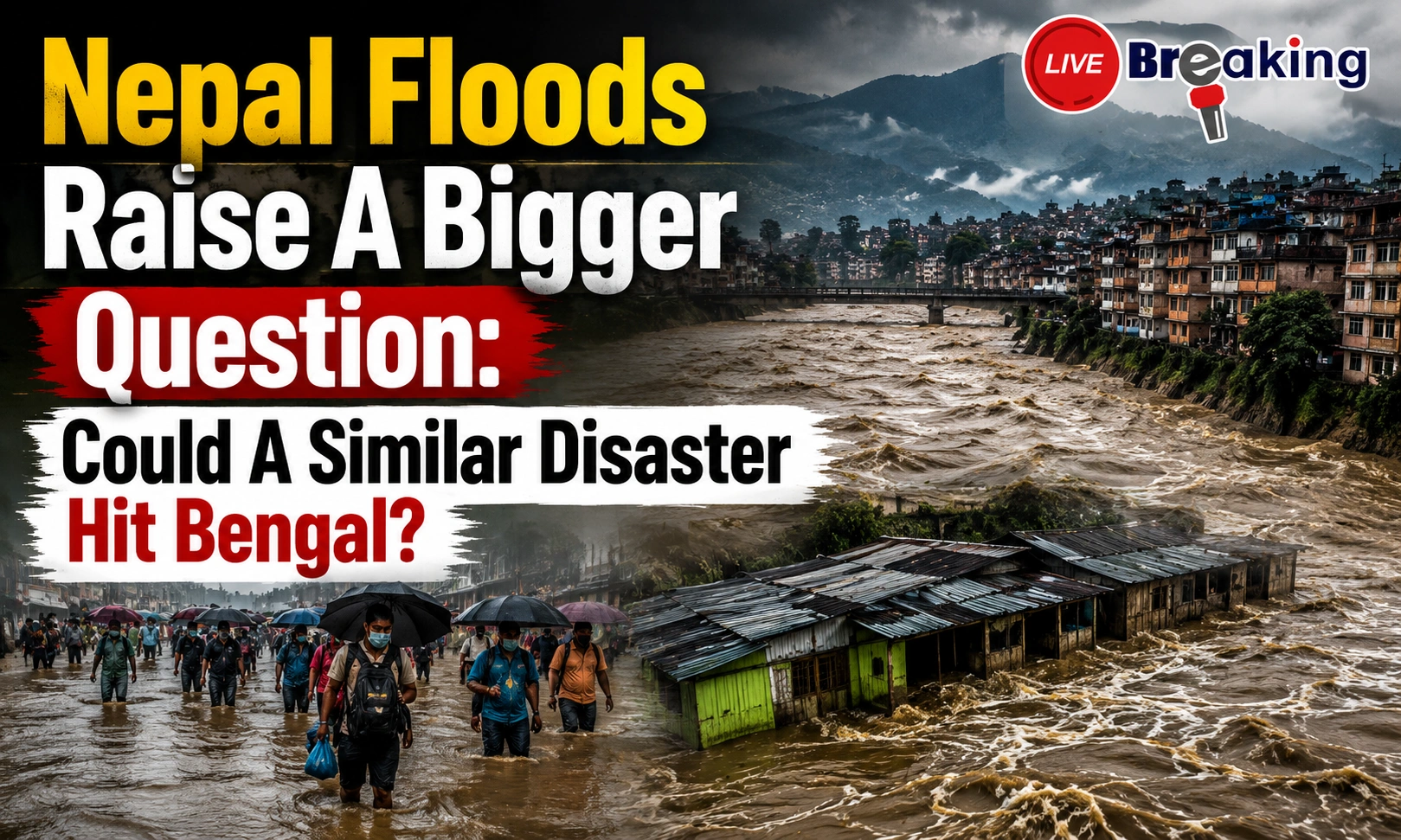
Nepal Floods: The devastating flash floods that struck Nepal have raised an uncomfortable question in neighbouring India: could a disaster of similar scale affect Bengal?
The answer is not a simple yes or no. West Bengal is geographically different from the mountainous areas of Nepal where the latest disaster unfolded. However, parts of the state—particularly North Bengal and the Himalayan foothills—are exposed to risks from sudden river surges, landslides, extreme rainfall and glacial or mountain-related events upstream.
The concern is particularly significant because rivers originating in the Himalayan region do not stop at national borders. Water released suddenly upstream can travel rapidly downstream, potentially affecting settlements, roads, bridges, agriculture and other infrastructure.
The latest Nepal disaster therefore serves as more than a tragedy in a neighbouring country. It is also a warning about the need for stronger monitoring and early-warning systems across the wider Himalayan river network.
What Happened In Nepal?
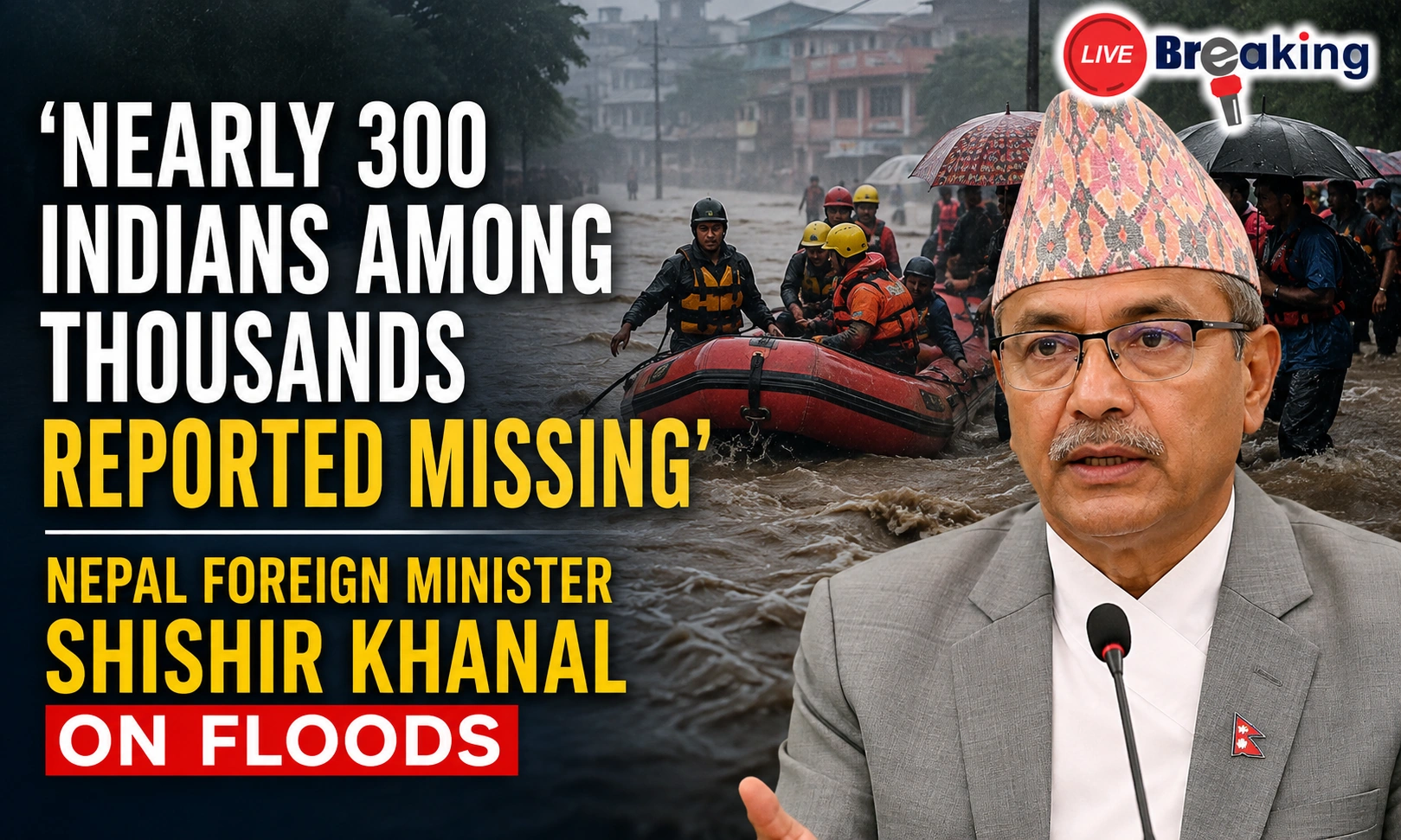
The recent disaster in Nepal was an exceptionally destructive flash-flood event. Preliminary scientific assessments have pointed towards a major mountain-related event, with a glacier collapse and associated debris flow emerging as a possible trigger. Reuters reported that satellite imagery showed a substantial portion of a glacier breaking away at high altitude before the resulting material moved rapidly towards the valley.
The sudden surge affected rivers and settlements downstream, destroying infrastructure and leaving a large number of people dead or missing.
The scale of the disaster has also highlighted a growing concern among scientists: warming temperatures are changing the stability of high-altitude environments.
The Himalayas contain thousands of glaciers and glacial lakes. When ice, rock or water is suddenly released, the resulting flood can travel downstream with enormous force.
In such circumstances, communities may have very little time to react.
Could A Similar Disaster Happen In Bengal?
A Nepal-style mountain flash flood occurring exactly as it did in Nepal is not something that can simply be predicted for West Bengal.
But that does not mean Bengal is risk-free.
North Bengal is connected to the Himalayan drainage system, and several rivers flowing through the region have their origins in the mountains.
The Teesta is perhaps the most prominent example.
The devastating 2023 South Lhonak Lake outburst in Sikkim demonstrated how a high-altitude event can send a destructive surge downstream. The resulting flooding caused extensive damage in Sikkim and affected parts of North Bengal along the Teesta basin. Recent analysis following the Nepal disaster has again drawn attention to this vulnerability.
This means the real question for Bengal is not whether the exact Nepal disaster can be repeated, but whether a sudden Himalayan water or debris event could create dangerous conditions downstream.
The answer is yes.
Why North Bengal Is More Vulnerable
North Bengal has a very different geographical profile from southern West Bengal.
The northern districts are located close to the Himalayan foothills and are crossed by several rivers and streams. Darjeeling, Kalimpong, Jalpaiguri, Alipurduar and neighbouring areas can experience intense rainfall, landslides and sudden rises in river levels.
Mountain terrain can make the consequences worse.
When heavy rain falls over steep slopes, water can move rapidly downhill. Landslides can temporarily block rivers, creating unstable natural dams. If such a blockage collapses suddenly, a large volume of water and debris can move downstream.
This can turn a local mountain event into a much larger downstream emergency.
The Teesta Factor
The Teesta basin deserves particular attention.
The river flows from the Himalayan region through Sikkim before entering West Bengal and eventually Bangladesh. Because of this geography, events occurring upstream can have consequences for communities farther downstream.
The 2023 South Lhonak Lake outburst was a major reminder of this risk.
The event demonstrated that the danger does not necessarily come from conventional monsoon flooding alone. Glacial lakes, landslides and sudden releases of water can create a different category of flood threat.
The lesson from Nepal is therefore particularly relevant to the Teesta basin: monitoring conditions high in the mountains is just as important as monitoring rainfall in downstream districts.
Climate Change Is Making The Risk More Complicated
Climate change adds another layer of uncertainty.
Scientists have increasingly warned that rising temperatures are altering glaciers, snow cover, permafrost and mountain ecosystems across the Himalayas. The Associated Press reported that warming in the Hindu Kush Himalaya region is increasing concerns about glacier-related disasters, including floods, avalanches and debris flows.
This does not mean that every extreme flood can automatically be attributed to climate change.
Natural geological processes remain extremely important.
However, a warmer climate can influence the physical conditions in which glaciers, snow and frozen ground exist. That can potentially alter the probability or severity of certain mountain hazards.
For downstream states such as West Bengal, this makes long-term monitoring increasingly important.
What About South Bengal And Kolkata?
The risk profile of South Bengal is different.
Kolkata and the southern districts are not directly exposed to the same Himalayan flash-flood mechanism as North Bengal. However, they face other flood-related risks, including intense monsoon rainfall, river flooding, drainage congestion and cyclonic weather systems.
Recent flooding in parts of southern West Bengal has also demonstrated how heavy rainfall and swollen rivers can create serious local emergencies. In August, rivers breached embankments in parts of Bankura, Purulia and West Midnapore, while water releases from reservoirs contributed to flood-like conditions in parts of the lower Damodar basin.
Therefore, it would be misleading to suggest that one Nepal-type event could simply sweep into Kolkata.
Instead, Bengal has multiple and geographically different flood risks.
Early Warning Systems Could Save Lives
One of the biggest lessons from Himalayan disasters is the importance of early warning.
A few minutes can make a dramatic difference during a flash flood.
For communities living near vulnerable rivers, authorities need reliable systems that can detect sudden changes in water levels and communicate warnings quickly.
This requires more than installing a siren.
Read More: Telangana Boy Stabbed Principal 27 Times. How His Lavish Lifestyle Busted Him
Monitoring should include:
- River-level sensors
- Rainfall monitoring
- Glacier and glacial-lake surveillance
- Landslide detection
- Satellite observation
- Real-time communication between neighbouring regions
- Community-level evacuation plans
- Regular disaster preparedness exercises
The Nepal disaster has renewed calls for better monitoring of dangerous Himalayan environments and stronger cooperation between regions sharing river systems.
Cross-Border River Coordination Is Essential
Rivers do not recognise political boundaries.
A flood originating in the Himalayas can potentially affect Nepal, India and Bangladesh at different stages of the river system.
That makes information sharing extremely important.
If an unusual rise in water level or a dangerous blockage is detected upstream, downstream authorities need to know as quickly as possible.
This is especially relevant for river systems connected to North Bengal and neighbouring Himalayan regions.
Better cross-border coordination could allow authorities to issue warnings before floodwaters reach vulnerable communities.
Bengal Has Already Seen The Warning Signs
The concern about Bengal is not purely theoretical.
North Bengal and neighbouring Himalayan regions have experienced major flood and landslide events in recent years.
Read More: “Extreme Appeasement”: Amit Shah Blasts Congress Over Full Vande Mataram Snub
The 2023 Teesta disaster was one of the clearest examples. The event caused extensive damage and demonstrated how a sudden high-altitude water release can rapidly affect downstream areas.
The latest Nepal catastrophe reinforces the same message: mountain hazards can move far beyond the location where they begin.
For Bengal, preparedness therefore cannot stop at the state border.
What Should Authorities Do Now?
The priority should be preparedness rather than panic.
There is no reason for people across Bengal to assume that a Nepal-scale disaster is about to occur.
At the same time, authorities should treat the Nepal event as an opportunity to review existing disaster-management systems.
Particular attention should be given to North Bengal’s vulnerable river corridors, bridges, settlements and roads.
Authorities could also strengthen communication between meteorological agencies, disaster-management departments, hydrological agencies and local administrations.
Communities living near rivers should know where to go during an emergency and how warnings will reach them.
The Bigger Lesson For Bengal
The most important lesson from Nepal is that modern flood risk is no longer simply about monsoon rainfall.
Read More: One Hour Of Rain Exposes Gurugram Civic Infrastructure Again
A disaster can emerge from a combination of geological instability, extreme rainfall, glacier dynamics, landslides and sudden water releases.
For Bengal, this means disaster planning must consider both traditional flooding and emerging Himalayan hazards.
The state cannot control what happens in the mountains.
But it can improve how quickly it detects a threat, communicates the warning and moves people to safety.
The Nepal disaster is therefore a warning—not necessarily that Bengal will experience an identical catastrophe, but that the region’s changing environmental conditions demand greater preparedness.
Conclusion
Could a disaster similar to the Nepal floods hit Bengal?
A direct repeat of the same event is not inevitable, and the risks vary significantly across the state. But North Bengal, particularly areas connected to Himalayan river systems, does face genuine exposure to flash floods, landslides and sudden upstream water releases.
The Teesta basin has already shown how a high-altitude disaster can affect downstream communities.
The most effective response is neither alarm nor complacency. It is preparation.
Better satellite monitoring, river sensors, early-warning systems, cross-border information sharing and community preparedness can reduce the human cost of future disasters.
Read More: Kriti Sanon’s Rakhi Ad Pulled Down Amid Feud With Kangana Ranaut Over ‘Bikini’ Remark
As the Himalayas undergo rapid environmental change, the question for Bengal should not simply be, “Could it happen here?”
It should be:
“If it happens, are we prepared?”
Frequently Asked Questions
1. Could the Nepal flood directly affect West Bengal?
A Nepal flash flood does not automatically mean that West Bengal will be flooded. However, Himalayan river systems connect neighbouring regions, and sudden upstream water releases can affect downstream areas depending on the river, location and scale of the event.
2. Which part of Bengal is most vulnerable to Himalayan floods?
North Bengal is more exposed to Himalayan-related hazards than southern West Bengal. Areas around the Teesta basin and Himalayan foothills face risks from flash floods, landslides, intense rainfall and sudden river-level changes.
3. Is the Teesta River a flood risk for Bengal?
Yes. The Teesta basin has experienced major flood events, including the consequences of the 2023 South Lhonak Lake outburst in Sikkim. Such events demonstrate the potential for sudden upstream hazards to affect downstream communities.
4. Can climate change increase flood risks in the Himalayas?
Climate change is altering glaciers, snow and high-altitude environments. Scientists are concerned that these changes can contribute to increased risks from glacier-related floods, landslides and other mountain hazards, although each disaster has to be assessed individually.
5. Is Kolkata at risk from a Nepal-style flash flood?
Kolkata does not face the same direct Himalayan flash-flood mechanism as parts of North Bengal. Its major flood risks are associated with heavy rainfall, drainage problems, river levels, cyclonic systems and other factors affecting southern Bengal.
6. What can be done to prevent flood deaths?
Flood deaths can be reduced through reliable early-warning systems, river monitoring, evacuation planning, stronger infrastructure, public awareness and rapid coordination between disaster-management agencies.
Key Risk Comparison
| Risk Factor | Nepal Himalayan Region | North Bengal | South Bengal/Kolkata |
|---|---|---|---|
| Flash Flood | Very High in vulnerable mountain valleys | High in some Himalayan foothill areas | Lower, but possible under extreme rainfall |
| Glacial Lake Outburst | Significant | Indirect downstream risk | Very limited direct risk |
| Landslides | Very High | High in hilly areas | Generally Low |
| Extreme Rainfall | High | High | High during monsoon systems |
| River Flooding | High | High near vulnerable rivers | High in several river basins |
| Cyclone Risk | Very Low | Low | High |
| Urban Drainage Flooding | Localised | Localised | Significant, especially in Kolkata |
| Need For Early Warning | Critical | Critical | Very Important |
Read More: “There’s Pressure”: Congress vs BJP As Penguin India Drops Sonia Gandhi’s Memoir
Suggested SEO Keywords
Primary Keyword: Nepal floods Bengal
Secondary Keywords:
- Nepal flood latest news
- Bengal flood risk
- West Bengal flood
- North Bengal flood
- Teesta River flood
- Nepal floods impact on Bengal
- Himalayan flood risk
- Bengal flash flood
- glacial lake outburst flood
- North Bengal disaster
- Teesta basin flood
- climate change Himalayas
- Nepal flood India impact
Like this post?
Register at Live Breaking to never miss out on videos, celeb interviews, and best reads.