

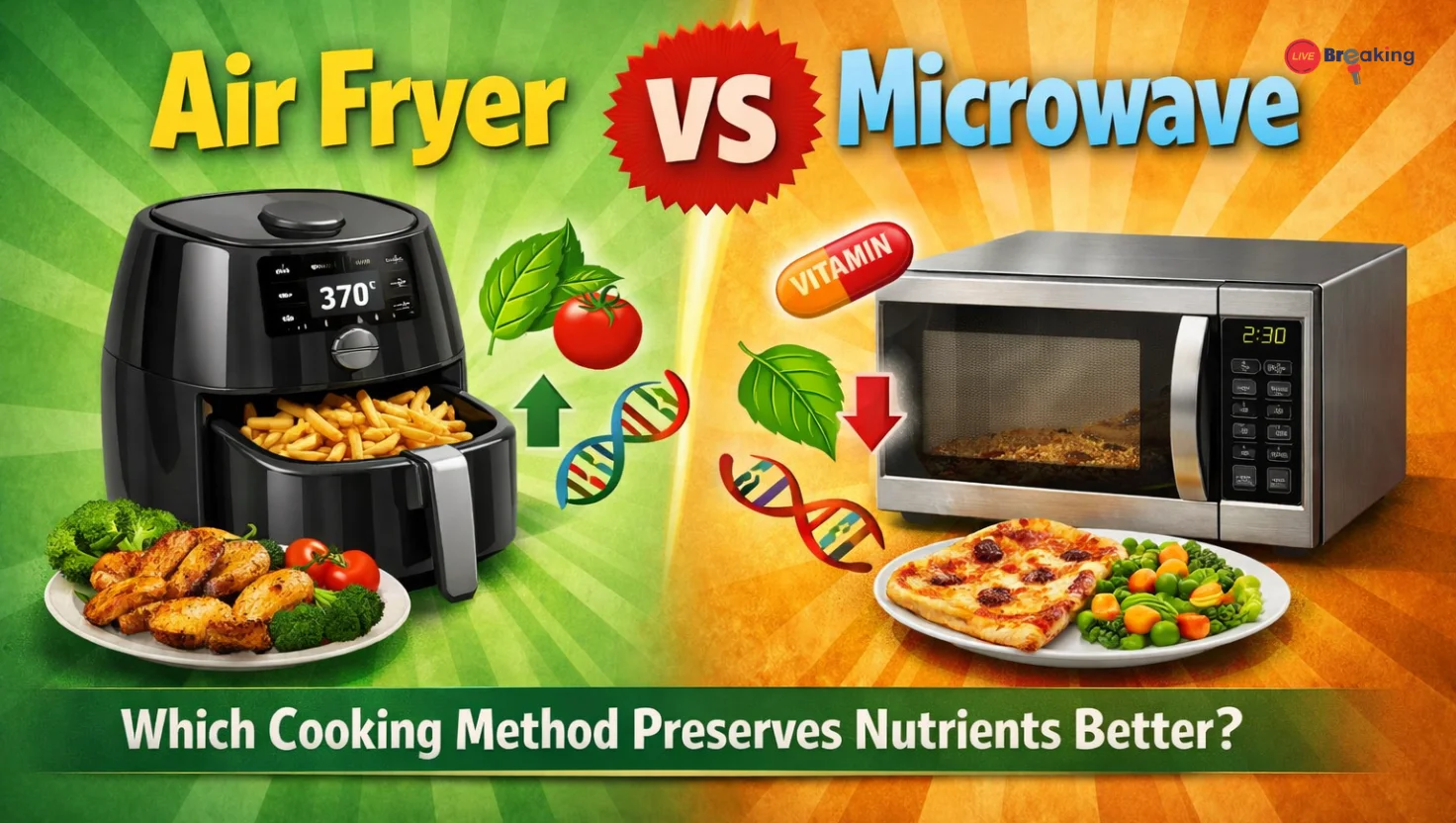
Air Fryer vs Microwave: Which Cooking Method Preserves Nutrients Better?
In today’s fast-paced lifestyle, kitchen appliances like air fryers and microwaves have become essentials. While both offer convenience and speed, many health-conscious individuals are now asking a critical question: Which method preserves nutrients better—air frying or microwaving?
Understanding how each cooking technique impacts vitamins, minerals, and overall food quality can help you make smarter dietary choices.
Understanding Nutrient Loss During Cooking
Cooking, regardless of the method, can affect nutrient levels in food. Nutrients like vitamin C and B vitamins are particularly sensitive to heat, water, and cooking time.
Key Factors That Affect Nutrient Retention:
- Temperature used during cooking
- Cooking duration
- Exposure to water
- Oxygen and light exposure
Generally, the longer and hotter you cook food, the more nutrients are lost.
What is an Air Fryer and How Does It Work?
An air fryer uses rapid hot air circulation to cook food, giving it a crispy texture similar to deep frying but with minimal or no oil.
Benefits of Air Frying:
- Requires less oil
- Produces crispy texture
- Faster than conventional ovens
- Suitable for snacks and fried-style foods
However, it operates at high temperatures, which can affect heat-sensitive nutrients.
What is a Microwave and How Does It Work?
A microwave uses electromagnetic waves to heat water molecules in food, cooking it quickly from the inside out.
Benefits of Microwave Cooking:
- Extremely fast cooking time
- Minimal use of water
- Energy-efficient
- Preserves color and texture of vegetables
Microwaves are often considered one of the best methods for retaining nutrients due to shorter cooking times.
Air Fryer vs Microwave: Nutrient Comparison Table
| Factor | Air Fryer | Microwave |
|---|---|---|
| Cooking Time | Moderate | Very Short |
| Temperature | High | Moderate |
| Water Usage | None | Very Low |
| Vitamin Retention | Moderate | High |
| Texture | Crispy | Soft |
| Oil Requirement | Low | None |
| Best For | Fries, nuggets, meats | Vegetables, reheating, steaming |
Which Method Retains More Nutrients?
Microwave Wins for Nutrient Retention
Microwaving is generally better at preserving nutrients because:
- It uses less cooking time
- Requires little to no water
- Reduces nutrient leaching
For example, steaming vegetables in a microwave helps retain vitamin C better than most other cooking methods.
Read more: Tap Water Vs RO Water: Expert Explains Which Is Harmful
Air Fryer: Better Than Deep Frying, But Not the Best
Air fryers are healthier than traditional frying, but:
- High temperatures can degrade some vitamins
- Longer cooking times compared to microwaves may lead to slight nutrient loss
Still, it’s a great option for reducing fat intake while maintaining taste.
Best Foods for Each Cooking Method
Foods Ideal for Microwave:
- Vegetables (broccoli, spinach, carrots)
- Rice and grains
- Leftovers
- Soups
Foods Ideal for Air Fryer:
- French fries
- Chicken wings
- Fish fillets
- Frozen snacks
Health Perspective: More Than Just Nutrients
While nutrient retention is important, overall health also depends on:
- Oil consumption
- Calorie intake
- Cooking habits
Read more: How Kareena Kapoor Stays Fit At 45: From Deadlift To Barbell Hold
Air fryers reduce oil significantly, which helps with weight management. Meanwhile, microwaves avoid added fats entirely.
Expert Tips to Maximize Nutrient Retention
- Use minimal water when cooking vegetables
- Avoid overcooking
- Cut vegetables into larger pieces to reduce nutrient loss
- Cover food while microwaving to trap steam
- Use lower temperatures when possible
Final Verdict: Which One Should You Choose?
There is no one-size-fits-all answer.
- Choose microwave for maximum nutrient preservation and quick cooking
- Choose air fryer for better texture and low-oil alternatives to fried food
The best approach is to use both appliances depending on the type of food and your health goals.
FAQs
Q1: Does microwaving destroy nutrients?
No, microwaving actually preserves nutrients better than many traditional methods because of shorter cooking times and minimal water usage.
Q2: Is air-fried food healthy?
Yes, air-fried food is healthier than deep-fried food as it uses significantly less oil, reducing fat and calorie intake.
Q3: Which is better for vegetables: air fryer or microwave?
Microwave is better for vegetables because it retains more vitamins, especially vitamin C and B vitamins.
Q4: Can I use both appliances in a healthy diet?
Absolutely. Using both allows you to balance nutrition and taste efficiently.
Q5: Does high heat in air fryers destroy nutrients?
High heat can degrade some nutrients, but the impact is less severe compared to deep frying.