Iran’s Underground ‘Missile Cities’: Strategic Defense Turning Into a Major Weakness
A network of secret missile bases hidden beneath mountains once symbolized Iran’s military strength. But in the evolving conflict with the United States and Israel, those underground fortresses are increasingly becoming exposed targets.
Introduction
For years, Iran quietly built a vast network of underground military bases known as “missile cities.” These facilities—hidden deep inside mountains and tunnels—were designed to store, protect, and launch ballistic missiles away from enemy surveillance.
However, recent developments in the Middle East suggest that the very infrastructure meant to secure Iran’s missile capabilities might now be a strategic vulnerability. According to multiple reports, targeted airstrikes and satellite surveillance have significantly damaged several missile facilities and reduced Iran’s missile launch capacity.
The shift highlights how modern warfare technologies—from bunker-busting bombs to real-time intelligence—are changing the effectiveness of underground military strategies.
What Are Iran’s Underground “Missile Cities”?
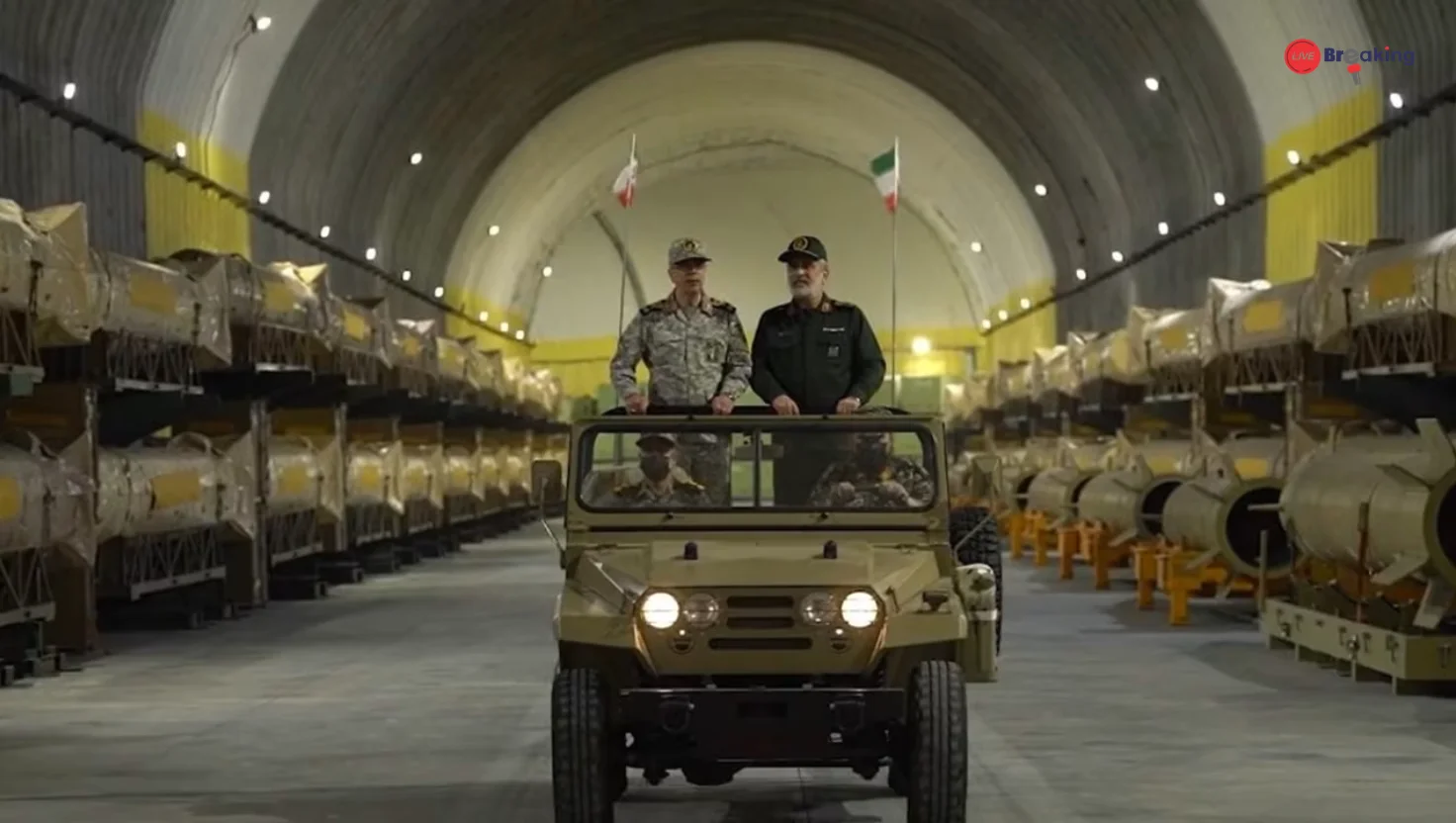
Iran’s underground missile bases are fortified complexes constructed beneath mountains or deep underground tunnels. They are operated primarily by the Islamic Revolutionary Guard Corps (IRGC) and designed to house ballistic missiles, launch vehicles, and command centers.
These facilities are believed to exist across multiple provinces in Iran, with some estimates suggesting hundreds of such bases nationwide.
The concept behind these “missile cities” is simple:
-
Protect missiles from airstrikes
-
Enable surprise missile launches
-
Maintain operational readiness during war
Many of these underground networks stretch for tens of kilometers and contain storage areas for thousands of missiles, including medium-range and long-range ballistic weapons.
Iran has periodically released footage of these facilities to demonstrate its military strength and deterrence capability.
Why Iran Invested Heavily in Underground Missile Bases
Iran’s missile strategy is deeply influenced by its geopolitical situation. Surrounded by rival powers and facing decades of sanctions and threats of military action, Tehran invested heavily in asymmetric defense systems.
Missile cities were created to achieve three key goals:
1. Protection Against Airstrikes
Underground tunnels provide natural shielding from conventional bombing.
2. Strategic Deterrence
By storing large missile arsenals underground, Iran hoped to maintain the ability to retaliate even if attacked.
3. Surprise Launch Capability
Missiles can be rolled out from hidden tunnel entrances and launched quickly, creating the possibility of sudden barrages.
This strategy became a central pillar of Iran’s military doctrine over the past two decades.
How These Missile Cities Became a Weak Point
Despite their intended security, recent military operations have exposed several weaknesses in Iran’s underground infrastructure.
Precision Airstrikes
Satellite intelligence and surveillance have allowed adversaries to identify tunnel entrances and launch sites. Once detected, these locations can be targeted with specialized bunker-buster bombs capable of penetrating reinforced structures.
Targeting Support Infrastructure
Even when missiles stored deep underground survive, surrounding infrastructure—such as communication systems, launch vehicles, and tunnel entrances—can be destroyed.
Satellite images released recently showed significant damage near missile base tunnel entrances, affecting operational capabilities.
Decline in Missile Launches
According to military assessments, Iran’s missile launch rate dropped dramatically during recent conflict phases, with an 86% decline within just four days due to sustained strikes and surveillance.
This indicates that underground facilities alone may not guarantee operational resilience.
Modern Warfare Is Changing the Rules
Iran’s underground missile strategy was developed at a time when surveillance and targeting technologies were less advanced.
Read more: How Mossad Spies & Hacked Traffic Cameras Led to Khamenei Assassination – Deep Intel Report
Today, several modern capabilities challenge such systems:
| Technology | Impact on Underground Bases |
|---|---|
| Satellite Surveillance | Detects hidden entrances and infrastructure |
| Bunker-Buster Bombs | Penetrates reinforced underground facilities |
| AI-Driven Intelligence | Identifies patterns of missile movement |
| Drone Reconnaissance | Provides real-time targeting data |
Because many missile bases rely on fixed tunnel networks, they can become predictable targets once their locations are discovered.
What Iran Might Do Next
Military analysts believe Iran could shift its strategy in several ways:
Increased Use of Mobile Launchers
Mobile missile systems that move constantly are harder to detect and target.
Drone and UAV Expansion
Drones are cheaper, easier to deploy, and harder to intercept.
Decentralized Missile Storage
Instead of concentrating missiles in large underground facilities, Iran may spread them across smaller hidden locations.
These adjustments would reduce the risk of large arsenals being destroyed in a single strike.
Global Implications of the Missile City Strategy
Iran’s missile cities were not only defensive structures—they were also a symbol of military deterrence aimed at rivals such as Israel and the United States.
Read more: Iran Enters Survival Mode After Assassination Of Supreme Leader Khamenei
However, recent events suggest that the balance between defense and vulnerability is shifting.
If underground bases continue to be successfully targeted, it could reshape military strategies across the Middle East and beyond. Countries that rely on underground infrastructure may reconsider whether such systems still provide a reliable shield in an era of precision warfare.
Key Known Underground Missile Base Locations
| Base Name | Province | Purpose |
|---|---|---|
| Khorramabad Underground Base | Lorestan | Missile storage and launch |
| Kenesht Canyon Base | Kermanshah | Strategic missile deployment |
| Panj Pelleh Base | Kermanshah | Underground missile facility |
| Khaji Abad Base | Hormozgan | Coastal missile operations |
These locations are part of a larger network that analysts believe spans the entire country.
Conclusion
Iran’s underground missile cities were once considered one of the most formidable components of its military strategy. Built deep within mountains and reinforced with complex tunnel networks, they were designed to safeguard the country’s missile arsenal and ensure a powerful retaliatory capability.
Yet in modern warfare, technological advancements—from high-resolution satellites to bunker-penetrating weapons—are exposing the limits of such defenses.
What was once seen as a strategic shield may now be turning into a strategic liability, forcing Iran to rethink its military doctrine for the future.
FAQs
1. What are Iran’s missile cities?
Missile cities are underground military bases built by Iran to store, maintain, and launch ballistic missiles from hidden tunnel networks.
Read more: ‘I Would Intervene But…’: Trump On Pakistan-Afghanistan “Open War”
2. Why did Iran build underground missile bases?
Iran created them to protect missiles from airstrikes, maintain deterrence against adversaries, and enable surprise missile launches.
3. Why are these facilities now considered vulnerable?
Advanced surveillance systems and bunker-busting weapons allow adversaries to locate and destroy tunnel entrances and launch infrastructure.
4. How many missile cities does Iran have?
Iranian officials have suggested there could be hundreds of underground missile bases across the country.
5. What could replace missile cities in the future?
Experts believe Iran may increasingly rely on mobile missile launchers, drones, and decentralized weapons storage.