

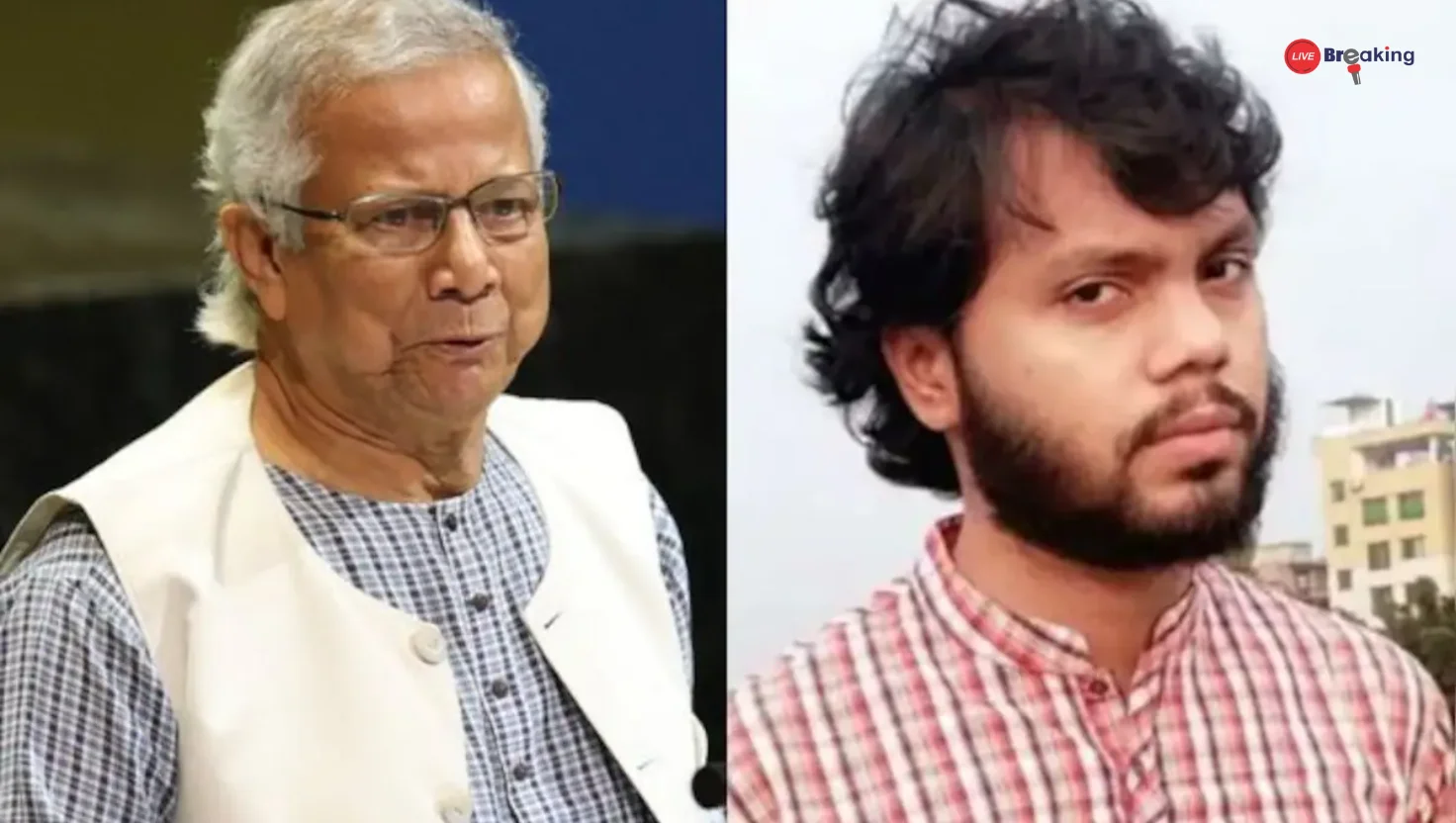
‘You Had Osman Hadi Murder To Derail Polls’: Big Charge Against Yunus Regime
Dhaka, Bangladesh — A political crisis has intensified in Bangladesh following the death of prominent youth leader Sharif Osman Hadi Killed, whose brother and supporters have leveled a sensational accusation — that the interim government led by Muhammad Yunus orchestrated the killing to disrupt the upcoming national elections scheduled for February.
Sharif Osman Hadi, 32, a prominent student activist and spokesperson for the protest group Inqilab Moncho, was shot in broad daylight in Dhaka on December 12, 2025, and succumbed to his injuries on December 18 in a Singapore hospital. The assassination has since ignited nationwide protests, political turbulence, and deep mistrust toward state institutions at a critical electoral moment.
Brother’s Allegation: A Government ‘Behind the Killing’ to Disrupt Elections
At a public gathering in Shahbagh, Dhaka, Sharif Omar Hadi, brother of the slain leader, confronted the Yunus-led interim government with a startling claim.
“You had Osman Hadi killed, and now you are trying to foil the election by using this as an issue,” Omar said, sharply accusing authorities of exploitation and even complicity in the murder for political ends. He stressed that Hadi had firmly supported holding the election by February and demanded accountability from those in power.
Omar also warned that attempts to use Hadi’s death as a lever to postpone or delegitimize the national polls would fail, vowing that justice would be pursued relentlessly, whether through courts or mass public action.
Adding to the tension, members of Inqilab Moncho threatened to intensify street protests and potentially topple the Yunus government if quick and credible action is not taken to solve the murder and arrest those responsible.
National Unrest: Protests, Vandalism and Rising Anti-Government Sentiment
The killing of Osman Hadi has sparked violent demonstrations across Bangladesh, particularly in Dhaka and other major urban centers. Since the news of his death, protests have often turned destructive, with mobs storming or attacking offices of major newspapers, cultural institutions, and even diplomatic missions perceived to be aligned with certain political blocs.
Demonstrators have voiced anti-India sentiment, blaming foreign influence for perceived injustices in Bangladesh’s political landscape and targeting Indian diplomatic premises in protest actions.
Meanwhile, journalist leaders and critics have condemned the broader unrest as a failure of security and governance, warning that such instability sets a dangerous precedent less than two months before the general election.
Read more: Rahul Gandhi in Germany: Questions on Polls, Institutional Capture & BJP Clash
Government Response and Promised Action
The interim government, headed by Nobel laureate Muhammad Yunus, has publicly condemned the killing and pledged a speedy investigation and trial. Law enforcement authorities have made several arrests relating to the case and offered rewards for information leading to suspects, but tangible breakthroughs remain limited.
In his remarks, Yunus called Hadi’s death an “irreparable loss for the nation” and urged calm amidst the turmoil, while state institutions declared a period of mourning.
However, critics argue that the pace of justice has been insufficient and that the government’s inability to quickly resolve the case only deepens public distrust.
Political Backdrop: A Fractured Transition
The controversy comes at a sensitive moment in Bangladesh’s political history. Following massive street protests in 2024 that ousted former Prime Minister Sheikh Hasina, Yunus was installed as head of an interim government to oversee the nation and prepare for elections — though questions over its legitimacy persist.
Read more: What RSS Chief Mohan Bhagwat Said and Why the Debate Matters
Opposition figures, including Hasina, have criticized the interim government for eroding democracy and failing to ensure law and order. The Hadi killing has now become a flashpoint in these broader political battles, raising concerns about whether the February elections can proceed without deeper divisions erupting into further unrest.
Looking Ahead: Elections, Justice, and National Stability
As Bangladesh edges closer to its planned February polls, the murder of Osman Hadi and the explosive allegation directed at the interim government threaten to overshadow the electoral process. With public trust at a low ebb, unless credible evidence emerges and justice is visibly served, the nation may face continued protests, political polarization, and the risk of derailing its democratic transition entirely.