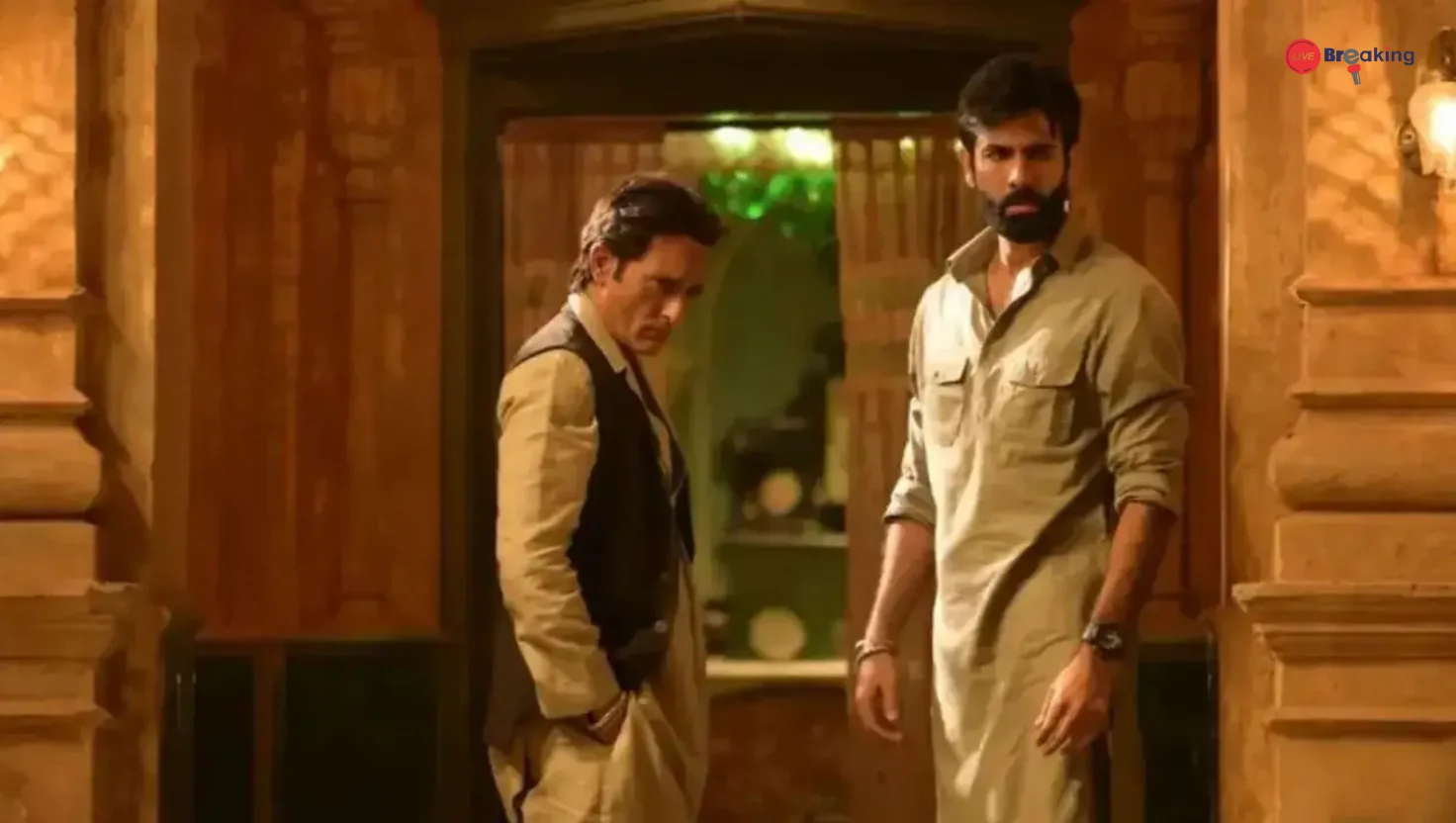
Rehman Dakait: A Heritage Haveli Brings Grit and Grandeur to Indian Cinema
Rehman Dakait: Bollywood’s upcoming period crime drama Dhurandhar is grabbing attention not only for its intense storyline and star cast but also for its striking visual authenticity.
The Lyari residence of the film’s central character Rehman Dakait has been shot at a 19th-century Lal Kothi in Amritsar, Punjab — a heritage structure that adds depth, realism, and gravitas to the film’s narrative.
The revelation has sparked curiosity among cinema lovers and architecture enthusiasts alike, as the Lal Kothi is not just a filming location but a living relic of colonial-era India. Its weathered red facade, grand arches, and old-world charm serve as a powerful backdrop for the fictional yet intense world of Dhurandhar.
Why the Lal Kothi Was Chosen for Dhurandhar
The makers of Dhurandhar aimed to recreate the atmosphere of Lyari, Karachi’s historic and crime-ridden neighborhood, without filming across borders. The solution came in the form of Amritsar’s Lal Kothi — a building that visually mirrors the age, density, and layered history required for Rehman Dakait’s residence.
Production designers reportedly chose the Lal Kothi because of:
-
Its 19th-century Indo-colonial architecture
-
Red brick exterior that naturally conveys power and dominance
-
High ceilings, arched corridors, and expansive courtyards
By using a real heritage structure, the film avoids the artificial feel of studio sets and instead grounds its story in tangible realism.
Rehman Dakait: A Character Rooted in Power and Place
Rehman Dakait, the character whose Lyari residence is shown in the film, is portrayed as a figure of authority, fear, and influence. His home is not merely a house but a symbol of control and legacy, and the Lal Kothi fits that symbolism seamlessly.
Temporary modifications were reversible, ensuring the heritage value of the building remained intact. this approach reflects a growing trend in Indian cinema — respecting architectural heritage while using it to tell compelling stories.
Amritsar’s Lal Kothi: A 19th-Century Architectural Gem
The Lal Kothi used in Dhurandhar dates back to the late 1800s, a period marked by British colonial expansion and Indo-European architectural fusion. Such structures were often owned by affluent families or administrators and were designed to project authority and permanence.
Key architectural features include:
-
Thick red-brick walls (hence the name Lal Kothi)
-
Colonial arches blended with Indian design elements
-
Large verandas and symmetrical layouts
-
Natural ventilation suited for North Indian summers
Though many such buildings have been lost to urban development, this Lal Kothi in Amritsar has survived — making its cinematic use even more significant.
Dhurandhar and the Rise of Authentic Locations
With Dhurandhar, Bollywood continues its shift toward realism-driven filmmaking. Instead of relying solely on constructed sets, filmmakers are increasingly turning to real locations with historical weight.
This strategy:
-
Enhances visual credibility
-
Helps actors immerse themselves in character
-
Connects audiences emotionally with the setting
-
Preserves and highlights lesser-known heritage sites
Films like Dhurandhar demonstrate that production design is not just aesthetic — it’s narrative storytelling.
Read more: How Deepika Padukone Stays Fit at 40: Diet, Workout & Wellness Secrets
Why This Location Matters Beyond Cinema
he spotlight on the Lal Kothi has renewed public interest in Amritsar’s lesser-known heritage structures. Film-induced tourism has often helped revive historical sites, and Dhurandhar could play a similar role.
Experts believe that showcasing real heritage buildings in mainstream cinema:
-
Encourages preservation efforts
-
Raises awareness about architectural history
-
Creates economic opportunities through tourism
-
Adds cultural depth to popular storytelling
FAQs
Q1. Where was Rehman Dakait’s Lyari residence shot in Dhurandhar?
It was filmed at a 19th-century Lal Kothi in Amritsar
Read More: Dhurandhar Box Office Collection: Inches Towards ₹1,300 Crore, Creates Indian Cinema History
Q2. Why didn’t the filmmakers shoot in Lyari, Karachi?
Due to logistical and geopolitical constraints, the production recreated Lyari using a visually similar heritage location in India.
Q3. What is special about the Lal Kothi used in the film?
It features authentic colonial-era red-brick architecture, arched corridors, and a historic layout that required minimal set alteration.
Q4. Is the Lal Kothi a real heritage building?
Yes, it is a genuine 19th-century structure with architectural and historical significance.