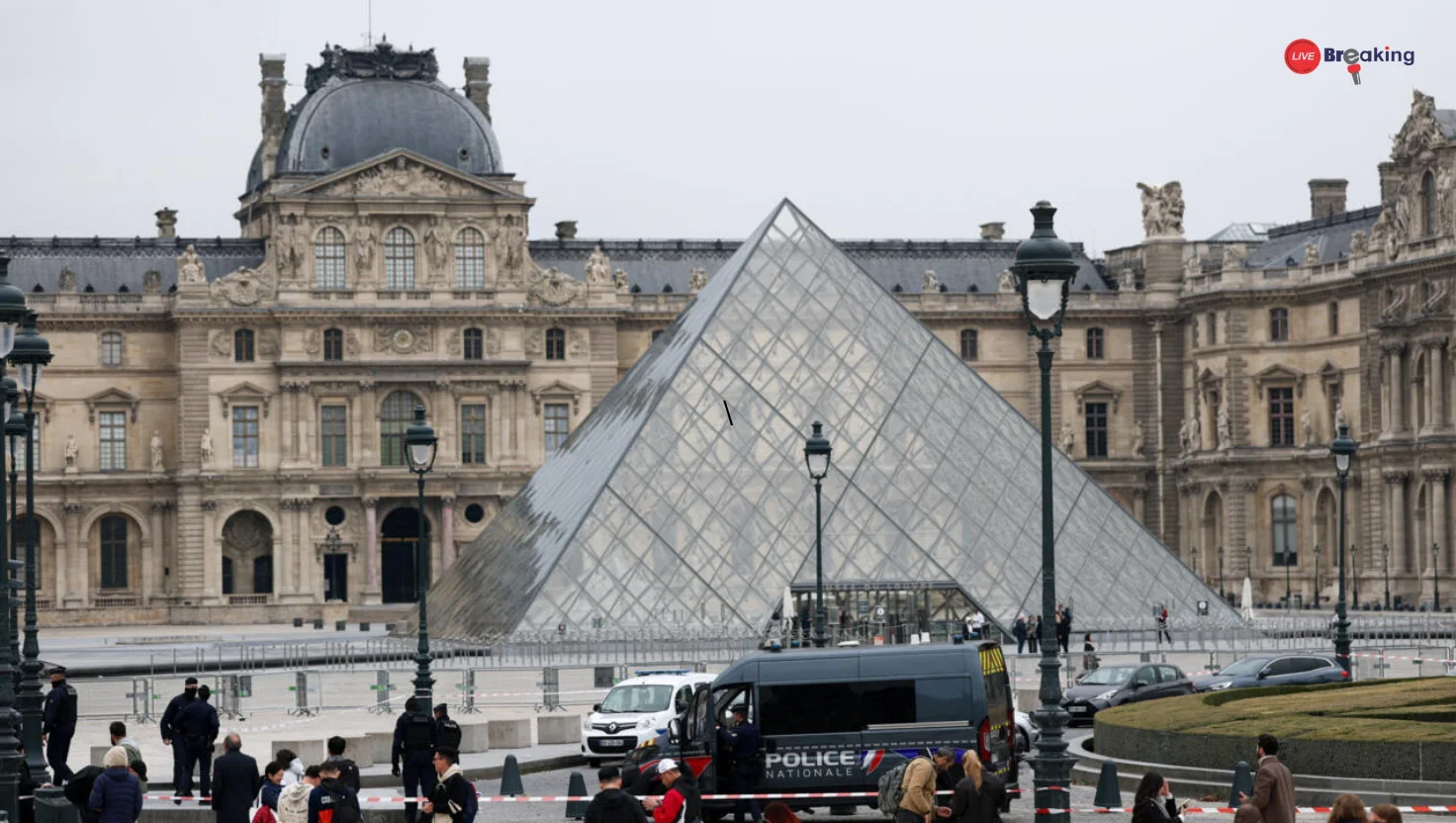
Napoleonic Jewels Stolen From Louvre In Paris In Daring Sunday Heist
In an incident that has sent shockwaves through the global art and heritage community, priceless Napoleonic-era jewels were stolen from the Louvre Museum in Paris in what authorities are calling a “highly sophisticated and daring heist.” The theft, which reportedly occurred in the early hours of Sunday morning, involved jewels once belonging to the French imperial family — relics that held not only immense financial value but also deep historical and cultural significance.
The Louvre, known for its unmatched art collection including the Mona Lisa and the Venus de Milo, has faced theft attempts before, but few have matched the precision and audacity of this latest heist. Early reports suggest that the stolen items include an ornate diamond-encrusted tiara, a sapphire brooch, and several pieces commissioned during the Napoleonic Empire — collectively valued in the tens of millions of euros.
How the Thieves Outwitted Louvre Security
According to preliminary investigations, the heist took place between 2 a.m. and 5 a.m., a period when the museum was closed to the public. Security footage indicates that the thieves gained entry through a restricted service corridor, bypassing multiple alarm systems and internal sensors. French police have described the operation as “expertly executed,” suggesting that the culprits may have had insider knowledge of the museum’s layout and security protocols.
Authorities revealed that the display case housing the jewels had been professionally disarmed, leaving no trace of forced entry. When museum staff began their rounds early Sunday morning, they found the glass intact — but the priceless jewels missing. The discovery triggered an immediate lockdown and a full-scale investigation by the Brigade de Répression du Banditisme (BRB), France’s elite anti-crime unit.
Historical Treasures Lost to Time — Again
The stolen collection had been part of the Louvre’s permanent display dedicated to the Napoleonic Empire, showcasing the splendor and grandeur of early 19th-century France. Among the stolen pieces were jewels that once adorned Empress Joséphine and Empress Marie-Louise, Napoleon Bonaparte’s two wives.
These items were more than luxury accessories; they represented the political power and aesthetic ideals of the French Empire. Crafted by master jewelers of the time, they stood as symbols of Napoleon’s ambition to rival the European monarchies in art and elegance. Their disappearance marks not only a material loss but also a symbolic blow to French cultural heritage.
Experts estimate that the jewels could fetch extraordinary sums on the black market. However, due to their historical provenance, selling them openly would be nearly impossible — suggesting the thieves might have targeted them for a private collector or for ransom.
A Pattern of High-Profile Museum Heists
This incident adds to a growing list of audacious museum thefts across Europe in recent years. From the Green Vault robbery in Dresden to the diamond heist in the Netherlands, cultural institutions have increasingly become targets of organized crime groups with advanced technical skills and international networks.
Read more: Delhi Government to Table School Fee Bill Amid Backlash Over Delay
Security experts note that while museums like the Louvre invest heavily in surveillance and protection, determined thieves often exploit human error or outdated systems. In this case, investigators are exploring whether the burglars may have disabled certain alarms remotely or gained access through an internal maintenance breach.
The Hunt for the Culprits
As of now, no arrests have been made. Parisian police, working in coordination with Interpol, have launched an international search, fearing that the jewels may have already been smuggled out of France. Forensic teams have been combing the Louvre’s restricted areas for fingerprints, DNA traces, or digital footprints left by the thieves.
Authorities are also reviewing footage from security cameras across central Paris, particularly around the Seine River and nearby underground parking zones. Given the museum’s proximity to multiple exit routes, investigators believe the culprits planned their escape with military-like precision.
France Mourns the Loss of Its Imperial Heritage
The French Ministry of Culture has called the heist “a national tragedy,” emphasizing the importance of recovering the stolen artifacts. The Louvre, which reopened to visitors under heightened security, has pledged full cooperation with the authorities.
Read more: Nitish Kumar Flexes Power: JDU Snatches 5 Key Seats Sought by Chirag Paswan
Curators and historians have expressed heartbreak over the loss. “These jewels are not just decorative objects; they are witnesses to history,” said one museum conservator. “To lose them is to lose a piece of France’s identity.”
Conclusion: A Mystery That Captivates the World
The theft of the Napoleonic jewels from the Louvre is more than a sensational crime story — it’s a sobering reminder of the fragility of cultural preservation. As investigators race against time to recover the missing treasures, the world watches with a mix of fascination and outrage.
Whether this daring heist will end in recovery or remain one of history’s great unsolved mysteries, one thing is certain: the legend of Napoleon’s jewels has now entered a new chapter — one written in intrigue, secrecy, and the enduring allure of priceless beauty.