

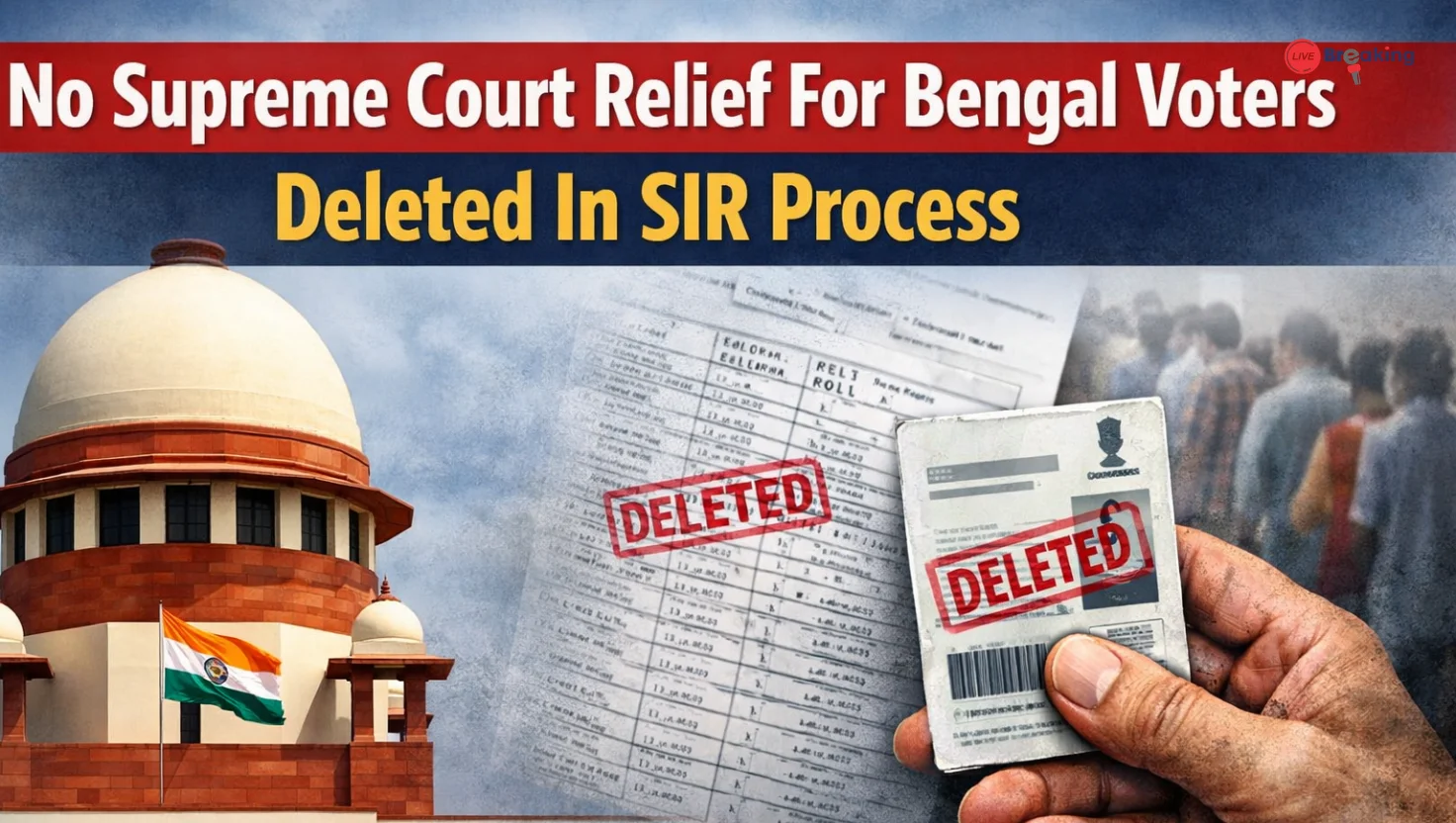
No Supreme Court Relief For Bengal Voters Deleted In SIR Process
In a significant development ahead of upcoming electoral processes, the Supreme Court of India has declined to grant immediate relief to voters in West Bengal whose names were removed during the Special Intensive Revision (SIR) process. The decision has sparked political debate and raised concerns among citizens regarding voter rights and electoral fairness.
The matter was brought before the court following multiple petitions filed by individuals and political representatives who alleged that genuine voters were wrongfully excluded from the electoral rolls during the revision exercise conducted by the Election Commission of India.
What is the SIR (Special Intensive Revision) Process?
The Special Intensive Revision (SIR) is a periodic exercise carried out by election authorities to update voter lists. Its primary goal is to ensure accuracy by removing duplicate, deceased, or ineligible voters while adding new eligible ones.
- Eliminate duplicate or fraudulent entries
- Update voter details
- Add newly eligible voters
- Ensure free and fair elections
However, critics argue that such processes, if not conducted meticulously, can result in the exclusion of legitimate voters.
The Core Issue: Why Were Voters Deleted?
Petitioners claimed that thousands of voters in West Bengal were removed from the electoral rolls without adequate verification or notice. Many affected individuals alleged they were not given sufficient opportunity to prove their eligibility.
Main Concerns Raised:
- Lack of proper notice before deletion
- Administrative errors during verification
- Disproportionate impact on certain communities
- Limited grievance redressal mechanisms
Legal representatives argued that such deletions could disenfranchise voters and undermine democratic participation.
Read More: Why JD Vance Is Leading US Side In Talks With Iran
Supreme Court’s Stand on the Matter
During the hearing, the Supreme Court refrained from issuing an immediate stay or relief. Instead, it emphasized following the existing legal framework and mechanisms available through the Election Commission.
- The Election Commission is the competent authority for electoral roll management
- Affected voters can seek remedies through prescribed legal channels
- Judicial intervention at this stage may not be appropriate
The court’s approach indicates a preference for institutional processes rather than direct judicial interference in electoral administration.
Political Reactions and Public Response
The decision has triggered strong reactions from political parties and civil society groups.
Read more: US Pushed Pakistan to Broker Iran Ceasefire: Inside the Diplomatic Strategy
Opposition’s View:
Opposition leaders criticized the move, claiming it could impact voter turnout and fairness in elections. They demanded a more transparent and accountable revision process.
Government’s Position:
Supporters of the process argue that maintaining an accurate voter list is essential for preventing electoral fraud and ensuring integrity.
Public Sentiment:
Many citizens expressed concern over the lack of clarity and accessibility in the appeal process. Social media discussions highlight fears of voter suppression.
Legal Remedies Available to Affected Voters
Even though immediate relief was denied, affected voters are not without options.
Steps Voters Can Take:
- File objections with local electoral registration officers
- Submit identity and residency proof
- Appeal through designated legal procedures
- Track application status via Election Commission portals
Read more: Plane and Truck Collision at LaGuardia Airport: Multiple Injuries Reported in New York
These mechanisms are designed to ensure that eligible voters can restore their names before elections.
Impact on Upcoming Elections
The removal of voters from electoral rolls could have a direct impact on election outcomes, especially in closely contested constituencies.
- Reduced voter turnout
- Political controversies and legal challenges
- Increased scrutiny of election processes
- Greater demand for transparency
Experts believe that how this issue is handled could influence public trust in electoral institutions.
Data Snapshot: Key Aspects of the Case
| Aspect | Details |
|---|---|
| Region Affected | West Bengal |
| Authority Involved | Election Commission of India |
| Issue | Deletion of voters in SIR process |
| Court Decision | No immediate relief granted |
| Legal Status | Remedies available via EC channels |
| Impact | Potential electoral implications |
Read More: US Fighter Jets Hit Over Iran: 2 Pilots Rescued, 1 Missing Amid Rising Tensions
FAQs
1. What is the SIR process in elections?
The Special Intensive Revision is a process to update voter lists by removing ineligible names and adding new voters to maintain accuracy.
2. Why did the Supreme Court deny relief?
The court stated that the Election Commission is responsible for electoral roll management and that existing legal remedies should be used first.
3. Can deleted voters get their names restored?
Yes, voters can apply through electoral officers and follow legal procedures to reinstate their names.
4. Does this affect upcoming elections?
Potentially yes, as voter deletions may influence turnout and electoral outcomes.
5. What should affected voters do immediately?
They should contact local election authorities and submit required documents to restore their voter status.
Read More: MP Woman Kills Husband After Affair Row: ‘Tum Kaale Ho’ Remark Sparks Shocking Crime
Conclusion
The Supreme Court’s decision not to intervene immediately in the deletion of voters during the SIR process in West Bengal underscores the delicate balance between judicial oversight and institutional autonomy. While the ruling places responsibility on the Election Commission, it also highlights the need for transparent and fair procedures to protect voter rights.
As elections approach, the focus will remain on how effectively grievances are addressed and whether corrective measures are implemented in time. The situation serves as a reminder of the importance of accurate electoral rolls and the fundamental right of every citizen to participate in the democratic process.