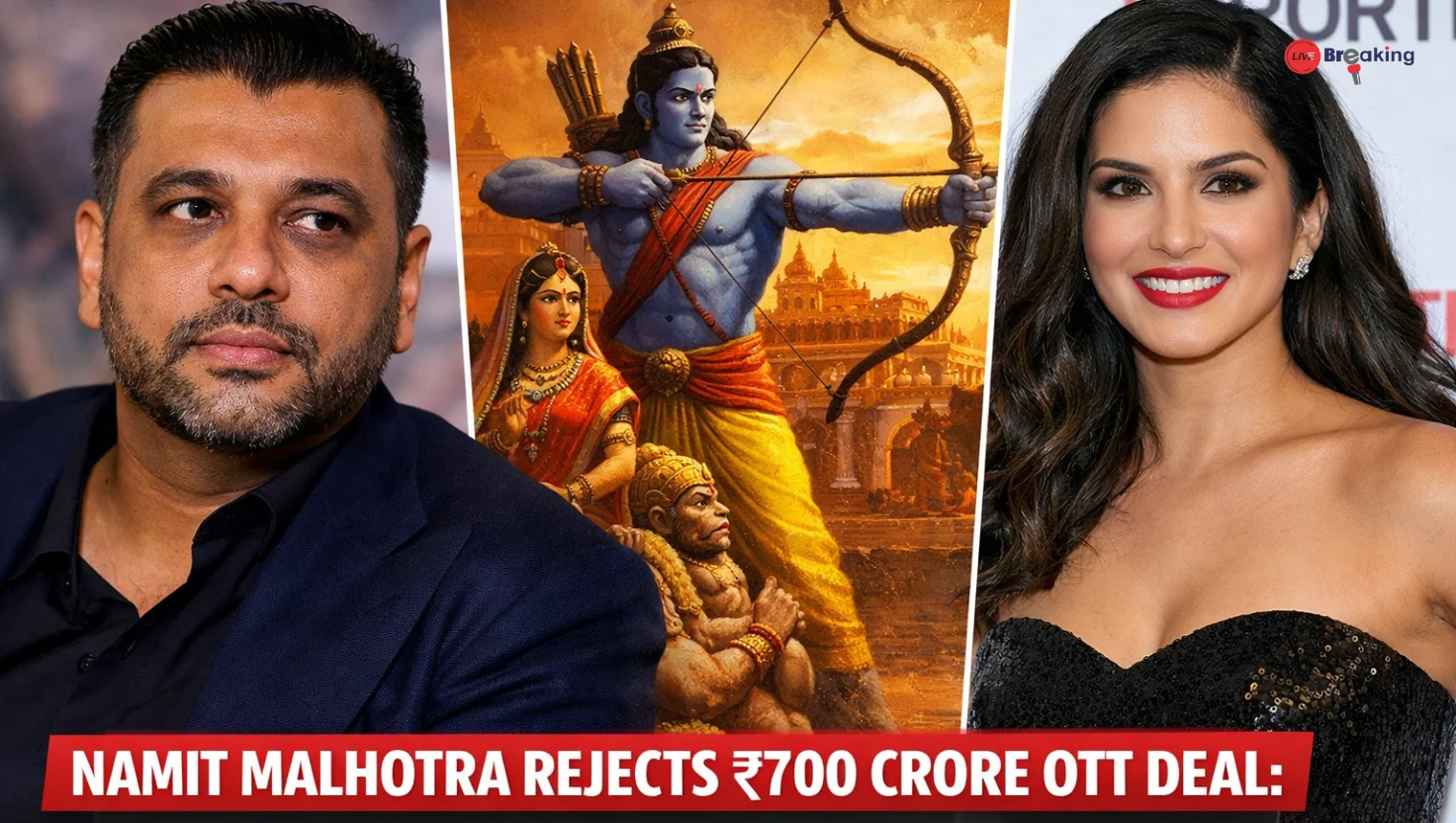
Namit Malhotra Rejects ₹700 Crore OTT Deal: Ramayana Buzz & Sunny Leone’s Big US Break
In a surprising development that has sent ripples across the Indian entertainment industry, Namit Malhotra has reportedly turned down a massive ₹700 crore OTT deal. At a time when digital platforms are aggressively acquiring premium content, such a decision stands out as both bold and strategic.
Malhotra, the CEO of DNEG, is known for his global vision and commitment to cinematic excellence. His decision is believed to be closely tied to his ambitious project—Ramayana, which is already generating immense buzz.
Why Reject a ₹700 Crore Deal? Understanding the Strategy
Turning down a deal of this magnitude is not a casual decision. Industry insiders suggest several possible reasons:
Protecting Theatrical Value
With the revival of theatrical releases post-pandemic, big-budget films are once again drawing massive audiences. Malhotra may be aiming to preserve the cinematic experience of Ramayana rather than opting for a direct OTT release.
Long-Term Brand Building
Instead of immediate profits, Malhotra appears focused on building a long-term franchise. Mythological epics like Ramayana have the potential to evolve into multi-part cinematic universes.
Global Market Vision
Given DNEG’s strong presence in Hollywood, Malhotra likely sees Ramayana as a global product rather than just an Indian release. A theatrical rollout could significantly boost international appeal and revenue.
Ramayana – The Project Everyone Is Talking About
The upcoming adaptation of Ramayana is already one of the most anticipated projects in Indian cinema.
Key Highlights of the Project:
| Aspect | Details |
|---|---|
| Genre | Mythological Epic |
| Scale | Multi-part cinematic universe |
| Target Audience | Global |
| Production Value | High-end VFX (Hollywood level) |
| Creator | Namit Malhotra |
This ambitious retelling aims to redefine how Indian mythology is presented on the global stage. With advanced visual effects and storytelling, it could become India’s answer to international franchises like The Lord of the Rings.
OTT vs Theatrical – A Growing Debate
The rejection of such a lucrative OTT deal has reignited the debate:
OTT Advantages
- Guaranteed revenue
- Wider accessibility
- Lower risk
Read More: Ramayana Teaser Out: Ranbir Kapoor First Look as Lord Rama Stuns Fans
Theatrical Advantages
- Higher long-term earnings
- Global recognition
- Cultural impact
Malhotra’s decision clearly leans toward the latter, signaling confidence in theatrical dominance for large-scale films.
Sunny Leone’s Big Break in the US Market
While the Indian industry is buzzing with Malhotra’s decision, another headline is making waves—Sunny Leone is expanding her presence in the United States entertainment industry.
Expanding Horizons
Sunny Leone has steadily transitioned from Bollywood to international projects. Her growing presence in the US indicates a shift toward global content collaborations.
Strategic Positioning
Unlike traditional Bollywood trajectories, Leone is focusing on:
- Cross-cultural roles
- Digital-first content
- Independent productions
This move aligns with the global trend where actors are no longer limited by geography.
Read More: Abhishek Bachchan Reveals “Severe Ego” Secret Behind 18-Year Marriage With Aishwarya Rai
What This Means for the Entertainment Industry
Both developments—Malhotra’s decision and Leone’s expansion—highlight a larger shift in the entertainment ecosystem.
Rise of Global Indian Content
Indian creators are no longer just catering to domestic audiences. Projects like Ramayana are being designed for worldwide appeal.
Power Shift Toward Creators
Rejecting a ₹700 crore deal shows that creators now have greater control and bargaining power.
Diversification of Talent
Actors like Sunny Leone are proving that success is no longer confined to a single industry or region.
Read more: Ranbir Kapoor Viral Reaction to Fan Praising Dhurandhar 2 at Ramayana Event in New York
Industry Reactions and Market Impact
The industry has been divided in its response:
- Supporters praise Malhotra’s vision and long-term thinking
- Critics argue that turning down guaranteed revenue is risky
However, one thing is clear—this decision has sparked a conversation about the future of content distribution.
Future Outlook – What Lies Ahead?
For Ramayana
- Likely a theatrical-first release
- Potential global franchise
- Heavy investment in VFX and storytelling
For OTT Platforms
- Increased competition for premium content
- Higher deal values in the future
For Artists like Sunny Leone
- More international collaborations
- Greater creative freedom
Read More: Deepika Padukone Cancels Paris Event Amid West Asia Tensions | Flight Cancelled
FAQs
Q1: Why did Namit Malhotra reject the ₹700 crore OTT deal?
He likely rejected it to preserve theatrical value, build a long-term franchise, and maximize global revenue potential for Ramayana.
Q2: What is special about the Ramayana project?
It is a large-scale, VFX-driven mythological epic aimed at global audiences, with potential to become a multi-part cinematic universe.
Q3: Is theatrical release making a comeback?
Yes, especially for big-budget films that offer immersive experiences, theatrical releases are regaining popularity.
Q4: What is Sunny Leone doing in the US?
She is expanding her career through international projects, focusing on digital and cross-cultural content.
Q5: What does this mean for OTT platforms?
OTT platforms may need to offer higher deals and more flexible terms to compete with theatrical opportunities.
Read More: Ek Din Trailer: Sai Pallavi And Junaid Khan Promise A Magical Love Story
Conclusion
The entertainment industry is undergoing a transformative phase. Namit Malhotra’s rejection of a ₹700 crore OTT deal is more than just a business decision—it’s a statement about the future of cinema. At the same time, Sunny Leone’s expansion into the US highlights the growing global footprint of Indian talent.
Together, these developments signal a new era where content is bigger, bolder, and no longer bound by traditional platforms or borders.