In Maharashtra Town, BJP-Congress Unite To Keep Sena Out, Then Suspensions
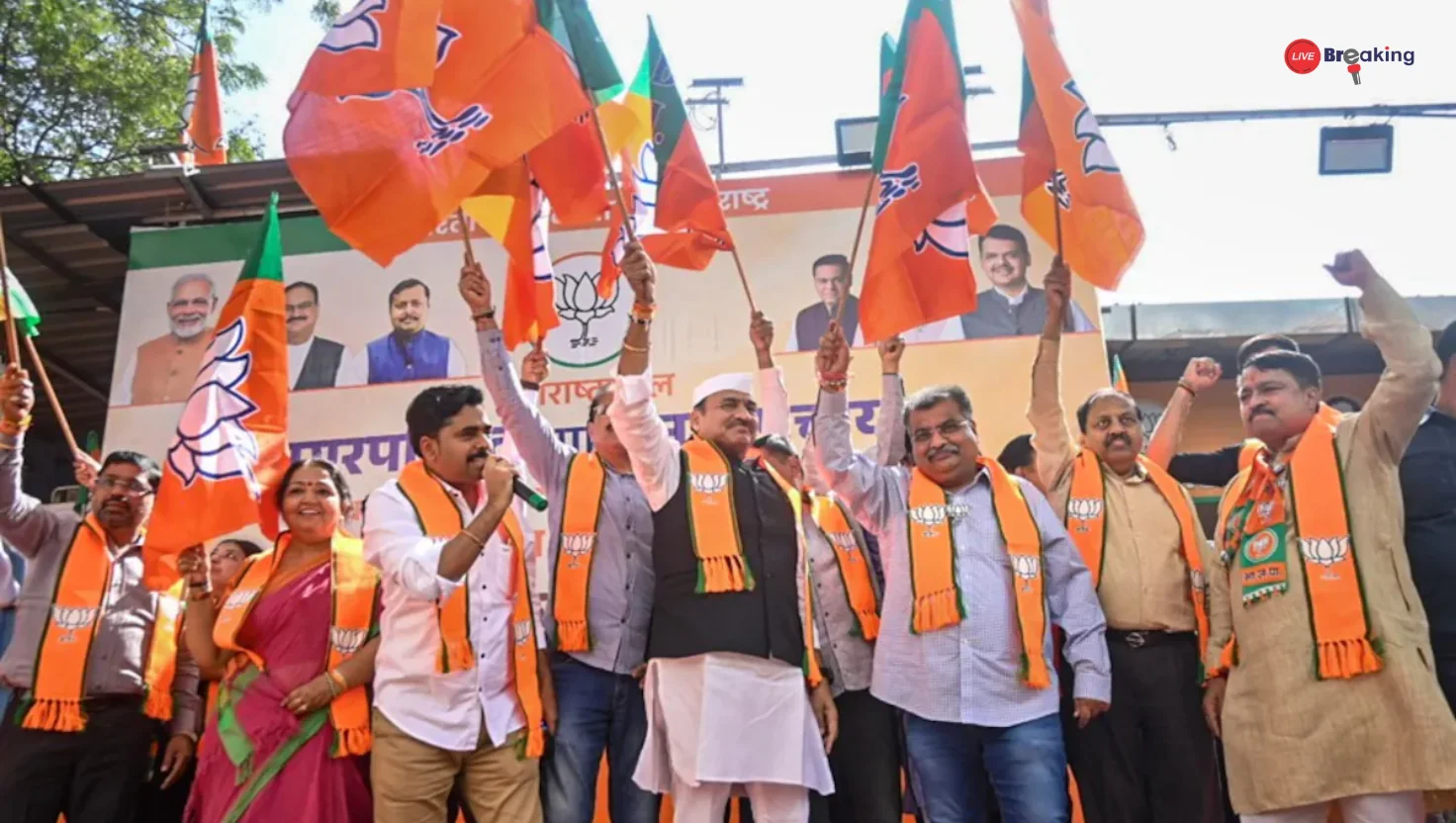
In a remarkable and unusual political development in Maharashtra Ambernath Municipal Council in the Thane district, political rivals the Bharatiya Janata Party (BJP) and the Indian National Congress joined hands to secure control of the local civic body, keeping the Shiv Sena (Eknath Shinde faction) out of power. This move marks a rare realignment of political forces in local body politics and has triggered a significant reaction from party leaderships and political analysts alike.
Traditionally, the BJP and Congress are fierce opponents at both the national and state levels. However, in the context of the 2025–26 Maharashtra local elections, these parties, along with the Ajit Pawar-led Nationalist Congress Party (NCP) faction, formed a post-poll coalition called the “Ambernath Vikas Aghadi” to gain a majority in the municipal council and elect BJP leader Tejashree Karanjule as its President.
Political Arithmetic That Changed the Game
In the municipal elections, the Shiv Sena (Shinde faction) emerged as the single largest party by winning the highest number of seats. However, due to the collective strength of the BJP-Congress-NCP combination, the alliance crossed the majority mark in the 52-member council and managed to form the governing body despite not being the largest individually.
This post-poll strategy allowed the BJP and Congress to sideline a party that is normally seen as the BJP’s partner within the Maha Yuti (Grand Alliance) — an alliance that also includes the Shiv Sena and NCP — thereby reshaping local power equations.
Party Discipline and Repercussions
The fallout from this unconventional political tie-up was swift, especially within the Congress. The Maharashtra Congress leadership took disciplinary action against its local councillors involved in the alliance, accusing them of violating party rules. All Congress corporators who participated in the coalition, along with the Ambernath bloc chief, were suspended from the party for their “unauthorized” decision.
Party officials described the move as a breach of party discipline, underscoring the tension between local tactical decisions and broader party ideology. Such internal action highlights how sensitive national parties are to any perceptions of ideological compromise.
Reaction from BJP Leadership
On the BJP side, the party’s top leadership was quick to distance itself from the unexpected alliance. Maharashtra Chief Minister Devendra Fadnavis reportedly called the coalition with the Congress (and similar tie-ups with AIMIM in other councils) “unacceptable” and directed local units to withdraw from such arrangements. Disciplinary measures were hinted at against those responsible for forming these alliances, indicating the central party’s unease with these post-poll maneuverings.
Read more: Inside Pakistan Washington Lobbying Blitz to Halt India’s Operation Sindoor
This reaction reflects the BJP’s broader political narrative that emphasizes opposition to the Congress at the national level, and how local exigencies sometimes clash with larger ideological positions.
Shiv Sena’s Response and Broader Implications
Unsurprisingly, the sidelined Shiv Sena (Shinde faction) reacted strongly to being ousted. Sena leaders accused the BJP of ideological hypocrisy and opportunistic politics. They argued that the traditional alliance between the BJP and Shiv Sena should have been maintained in Ambernath, and that breaking this understanding could have long-term political ramifications in future elections.
Political analysts see this episode as symptomatic of a larger trend in Maharashtra — where old rivalries and alliances are being tested and sometimes reshaped by local electoral math. The development raises compelling questions about the future of coalition politics and ideological coherence in the state.
What This Means for Maharashtra’s Election Landscape
The Embernath alliance is not an isolated incident. Other local bodies in Maharashtra have witnessed similar unusual collaborations, such as the BJP’s partnership with AIMIM in Akot municipal council, indicating a broader trend of unconventional electoral coalitions.
Read more: Ex-Boyfriend Files Missing Report, Flees After Indian Woman Found Dead
As the Maharashtra civic elections of 2026 continue to unfold across multiple municipalities and corporations, the Ambernath case could foreshadow further strategic recalibrations by political parties eager to secure power. This includes potential shifts in long-standing alliances and the use of post-poll negotiations to secure majority control in closely contested councils.
FAQs
Q1: Why did the BJP and Congress form an alliance in Ambernath?
A: The BJP and Congress, along with the Ajit Pawar-led NCP, formed a post-poll alliance in Ambernath to achieve a majority in the municipal council and keep the Shiv Sena (Shinde faction) out of power, despite Shiv Sena being the largest party individually.
Q2: What action did the Congress take after the alliance?
A: The Maharashtra Congress suspended local corporators and the Ambernath bloc chief for violating party discipline by entering into an alliance with the BJP.
Read more: Supreme Court Stays Bail for Kuldeep Singh Sengar in Unnao Rape Case — Ex MLA to Remain in Jail
Q3: How did the BJP leadership react to this alliance?
A: Senior BJP leaders, including Chief Minister Devendra Fadnavis, condemned the alliance with the Congress, labeling it unacceptable and asked local units to withdraw from such coalitions.
Q4: What does this political move suggest about Maharashtra politics?
A: The Ambernath development highlights shifting political strategies in Maharashtra, where post-poll alliances and tactical collaborations are increasingly influencing power dynamics, sometimes overriding ideological divides.