How NCERT Books Are Published and Why the Supreme Court Ordered a Crackdown
The NCERT has been at the centre of a nationwide debate after the Supreme Court of India intervened in a controversy concerning one of its newly released textbooks. In a rare move, the apex court ordered the immediate withdrawal and seizure of a Class 8 Social Science book following concerns over the portrayal of the judiciary. This incident has sparked a larger conversation about textbook content, academic oversight, and respect for constitutional institutions in school education.
How NCERT Publishes Its Textbooks
Textbook development under NCERT is structured, consultative, and governed by established educational frameworks:
1. Based on National Curriculum Framework (NCF):
NCERT textbooks are primarily guided by the National Curriculum Framework, which outlines educational goals and content standards for various classes. Subject expert committees draft chapters in line with these frameworks.
2. Multi-level Review and Consultation:
Draft textbooks go through several rounds of review, involving academicians, educators, and subject specialists. The aim is to ensure accuracy, relevance, and pedagogical quality before final approval.
3. Printing and Distribution:
Once approved:
-
The Publication Division oversees printing in multiple languages (Hindi, English, Urdu, etc.).
-
Books are distributed via regional printing centres, central warehouses, wholesale agents, and retail outlets.
-
Digital versions are also released on official portals and can be downloaded for free.
4. Role of Boards and States:
While the Central Board of Secondary Education (CBSE) recommends NCERT books for most classes, state boards and State Councils of Educational Research and Training (SCERTs) may adapt or add local context.
What Triggered Supreme Court’s Crackdown?
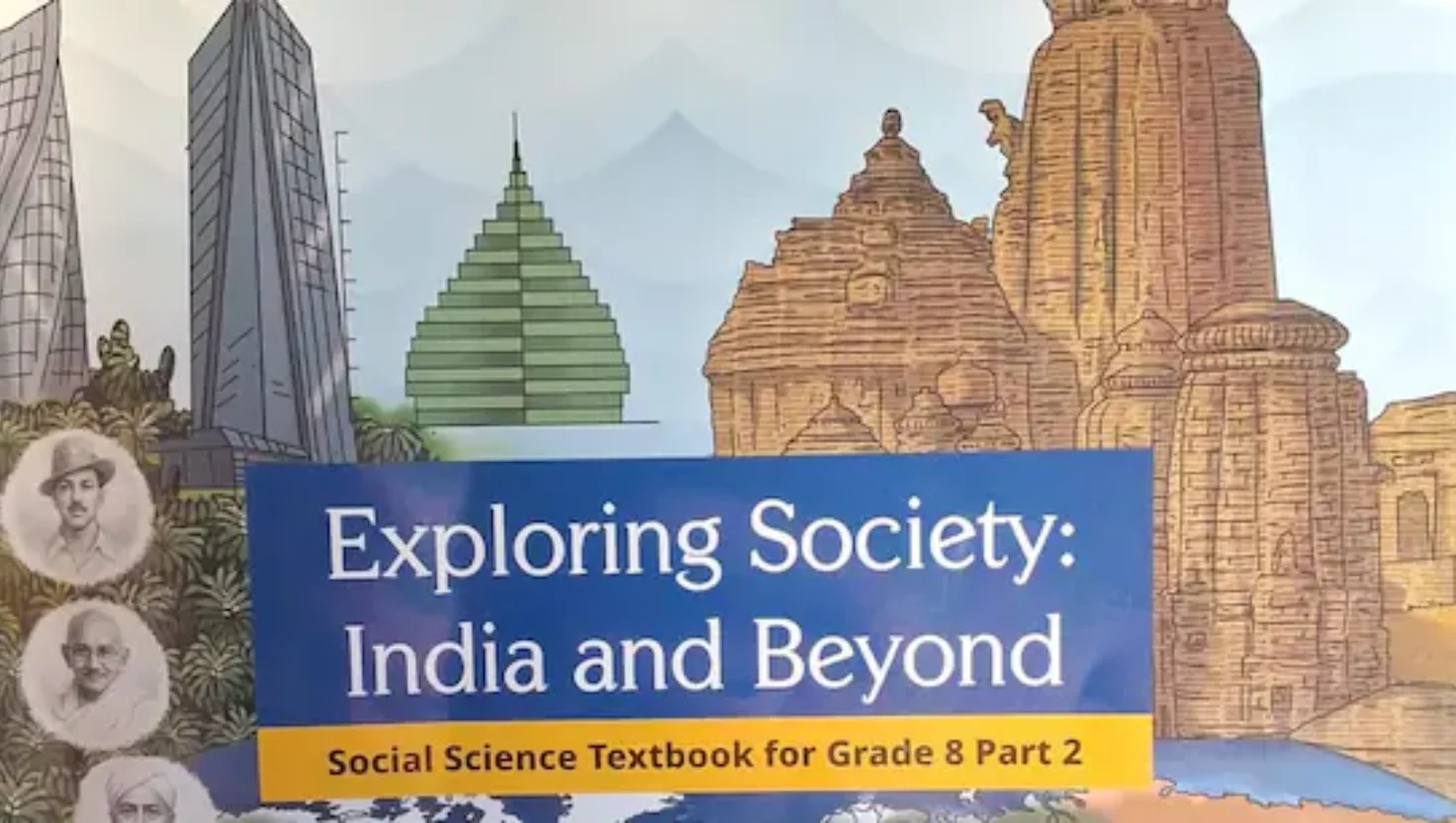
The controversy erupted following the release of a Class 8 Social Science textbook titled “Exploring Society: India and Beyond, Vol II” in February 2026. The focal point was Chapter 4 — “The Role of the Judiciary in Our Society”, which included discussion on alleged corruption and systemic issues within the judiciary.
Key Points of Contention:
-
The chapter referred to “corruption at various levels of the judiciary”, argued to be inappropriate for a foundational school curriculum.
-
It quoted a former Chief Justice of India about judicial challenges.
-
The court characterized the inclusion as a “calculated move to undermine” the judiciary, and observed it could prima facie amount to criminal contempt of court.
The Supreme Court’s bench expressed that such content might shape young minds in a manner that undermines faith in a constitutional authority that is central to democratic governance. It also stated that textbook content must be balanced, factual, and sensitive given its influence on students.
Read more: IITs To Allow Students To Study Across Campuses Starting This Academic Year
Supreme Court Order — What It Means
The Supreme Court’s directives were strong and unequivocal:
-
All physical and digital copies of the textbook were ordered to be removed from circulation immediately.
-
NCERT and state education departments must submit compliance reports within two weeks.
-
The NCERT director was held responsible for ensuring compliance, including recalling distributed copies.
In response, NCERT acknowledged an “error in judgement”, halted distribution, and promised to revise the contentious chapter for the academic session 2026-27.
Broader Implications and Reactions
Educational Concerns:
Experts highlighted that while discussing institutions in civic education is important, content should be framed carefully so as not to distort students’ understanding or inadvertently undermine public trust.
Judicial Response:
The court made clear it will not tolerate content in educational materials that it believes defame constitutional institutions, signalling a need for stricter internal review mechanisms.
FAQs (Frequently Asked Questions)
Q1: What triggered the Supreme Court’s action against NCERT?
➡️ The inclusion of a chapter discussing alleged judicial corruption in a Class 8 textbook raised concern at the Supreme Court, which ordered recall of all copies citing potential contempt.
Read more: PM Modi Congratulates BNP’s Tarique Rahman: “India Will Support Democratic, Inclusive Bangladesh”
Q2: Are NCERT textbooks legally mandated for all schools?
➡️ NCERT textbooks are recommended by CBSE and widely adopted, but state boards may choose or adapt content as per local needs.
Q3: What will happen to the seized textbooks?
➡️ All copies will be retrieved and rewritten; compliance reports must be filed with the Supreme Court.
Q4: Can NCERT include critical content about public institutions?
➡️ Yes, but it must be balanced, fact-checked, and appropriate for the target age group. The recent incident highlights enhanced scrutiny expectations.