

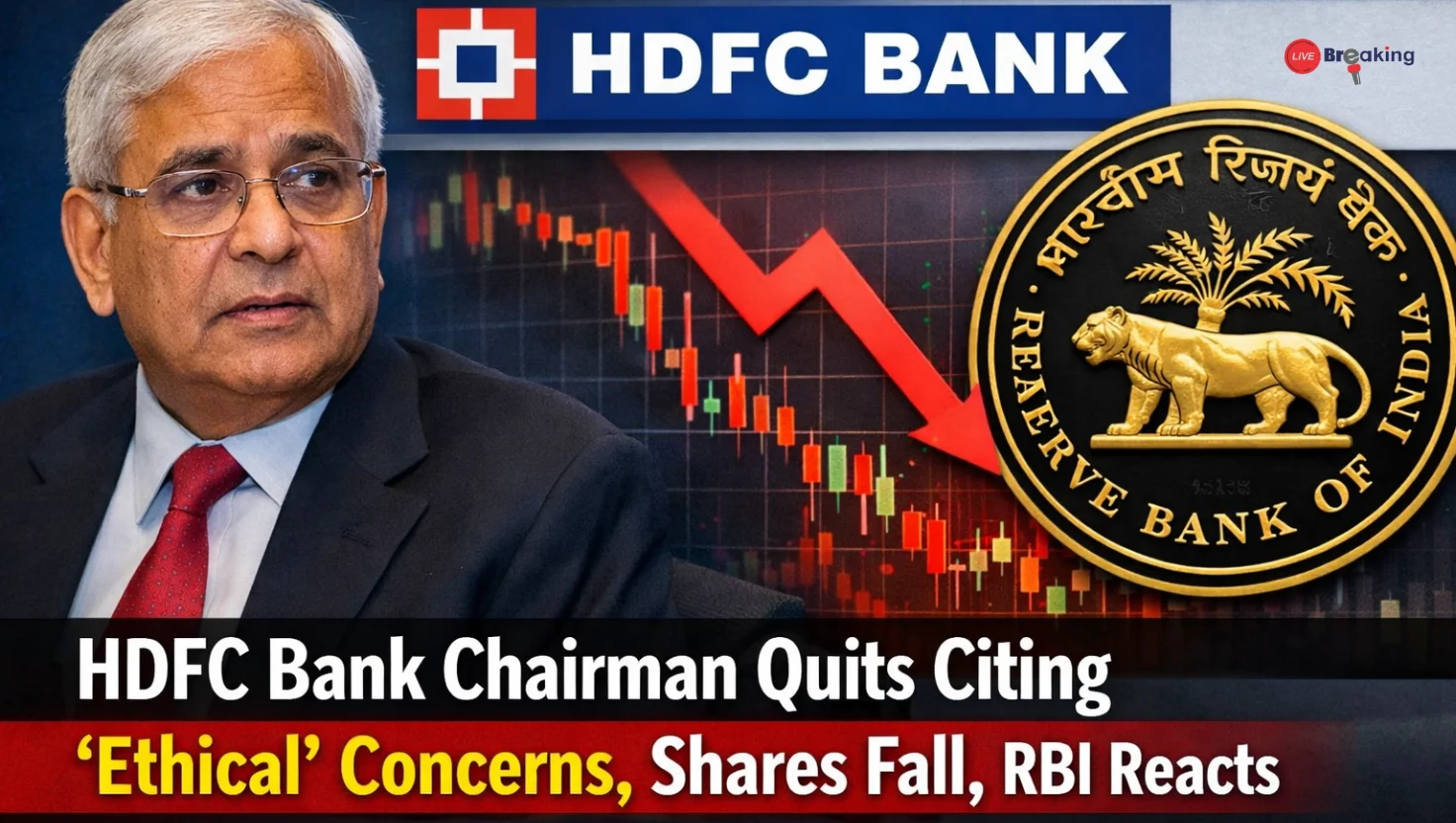
HDFC Bank Chairman Quits Citing ‘Ethical’ Concerns, Shares Fall, RBI Reacts
In a surprising development that has sent shockwaves across India’s financial markets, HDFC Bank Chairman Atanu Chakraborty has stepped down from his position, citing “ethical concerns.” The sudden resignation triggered a sharp fall in the bank’s share price, raising serious questions about corporate governance, transparency, and internal controls at one of India’s most trusted private sector banks.
The Reserve Bank of India (RBI) has also taken note of the situation, signaling heightened regulatory scrutiny. This unfolding situation has left investors, analysts, and stakeholders seeking clarity on what led to this unexpected move and what it means for the future of HDFC Bank.
Why Did Atanu Chakraborty Resign?
Atanu Chakraborty’s resignation reportedly stems from ethical considerations, though detailed disclosures remain limited. While the exact nature of the concerns has not been fully made public, such language typically indicates potential governance issues, conflicts of interest, or internal compliance lapses.
Industry experts suggest that when a chairman cites ethics as the reason for stepping down, it often reflects:
-
Internal disagreements over governance standards
-
Concerns about decision-making transparency
-
Possible regulatory or compliance risks
The lack of detailed clarification has only fueled speculation, making investors uneasy.
Market Reaction: Shares Take a Hit
The immediate aftermath of the announcement saw HDFC Bank’s shares decline significantly. Investors reacted swiftly, interpreting the resignation as a red flag for potential instability within the organization.
Key Market Impact
| Factor | Impact |
|---|---|
| Share Price | Declined sharply post announcement |
| Investor Sentiment | Turned cautious and uncertain |
| Banking Sector Ripple Effect | Mild pressure across private bank stocks |
| Institutional Investors | Likely reviewing exposure |
The drop reflects not just concern about leadership changes, but also the broader implications of governance issues in a systemically important bank.
RBI’s Response and Regulatory Oversight
The Reserve Bank of India has acknowledged the development and is closely monitoring the situation. While no punitive action has been announced, the RBI typically takes governance-related resignations very seriously.
Possible RBI Actions
-
Seeking detailed explanation from the bank
-
Reviewing internal governance practices
-
Ensuring no systemic risk arises
-
Monitoring board restructuring
The RBI’s involvement is crucial in maintaining trust in India’s banking system, especially when a major institution like HDFC Bank is involved.
Corporate Governance Concerns
HDFC Bank has long been considered a benchmark for strong governance and stability in India’s financial sector. This incident, however, challenges that perception.
Key Governance Questions
-
Were there internal conflicts at the board level?
-
Did compliance mechanisms fail to address concerns earlier?
-
Is there a need for leadership restructuring?
Such events highlight the importance of transparency and accountability at the highest levels of corporate leadership.
Read more: US Strikes Iran Near Hormuz With 2,200 kg Bunker Buster Bombs – Global Impact & Analysis
What This Means for HDFC Bank
Despite the immediate negative reaction, HDFC Bank remains fundamentally strong in terms of financials, customer base, and operational efficiency. However, leadership uncertainty can have short-term implications.
Short-Term Impact
-
Increased volatility in stock price
-
Investor skepticism
-
Media and regulatory scrutiny
Long-Term Outlook
If handled correctly, this could be a temporary setback. The bank’s ability to:
-
Appoint a credible successor
-
Maintain transparency
-
Strengthen governance
will determine how quickly it regains investor confidence.
Leadership Transition: What Comes Next?
The focus now shifts to who will replace Atanu Chakraborty and how the transition is managed. Leadership continuity is critical for maintaining stability.
Read more: Mumbai Couple Spends ₹4 Crore Bill in 27 Months to Save Son: A Heartbreaking Fight for Life
Ideal Qualities for the Next Chairman
-
Strong governance track record
-
Regulatory credibility
-
Crisis management experience
-
Transparency-driven leadership
The board’s next move will play a crucial role in shaping market perception.
Broader Impact on Indian Banking Sector
This incident is not isolated in its implications. It sends a broader signal to the entire banking ecosystem.
Sector-Wide Implications
-
Increased focus on governance standards
-
More stringent regulatory oversight
-
Investor preference for transparency
-
Potential re-rating of banking stocks
Other banks may also face increased scrutiny as regulators aim to prevent similar situations.
Investor Takeaways
For investors, the key question is whether this is a temporary governance issue or a deeper structural concern.
Read more: Supreme Court Rejects Menstrual Leave Plea in India: Concerns Over Women’s Employment
What Investors Should Watch
-
Official disclosures from HDFC Bank
-
RBI statements and actions
-
Appointment of new chairman
-
Quarterly performance trends
While panic selling may not be justified, caution is certainly warranted.
FAQs
1. Why did HDFC Bank Chairman resign?
Atanu Chakraborty resigned citing “ethical concerns,” though specific details have not been fully disclosed. This typically indicates governance or compliance-related issues.
2. How did the stock market react?
HDFC Bank shares fell sharply following the announcement, reflecting investor concern over leadership stability and governance.
3. What is RBI’s role in this situation?
The Reserve Bank of India is monitoring the situation closely and may review governance practices to ensure financial stability.
4. Is HDFC Bank financially stable?
Yes, despite the leadership issue, HDFC Bank remains fundamentally strong with solid financial performance.
Read more: How Mossad Spies & Hacked Traffic Cameras Led to Khamenei Assassination – Deep Intel Report
5. Should investors be worried?
Short-term uncertainty exists, but long-term impact will depend on how effectively the bank handles leadership transition and governance improvements.
Conclusion
The resignation of HDFC Bank Chairman Atanu Chakraborty marks a significant moment in India’s banking landscape. While the exact reasons remain unclear, the mention of ethical concerns has raised important questions about governance and transparency.
The coming weeks will be critical as regulators, investors, and the bank itself work toward restoring confidence. If managed well, this episode could ultimately strengthen governance frameworks—not just for HDFC Bank, but for the entire banking sector.