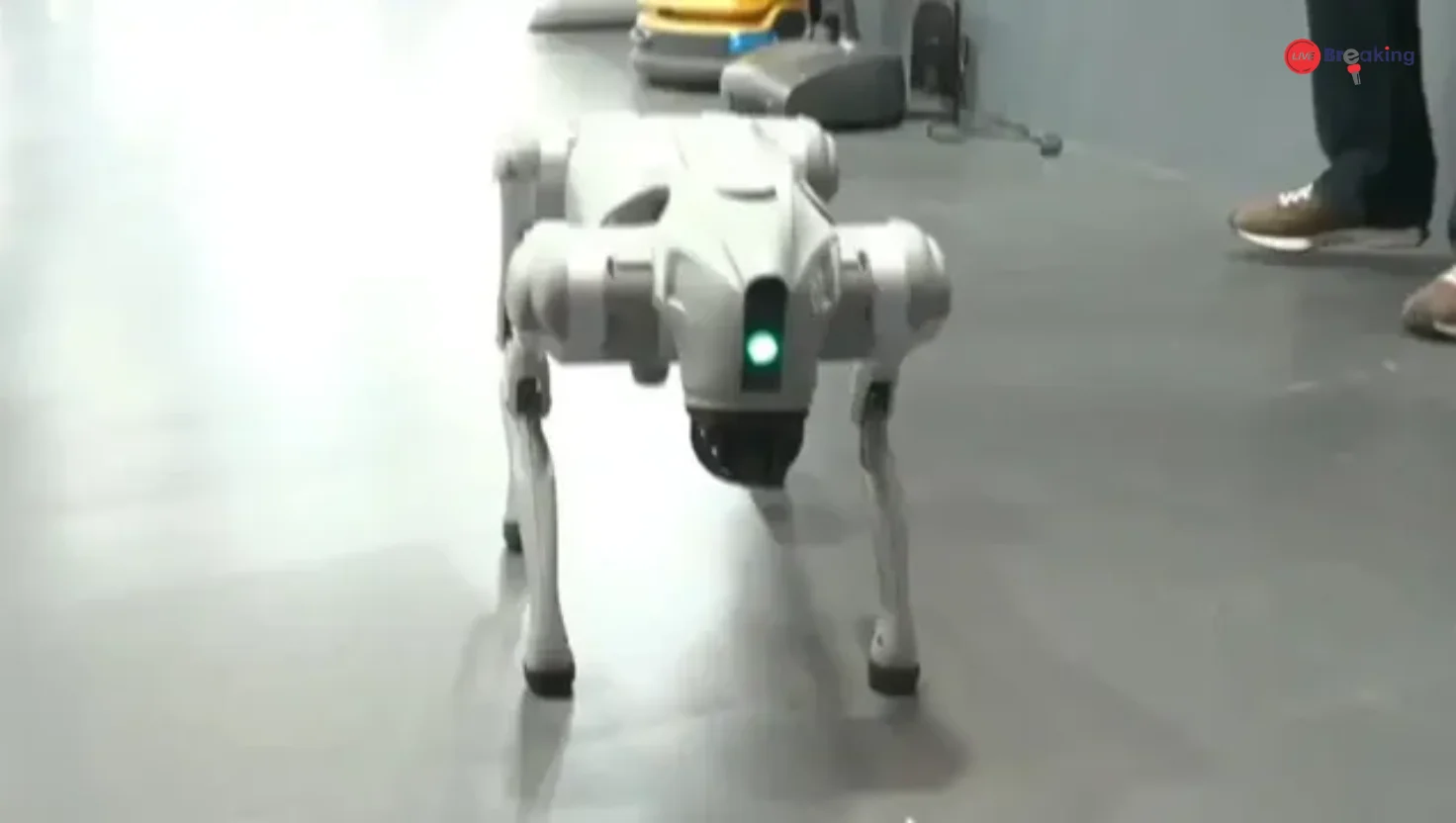
‘These Robot Dogs Are Chinese, Not Indian’: Galgotias University Thrown Out Of AI Summit
In a surprising turn of events at a recent artificial intelligence summit, Galgotias University was reportedly asked to exit the event following controversy surrounding the origin of robotic dogs showcased at its stall. The incident has sparked widespread discussion across technology and academic circles, raising questions about transparency, indigenous innovation, and representation in high-profile tech forums.
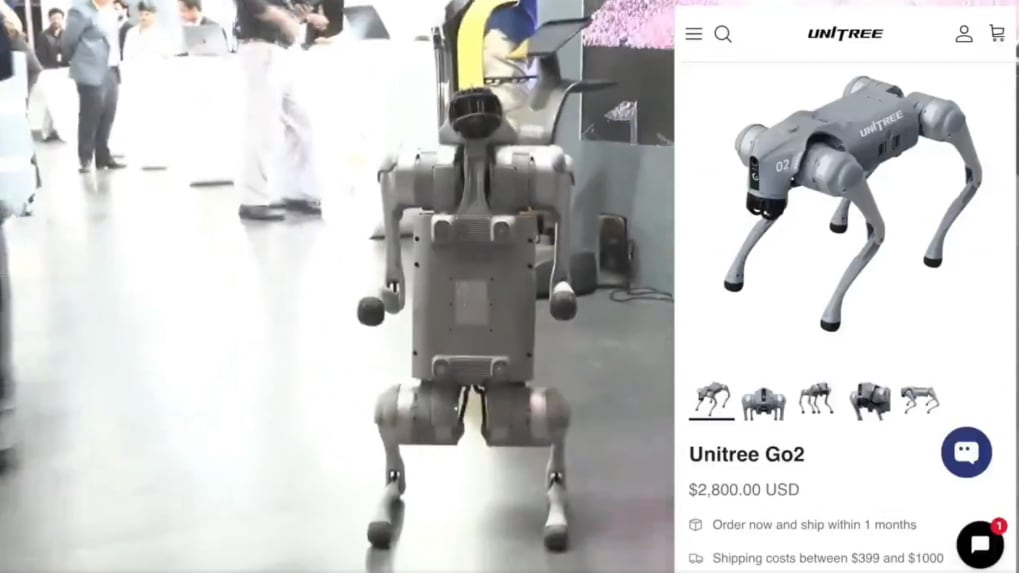
The row began after claims surfaced that the robot dogs being presented as part of the university’s AI and robotics innovation were not developed in India but were allegedly Chinese-manufactured units. The issue quickly gained attention among summit participants and online audiences.
What Happened at the AI Summit?
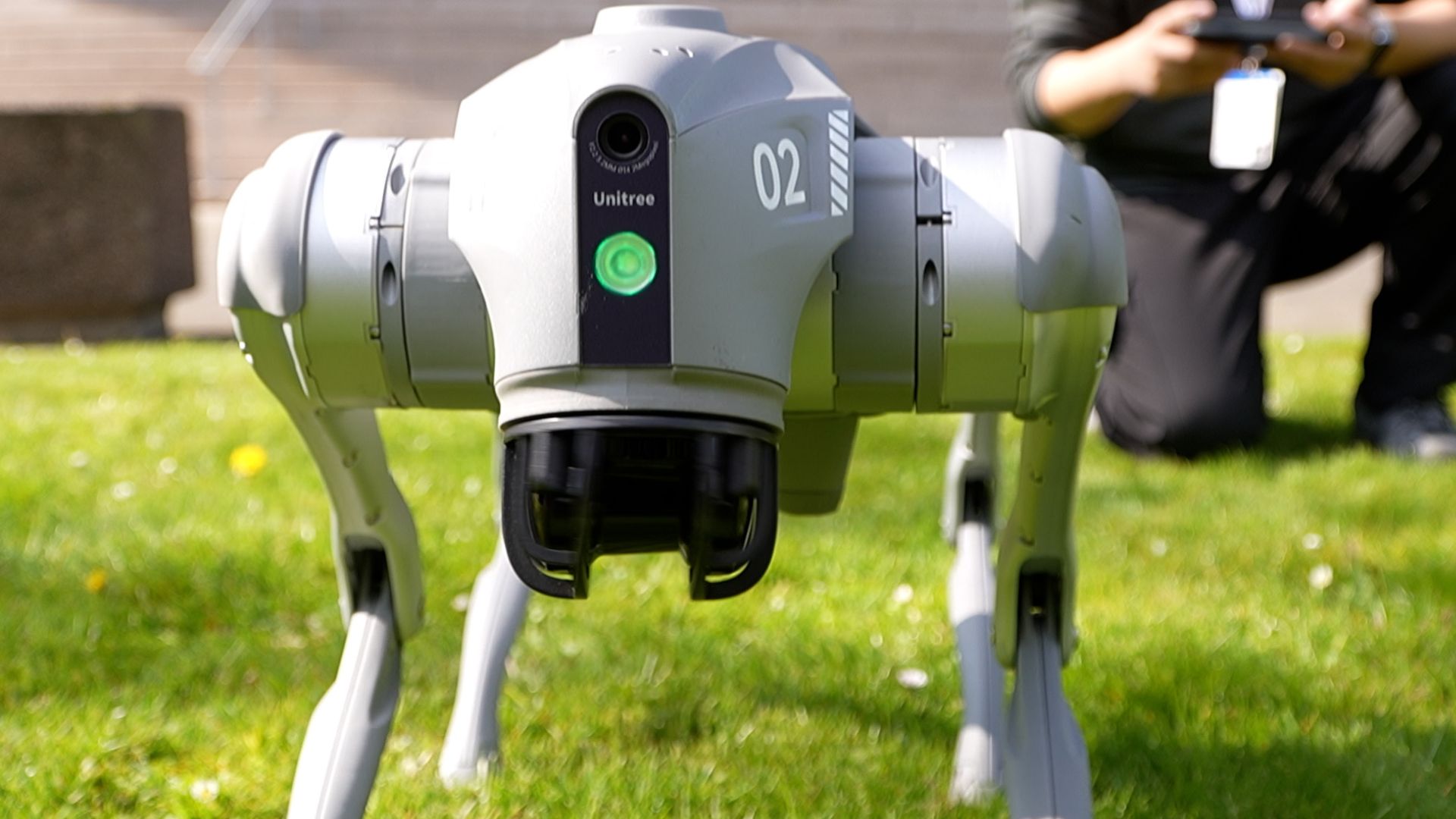
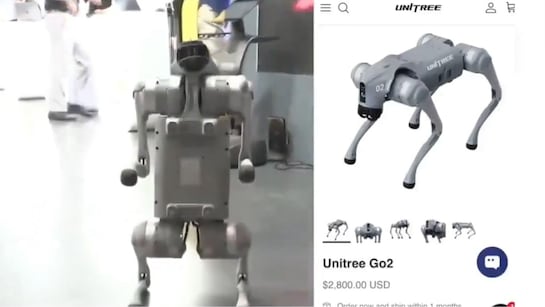

However, controversy reportedly erupted when questions were raised about the origin of the robots. Critics alleged that the machines were not developed domestically but were imported Chinese products being showcased as indigenous innovations.
Organizers of the summit reportedly took note of the concerns, and soon after, the university was asked to vacate its stall. The development triggered heated debate both at the venue and across social media platforms.
Why the Origin of Robot Dogs Became a Sensitive Issue
In recent years, India has emphasized the importance of “Make in India” and indigenous technological development, especially in strategic and emerging sectors like artificial intelligence and robotics. The presence of foreign-manufactured technology being presented in a national innovation setting can become a sensitive matter, particularly when claims about local development are involved.
Robot dogs, often used in surveillance, research, and industrial inspection, have become symbolic of advanced AI capabilities. Globally, companies like Boston Dynamics have popularized quadruped robots such as Spot, setting benchmarks for robotic mobility and autonomy. China, too, has rapidly advanced in robotics manufacturing, making such devices more accessible worldwide.
In this context, accurately representing the source of technology becomes critical—not only for credibility but also for national policy alignment.
Galgotias University’s Role and Reaction


Galgotias University, based in Greater Noida, is known for its engineering and technology programs. The university has frequently participated in innovation summits and tech exhibitions to highlight student projects and research initiatives.
While the full details of internal communications remain unclear, reports indicate that the controversy centered specifically on whether the robotic dogs were indigenously developed or commercially sourced products being demonstrated for academic purposes.
Universities often procure advanced robotic platforms from international vendors for research and experimentation. However, the issue appears to have arisen from perceived claims regarding the origin or development of the showcased units.
Larger Debate: Indigenous Innovation vs. Global Collaboration
The incident has ignited a broader conversation about what constitutes innovation in today’s interconnected world. Modern research institutions commonly use globally manufactured hardware while developing their own software, AI models, and applications on top of these platforms.
For example, many robotics labs worldwide purchase base hardware systems and then build proprietary algorithms, control systems, or machine learning frameworks to demonstrate advanced capabilities. The question then becomes: does using imported hardware undermine claims of innovation, or does innovation primarily lie in how the technology is utilized and enhanced?
Industry experts argue that transparency is key. Clear labeling—distinguishing between imported hardware and in-house AI development—can prevent misunderstandings while still showcasing research capabilities.
Public and Social Media Reaction
As news of the incident spread, social media platforms saw a mix of reactions. Some users criticized the alleged misrepresentation, emphasizing the need for authenticity in national innovation forums. Others defended academic institutions, pointing out that imported robotics platforms are standard tools for research and learning.
The debate reflects growing public scrutiny over technology claims, particularly in areas linked to national pride and self-reliance.
What This Means for Future Tech Showcases
The episode underscores the importance of clarity and documentation when presenting technological achievements. Organizers of major AI summits may now adopt stricter verification processes regarding product origin and development claims.
Read more: PM Modi Congratulates BNP’s Tarique Rahman: “India Will Support Democratic, Inclusive Bangladesh”
For universities and startups, the lesson is equally significant: while showcasing global hardware is common practice, transparency about development roles can protect credibility and prevent controversy.
Ultimately, the incident highlights how rapidly advancing technologies like AI and robotics intersect with national narratives, policy objectives, and public perception.
FAQs
Why was Galgotias University removed from the AI summit?
The university was reportedly asked to leave after controversy arose over claims that the robot dogs showcased were Chinese-manufactured rather than indigenously developed.
Were the robot dogs developed in India?
Reports suggest that the devices were allegedly Chinese-made, though the controversy centered around how they were represented at the summit.
Read more: NRI Reveals Reason To Leave Rs 2.9 Crore Salary In US To Return To India
Why is the origin of robot dogs important?
In India’s current push for indigenous innovation under initiatives like “Make in India,” accurately representing the origin of technology is considered important for credibility and policy alignment.
Are imported robots commonly used in research?
Yes, universities worldwide often use internationally manufactured robotic platforms for research, experimentation, and AI software development.
What are robot dogs used for?
Robot dogs are used in surveillance, industrial inspection, academic research, disaster response simulations, and AI development projects.