Supreme Court Slams Bengal Government and Election Commission Over Voter List Dispute
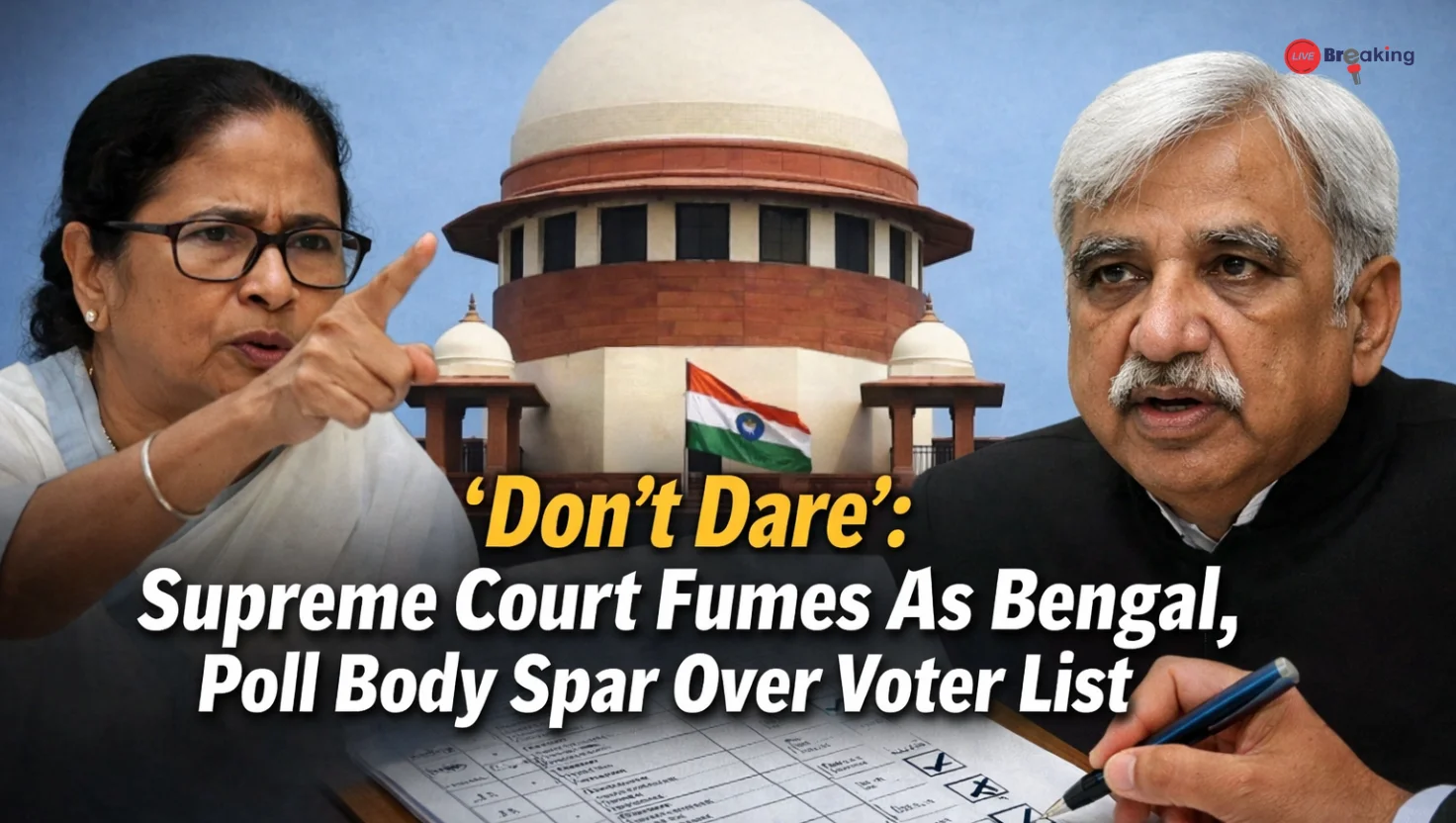
India’s Supreme Court delivered a sharp rebuke during a hearing related to the voter list controversy in West Bengal, expressing strong displeasure with both the state government and the Election Commission over their ongoing disagreement. The court’s stern remark — “Don’t dare…” — underscored the seriousness of the issue and highlighted growing tensions between authorities over electoral procedures.
The dispute revolves around alleged irregularities and administrative disagreements regarding the preparation and verification of voter lists in the state. The matter has gained national attention due to concerns about transparency, electoral fairness, and constitutional responsibilities.
The bench made it clear that the integrity of the electoral process must not be compromised, warning both sides against actions that could undermine democratic institutions.
Background of the Voter List Dispute
The controversy emerged after allegations surfaced about discrepancies in the voter rolls in certain areas of West Bengal. Opposition parties and several groups raised concerns that irregular entries or omissions could affect the fairness of upcoming elections.
The West Bengal government, led by Chief Minister Mamata Banerjee, has argued that the state administration is following due procedures and that accusations are politically motivated.
Meanwhile, the Election Commission of India (ECI) maintains that it operates independently and strictly adheres to constitutional guidelines for maintaining voter lists. However, disagreements over jurisdiction, administrative responsibilities, and verification procedures escalated the conflict.
The matter eventually reached the Supreme Court, prompting judicial intervention.
What Happened in the Supreme Court Hearing
During the hearing, the Supreme Court bench reportedly expressed frustration over the confrontational stance taken by both the Bengal government and the poll authorities.
At one point, the judges warned officials not to escalate the conflict further or take steps that might disrupt the electoral process.
The court emphasized that:
-
Electoral processes must remain transparent and unbiased
-
Government bodies must cooperate with constitutional institutions
-
Political disagreements should not interfere with administrative duties
The judges also reminded authorities that the Election Commission holds a constitutional mandate to conduct elections fairly and that state governments must assist rather than obstruct the process.
Key Issues Raised in the Case
The voter list controversy involves several critical issues affecting election management.
1. Accuracy of Voter Rolls
Maintaining an accurate voter list is essential for fair elections. Allegations of duplicate or missing names could potentially impact voter participation and electoral outcomes.
2. Administrative Authority
The case also raises questions about the division of responsibilities between the state government and the Election Commission regarding electoral administration.
3. Transparency and Verification
Ensuring transparency in voter verification processes is vital to maintain public trust in democratic institutions.
4. Political Sensitivity
Given West Bengal’s highly competitive political environment, disputes over electoral processes often become politically charged.
Timeline of Events
| Date | Event |
|---|---|
| Initial Complaints | Allegations emerge regarding irregularities in voter lists |
| State Response | Bengal government denies wrongdoing and defends procedures |
| Escalation | Political parties and officials raise concerns |
| Supreme Court Hearing | Court issues stern warning and demands cooperation |
Political Reactions
The controversy has triggered strong reactions across the political spectrum.
Read More: Delhi To Manchester IndiGo Flight Makes U-Turn After 7 Hours Amid Iran War
Opposition Parties
Opposition leaders have called for greater scrutiny of the voter lists and urged authorities to ensure transparency. They argue that any irregularities could undermine democratic fairness.
Bengal Government
The Bengal administration insists it is committed to free and fair elections and denies allegations of manipulation. Officials claim the dispute is being exaggerated for political reasons.
Election Commission
The Election Commission maintains that it is acting within its constitutional authority and will continue to monitor the situation closely.
Why the Supreme Court Intervention Matters
The Supreme Court’s involvement signals the seriousness of the dispute and the importance of protecting electoral integrity.
Judicial oversight in such matters helps ensure that:
-
Constitutional bodies function within their mandates
-
Electoral processes remain impartial
-
Disputes between institutions are resolved lawfully
The court’s strong remarks also send a clear message that any attempt to compromise the democratic process will face strict scrutiny.
Possible Impact on Upcoming Elections
The outcome of this case could influence electoral preparations in West Bengal and potentially set precedents for other states as well.
Read more: Trump Alienation of India Called ‘Biggest Mistake’ by Former Australia PM Tony Abbott
Key possible outcomes include:
-
Enhanced voter list verification procedures
-
Clearer guidelines on administrative responsibilities
-
Increased judicial monitoring of electoral disputes
Political analysts believe the case could shape discussions about electoral transparency ahead of future elections.
Conclusion
The heated exchange between the Bengal government and the Election Commission over voter list management has drawn national attention, prompting the Supreme Court to step in and issue a stern warning.
By emphasizing cooperation and constitutional responsibility, the court has reinforced the importance of maintaining transparency and fairness in India’s electoral system.
As the case continues to unfold, its implications could extend beyond West Bengal, influencing how electoral disputes are handled across the country.
Frequently Asked Questions (FAQ)
1. Why did the Supreme Court criticize the Bengal government and poll body?
The court expressed concern over their disagreement regarding voter list management and warned both sides against actions that could disrupt the electoral process.
Read more: How Mossad Spies & Hacked Traffic Cameras Led to Khamenei Assassination – Deep Intel Report
2. What is the voter list controversy in West Bengal?
The controversy involves allegations of irregularities and disputes over how voter lists are prepared and verified before elections.
3. What role does the Election Commission play in voter lists?
The Election Commission of India is responsible for preparing, updating, and maintaining electoral rolls to ensure fair elections.
4. Why is an accurate voter list important?
Accurate voter lists ensure that eligible citizens can vote while preventing duplicate or fraudulent entries.
5. What could be the impact of the Supreme Court’s intervention?
The court’s involvement may lead to clearer guidelines, improved verification processes, and stronger oversight of election administration.