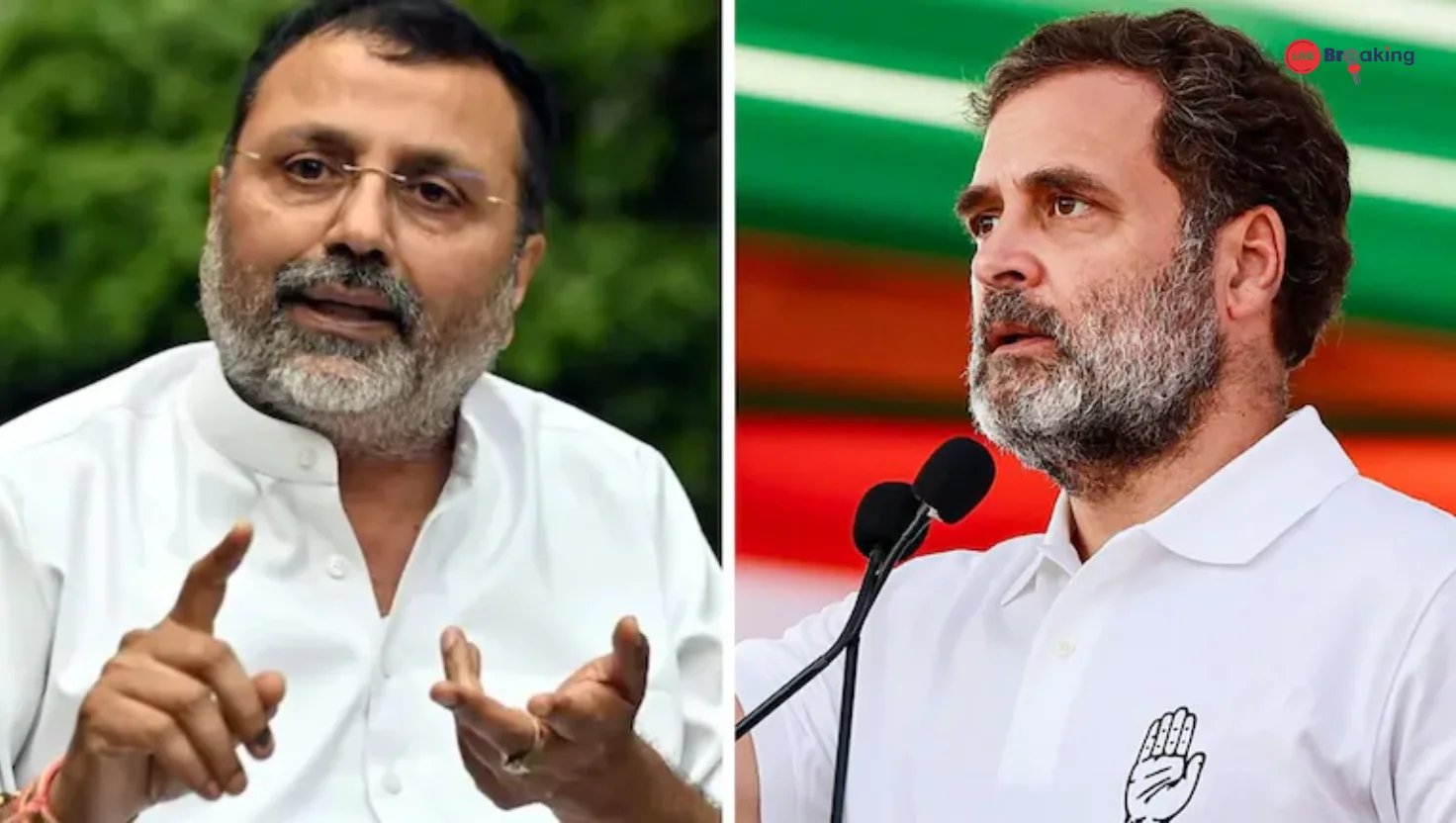
BJP MP Nishikant Dubey Moves to Disqualify Rahul Gandhi from Parliament
In a fresh political development that has intensified the ongoing confrontation between the ruling Bharatiya Janata Party (BJP) and the opposition Congress, BJP Member of Parliament Nishikant Dubey has reportedly taken the first formal step toward seeking the disqualification of Congress leader Rahul Gandhi from the Lok Sabha. The move has once again placed the spotlight on parliamentary conduct, constitutional provisions, and the widening rift between the two major political forces in the country.
The development follows recent controversies involving Rahul Gandhi’s public remarks and political statements that have drawn sharp criticism from BJP leaders. According to reports, Dubey has approached the appropriate parliamentary authorities, citing grounds that he believes warrant a closer examination under the rules governing Members of Parliament.
What Prompted the Move?
The latest action stems from statements and political commentary made by Rahul Gandhi that the BJP alleges are inappropriate and potentially in violation of parliamentary norms. While opposition leaders argue that Gandhi’s comments fall within the scope of democratic debate and free speech, the ruling party views certain remarks as damaging to the dignity of Parliament and possibly prejudicial to national interests.
Nishikant Dubey’s complaint reportedly calls for scrutiny under provisions that govern conduct of MPs, including matters relating to privilege, decorum, and adherence to constitutional responsibilities. The specific legal and procedural grounds cited in the request are expected to be examined by the Speaker or relevant parliamentary committees.
Constitutional and Legal Framework
Disqualification of a Member of Parliament in India can occur under several circumstances, including:
-
Violation of anti-defection laws under the Tenth Schedule
-
Conviction in a criminal case meeting specific criteria
-
Holding an office of profit
-
Breach of parliamentary privilege or conduct deemed unbecoming
Any move toward disqualification must follow due process. The Speaker of the Lok Sabha plays a central role in such decisions. If the issue relates to parliamentary privilege or conduct, it may be referred to a Privileges Committee for investigation before a final ruling is made.
Legal experts note that disqualification is a serious constitutional action and is not taken lightly. The process involves examination of facts, responses from the concerned MP, and adherence to established procedural safeguards.
Political Reactions Intensify
The Congress party has strongly criticized the move, calling it politically motivated and an attempt to silence opposition voices. Party leaders argue that Rahul Gandhi, as Leader of Opposition, has a constitutional duty to question the government and raise issues in public interest.
On the other hand, BJP leaders maintain that accountability and responsible speech are essential in public life, particularly for elected representatives holding senior positions. They assert that parliamentary democracy thrives on debate but must remain within the boundaries of decorum and national responsibility.
Political analysts suggest that the timing of this development may have broader implications. With key elections approaching in several states and heightened political polarization, the issue is likely to dominate headlines and parliamentary sessions in the coming weeks.
Impact on Parliament and Public Discourse
If the complaint proceeds to formal consideration, it could lead to heated debates within Parliament. Even if disqualification does not materialize, the process itself may shape political narratives and campaign messaging.
Observers believe the controversy may further entrench partisan positions. Supporters of Rahul Gandhi may view the move as suppression of dissent, while BJP supporters may see it as enforcement of accountability.
The development also raises broader questions about the balance between free speech and institutional integrity in democratic systems. In India’s parliamentary framework, maintaining respect for constitutional offices while allowing robust debate remains a delicate equilibrium.
What Happens Next?
The next steps depend on how parliamentary authorities respond to the complaint. The Speaker may:
-
Seek clarification from Rahul Gandhi
-
Refer the matter to a committee
-
Dismiss the complaint if deemed insufficient
Any formal inquiry would likely involve documentation, legal interpretation, and possible hearings. Until an official decision is made, Rahul Gandhi continues to serve as a Member of Parliament.
Read more: Family Of Indian Student Killed By US Officer Gets Rs 260 Crore Settlement
Political watchers emphasize that such proceedings often take time and may conclude without drastic action. However, the symbolic and political significance of the move is substantial.
Broader Political Context
The BJP and Congress have been locked in an increasingly combative political battle at both national and state levels. Issues ranging from governance and economic policy to national security and international remarks have fueled tensions.
Rahul Gandhi has been vocal in criticizing government policies, while BJP leaders frequently counter his claims and question his statements. The current episode adds another chapter to this ongoing rivalry.
As India’s political landscape continues to evolve, actions like these underscore the intensity of competition and the strategic use of parliamentary procedures in shaping political narratives.
Frequently Asked Questions (FAQ)
1. Can a Member of Parliament be disqualified for remarks made outside Parliament?
Disqualification depends on the nature of the remarks and whether they violate specific constitutional or legal provisions. Each case is evaluated individually.
2. Who decides on disqualification of a Lok Sabha MP?
The Speaker of the Lok Sabha plays a key role. In some cases, matters may be referred to a committee before a final decision.
Read More: “Sold Bharat Mata. Have You No Shame?” Rahul Gandhi vs Centre In Lok Sabha
3. What is the anti-defection law?
The anti-defection law, under the Tenth Schedule of the Constitution, prevents elected representatives from switching parties without facing disqualification.
4. Has Rahul Gandhi faced disqualification before?
Rahul Gandhi has previously faced legal and parliamentary challenges, though each situation has been distinct in its legal basis and context.
5. What happens if an MP is disqualified?
If disqualified, the seat becomes vacant, and a by-election may be held unless the term is close to completion.