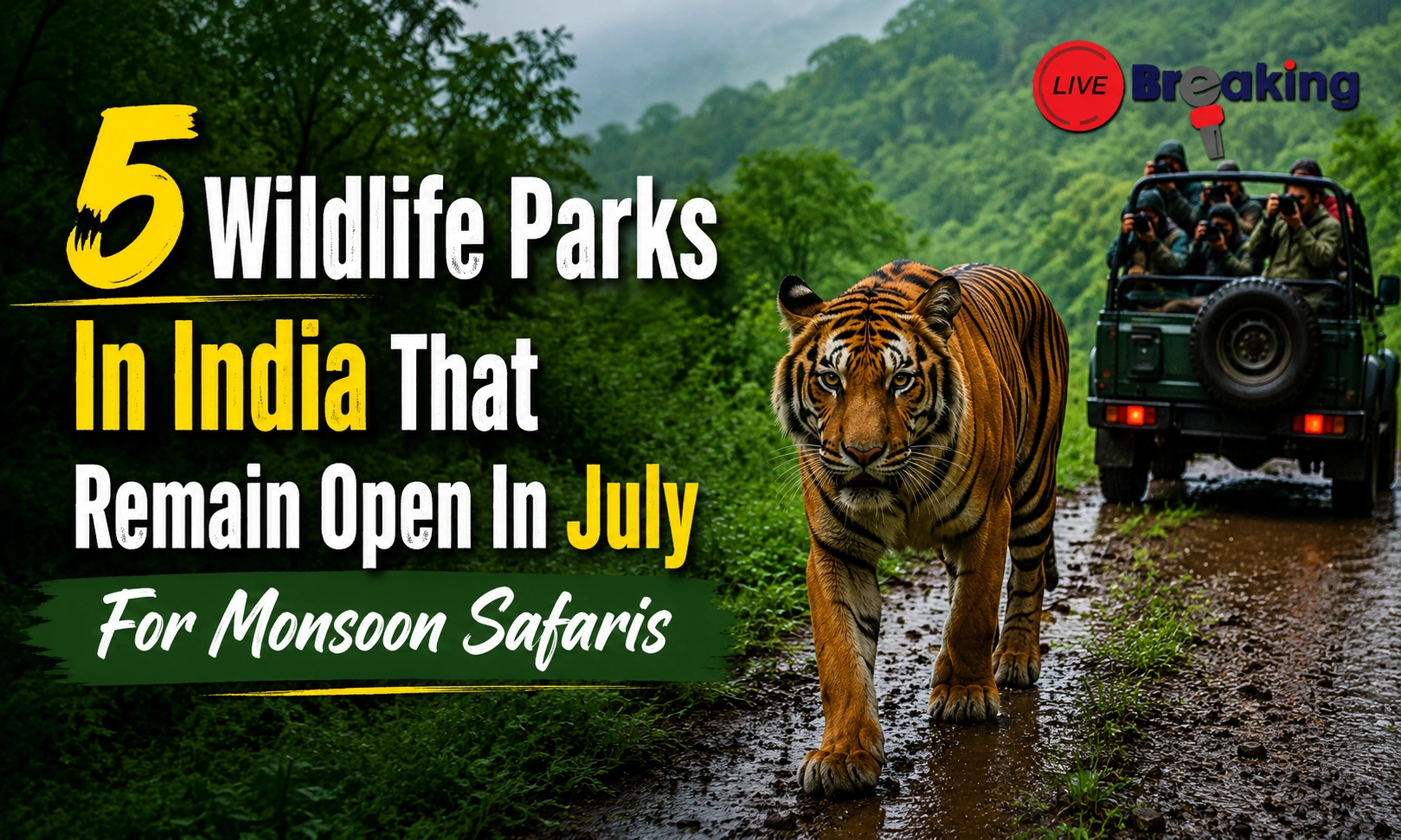
5 Wildlife Parks in India That Remain Open in July for Monsoon Safaris, Best Monsoon Wildlife Destinations
The arrival of the monsoon transforms India’s forests into lush green landscapes filled with fresh vegetation, flowing streams, and vibrant wildlife activity. While many famous national parks and tiger reserves close during the rainy season to protect wildlife habitats and ensure visitor safety, several wildlife destinations continue to welcome tourists throughout July. These parks offer a unique opportunity to experience nature in its most beautiful form while avoiding the crowds typically seen during the peak safari season.
Monsoon safaris provide a completely different wildlife experience. The forests are greener, birdlife is abundant, and the dramatic weather adds an adventurous element to every safari. For wildlife enthusiasts looking for an offbeat travel experience, July can be one of the best times to explore India’s wilderness.
Here are five wildlife parks and reserves that remain open during July and offer memorable monsoon safari experiences.
Why Do Most National Parks Close During Monsoon?
Many wildlife parks in India shut their core safari zones during the monsoon months because heavy rainfall makes roads inaccessible and creates safety concerns for visitors. The period is also crucial for animal breeding and habitat regeneration. Parks such as Ranthambore, Kanha, Bandhavgarh, and Kaziranga typically close during this season.
However, some wildlife reserves either remain fully open or keep selected zones operational, allowing visitors to enjoy safaris amid lush monsoon scenery.
1. Periyar National Park, Kerala
Located in the Western Ghats, Periyar National Park is one of India’s most beautiful wildlife destinations during the monsoon season. Unlike many parks that close due to heavy rains, Periyar remains accessible and offers unique experiences such as boat safaris on Periyar Lake.
The park is famous for its large elephant population, Indian bison, sambar deer, and diverse birdlife. The surrounding forests become incredibly green during July, creating a magical atmosphere for nature lovers.
Highlights
- Boat safaris through scenic lake surroundings
- Excellent birdwatching opportunities
- Dense evergreen forests at their best during monsoon
- Chance to spot wild elephants near the water
2. Jim Corbett National Park (Jhirna and Dhela Zones), Uttarakhand
While several zones of Jim Corbett National Park close during the monsoon, the Jhirna and Dhela tourism zones remain open throughout the year. This makes Corbett one of the few tiger reserves where visitors can enjoy wildlife safaris even in July.
The park is home to Bengal tigers, leopards, elephants, crocodiles, and hundreds of bird species. Monsoon rains transform the landscape into a lush paradise, offering stunning photography opportunities.
Read more: Boost Positive Vibes: 7 Home Decor Pieces For Luck & Abundance
Highlights
- Year-round safari zones
- Rich biodiversity
- Tiger and elephant sightings
- Beautiful monsoon landscapes
3. Sundarbans National Park, West Bengal
The Sundarbans is unlike any other wildlife destination in India. Famous for its mangrove forests and Royal Bengal Tigers, the park remains accessible during the monsoon season through boat-based safaris.
The unique ecosystem consists of rivers, tidal waterways, mudflats, and islands that create a fascinating wildlife habitat. Apart from tigers, visitors may spot crocodiles, spotted deer, fishing cats, and numerous bird species.
Highlights
- UNESCO World Heritage Site
- Boat safaris through mangrove forests
- Home to the Royal Bengal Tiger
- Exceptional birdwatching
4. Sariska Tiger Reserve, Rajasthan
Sariska Tiger Reserve offers a quieter alternative to Rajasthan’s famous Ranthambore National Park. While Ranthambore generally shuts during the monsoon season, Sariska keeps selected areas accessible, attracting wildlife enthusiasts seeking monsoon adventures.
The reserve is known for its tiger conservation efforts and also shelters leopards, hyenas, jackals, sambars, and nilgai. The Aravalli hills become remarkably green during July, creating breathtaking scenery.
Read more: Home Decor Ideas: Small Changes, Big Impact, Easy Additions to Refresh Every Room
Highlights
- Scenic Aravalli landscapes
- Lesser crowds
- Tiger, leopard, and hyena sightings
- Excellent photography opportunities
5. Nagarhole National Park, Karnataka
Part of the Nilgiri Biosphere Reserve, Nagarhole National Park offers limited but exciting safari experiences during the monsoon months depending on weather conditions. The park’s forests become exceptionally beautiful after the rains, attracting wildlife enthusiasts and photographers alike.
Nagarhole is known for its healthy populations of tigers, elephants, gaurs, and leopards. The lush surroundings and mist-covered forests make every safari feel like a journey through a tropical wilderness.
Highlights
- Part of the Nilgiri Biosphere Reserve
- Dense forests and scenic landscapes
- Rich wildlife diversity
- Ideal for nature photography
Read more: 5 Best Messy Bun Styles That Look Stylish And Effortless, Trendy Messy Bun Styles Guide
Wildlife Parks Open During July: Quick Comparison
| Wildlife Park | State | Main Attraction | Safari Type |
|---|---|---|---|
| Periyar National Park | Kerala | Elephants and birdlife | Boat Safari |
| Jim Corbett (Jhirna & Dhela) | Uttarakhand | Tigers and elephants | Jeep Safari |
| Sundarbans National Park | West Bengal | Royal Bengal Tigers | Boat Safari |
| Sariska Tiger Reserve | Rajasthan | Tigers and leopards | Jeep Safari |
| Nagarhole National Park | Karnataka | Tigers and elephants | Jeep Safari |
Tips for Monsoon Safaris
- Carry waterproof clothing and rain protection.
- Use waterproof covers for cameras and electronic devices.
- Wear comfortable trekking shoes with good grip.
- Book safaris in advance, as availability may be limited.
- Follow all forest department guidelines and safety instructions.
- Keep binoculars handy for birdwatching.
Why Monsoon Safaris Are Worth Experiencing
Monsoon safaris offer a refreshing alternative to traditional summer wildlife trips. The forests are alive with greenery, water bodies are full, and many species become more active. Birdwatchers especially benefit during this season as migratory and resident birds are often easier to spot.
Read More: A New Rs 25,000 DTV Visa Can Let Indians Stay In Thailand For Up To 5 Years, Here’s How It Works
The reduced tourist crowd also means a more peaceful and immersive wildlife experience. From mist-covered forests in Karnataka to the mangrove waterways of the Sundarbans, India’s monsoon wildlife destinations reveal a completely different side of nature.
Conclusion
Although many of India’s famous wildlife parks close during the rainy season, several exceptional destinations remain open for adventurous travelers. Periyar, Jim Corbett’s year-round zones, Sundarbans, Sariska, and Nagarhole offer unique opportunities to witness wildlife amid lush monsoon landscapes.
If you’re looking to escape crowded tourist spots and experience nature at its most vibrant, a monsoon safari in July could be the perfect travel plan. Just pack your rain gear, embrace the adventure, and get ready to explore India’s wild side like never before.
Frequently Asked Questions (FAQs)
Which national parks in India remain open in July?
Periyar National Park, Sundarbans National Park, Sariska Tiger Reserve, Nagarhole National Park, and Jim Corbett’s Jhirna and Dhela zones remain accessible during July.
Why do most wildlife parks close during monsoon?
Most parks close due to heavy rainfall, breeding seasons for wildlife, and safety concerns for tourists.
Read More: A New Rs 25,000 DTV Visa Can Let Indians Stay In Thailand For Up To 5 Years, Here’s How It Works
Is July a good time for wildlife safaris?
Yes. July offers lush landscapes, fewer crowds, excellent birdwatching opportunities, and a unique monsoon wilderness experience.
Can I see tigers during monsoon safaris?
Tiger sightings are possible in parks such as Jim Corbett, Sariska, Nagarhole, and Sundarbans, although sightings depend on weather and animal movement.
What should I pack for a monsoon safari?
Carry raincoats, waterproof bags, trekking shoes, insect repellent, binoculars, and waterproof camera protection.