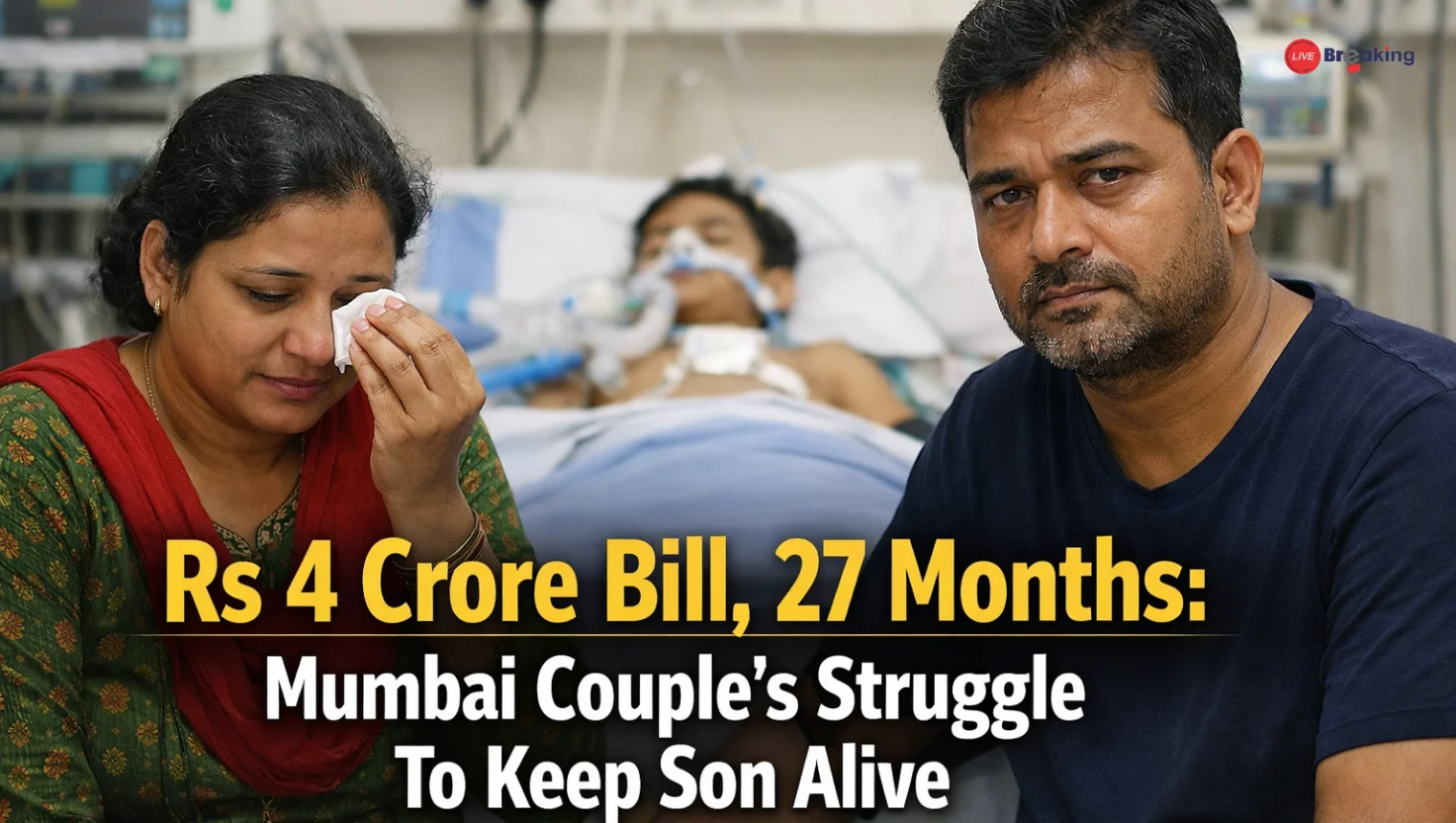
Rs 4 Crore Bill, 27 Months: Mumbai Couple’s Struggle To Keep Son Alive
In a deeply emotional and heart-wrenching story from Mumbai, a couple has spent over ₹4 crore Bill in just 27 months to keep their young son alive. Their journey highlights not only a parent’s unconditional love but also the immense financial and emotional burden that comes with prolonged critical medical care.
The child, who suffers from a severe and rare medical condition, has been on life support for more than two years. Despite the odds and escalating expenses, the family continues to fight, refusing to give up hope.
The Medical Condition and Continuous Care
The boy’s condition requires constant monitoring, advanced medical equipment, and round-the-clock ICU-level care at home. Doctors have indicated that his survival depends entirely on uninterrupted support systems, including ventilators, specialized medicines, and trained nursing staff.
Key Medical Requirements
-
24/7 ventilator support
-
Continuous oxygen supply
-
ICU-grade monitoring equipment
-
Specialized nursing care
-
Frequent hospital consultations
These requirements have turned the family’s home into a mini-intensive care unit.
Financial Burden: ₹4 Crore and Counting
The cost of sustaining such care is staggering. Over 27 months, the family has already spent ₹4 crore, draining savings, selling assets, and relying on financial help.
Breakdown of Expenses
| Expense Category | Estimated Cost (₹) |
|---|---|
| Ventilator & Equipment | 80–100 lakh |
| Medicines & Consumables | 1.2–1.5 crore |
| Nursing & Medical Staff | 1–1.2 crore |
| Hospital Visits & Emergency | 50–70 lakh |
| Miscellaneous Costs | 30–50 lakh |
This financial pressure is a stark reminder of the lack of affordable long-term healthcare support for critical illnesses in India.
Emotional Toll on the Family
Beyond the financial strain, the emotional toll is immense. The parents live in constant anxiety, balancing hope with uncertainty. Every day is a test of resilience, as they watch their child depend on machines for survival.
Read more: Supreme Court Rejects Menstrual Leave Plea in India: Concerns Over Women’s Employment
They have also limited their social interactions and professional commitments, dedicating their entire lives to caregiving.
Why This Case Sparks Nationwide Attention
This story has gained widespread attention because it reflects a larger issue:
-
Rising cost of healthcare in India
-
Lack of insurance coverage for long-term ICU care
-
Emotional and psychological stress on families
-
Ethical dilemmas surrounding life support
It raises an important question: how far can—and should—families go to sustain life when the costs are so high?
The Role of Government and Healthcare Policies
Cases like this highlight the urgent need for:
-
Better health insurance coverage for chronic conditions
-
Government support programs for critical care
-
Subsidized medical equipment and home ICU setups
-
Mental health support for caregivers
Without systemic changes, many families may face similar struggles without the means to continue.
Hope, Humanity, and the Power of Parental Love
Despite everything, the parents remain hopeful. Their determination is rooted in love, faith, and the belief that every moment of their child’s life is worth fighting for.
Read More: Iran War Triggers LPG Shortage in India: Restaurants Turn to Wood and Coal
Their story is not just about medical hardship—it is about the extraordinary lengths parents will go to protect their child.
FAQs
Q1: Why did the Mumbai couple spend ₹4 crore on treatment?
The couple’s son requires continuous life support, including a ventilator and ICU-level care at home, leading to extremely high medical expenses over 27 months.
Q2: What medical condition does the child have?
The child suffers from a severe and rare condition that prevents independent breathing and requires constant monitoring and life support.
Q3: Is long-term ICU care at home common in India?
No, it is relatively rare and extremely expensive, making it inaccessible for most families without significant financial resources.
Q4: Does insurance cover such prolonged treatments?
In most cases, insurance policies in India do not fully cover long-term ICU care or home-based life support systems.
Read more: How Mossad Spies & Hacked Traffic Cameras Led to Khamenei Assassination – Deep Intel Report
Q5: What can be done to support such families?
Improved healthcare policies, financial aid programs, and expanded insurance coverage can help families manage the burden of long-term critical care.
Key Takeaways
-
A Mumbai family spent ₹4 crore over 27 months to keep their son alive
-
The case highlights rising healthcare costs in India
-
Long-term ICU care is financially and emotionally exhausting
-
There is an urgent need for better healthcare support systems