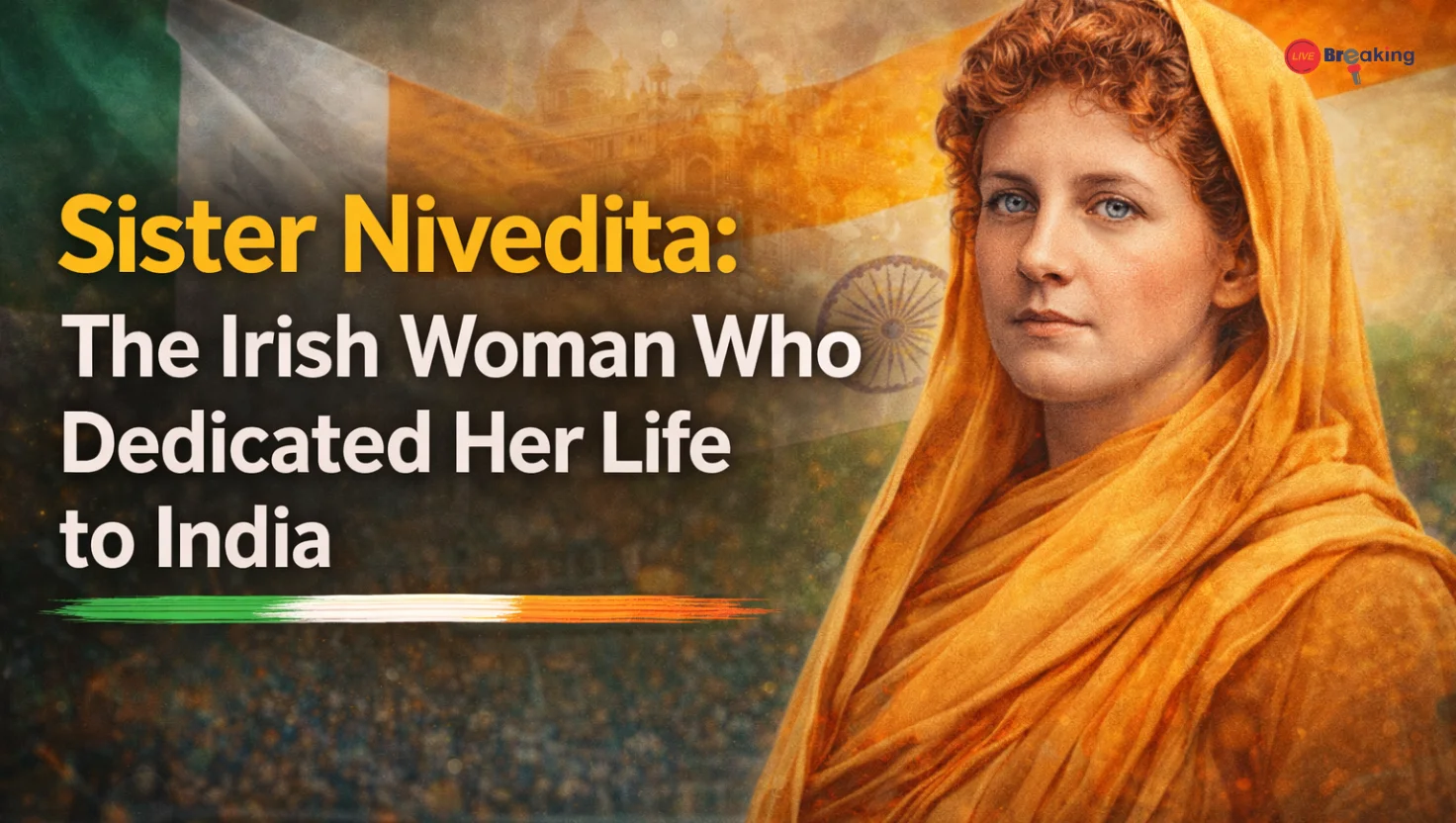
Sister Nivedita: The Irish Woman Who Dedicated Her Life to India
In the late 19th century, when India was under British colonial rule, an Irish woman crossed continents and cultures to dedicate her life to the spiritual and social awakening of the country. Born as Margaret Elizabeth Noble, she later became known to India and the world as Sister Nivedita—a name meaning “the dedicated one.”
Her journey from Ireland to India was not merely geographical; it was a transformation of identity, purpose, and spirit. Inspired by Swami Vivekananda, she became a passionate advocate for Indian education, women’s empowerment, culture, and nationalism. Even today, Sister Nivedita remains a symbol of selfless service, cross-cultural unity, and deep spiritual commitment.
Early Life of Margaret Noble
Sister Nivedita was born on October 28, 1867, in Dungannon, Ireland. She grew up in a deeply religious household, as her father was a minister. From an early age, Margaret developed a strong interest in spirituality, literature, and education.
Her father’s teachings instilled in her the belief that service to humanity was the highest form of worship. After completing her education, Margaret began working as a teacher in England, where she quickly gained recognition for her progressive educational ideas.
However, she felt that something was missing in her life—a deeper purpose beyond professional success.
Meeting Swami Vivekananda: A Life-Changing Encounter
Margaret Noble’s life took a dramatic turn in 1895 when she attended a lecture by Swami Vivekananda in London.
Vivekananda’s powerful message about Vedanta philosophy, universal spirituality, and India’s cultural heritage deeply moved her. His vision of empowering Indian society through education and spiritual awakening resonated with her heart.
After several discussions with Vivekananda, Margaret decided to dedicate her life to his mission. Vivekananda encouraged her to come to India and help in the upliftment of women and education.
In 1898, Margaret arrived in India. It was here that Swami Vivekananda gave her the name “Sister Nivedita,” meaning “The Dedicated One.”
Why She Chose to Serve India
Sister Nivedita believed that India possessed a profound spiritual and cultural heritage that the world needed to understand. She also recognized the challenges faced by Indian society, especially women’s lack of access to education.
Her mission became clear:
-
Empower women through education
-
Preserve Indian culture and traditions
-
Support India’s awakening and self-confidence
Unlike many foreigners of the time, she did not approach India with a colonial mindset. Instead, she immersed herself in Indian culture, learning local customs, traditions, and languages.
Sister Nivedita’s Contributions to India
1. Women’s Education
One of her greatest contributions was in the field of girls’ education.
In 1898, she founded a school for girls in Kolkata, which focused on both academic learning and cultural education. At a time when female education was widely neglected, her initiative became revolutionary.
She personally visited homes to convince parents to send their daughters to school.
2. Support for Indian Nationalism
Sister Nivedita became deeply involved in India’s nationalist movement. She believed that India needed not only political freedom but also cultural and intellectual awakening.
She supported many national leaders and thinkers and encouraged Indians to take pride in their heritage.
3. Contribution to Science and Arts
Sister Nivedita also played a key role in supporting Indian scientists and artists.
She strongly supported Jagadish Chandra Bose, the famous Indian scientist, when his work was ignored by British institutions. She helped promote his research and gain international recognition.
She also encouraged the revival of Indian art, supporting artists like Abanindranath Tagore and promoting indigenous artistic traditions.
Key Contributions of Sister Nivedita
| Contribution Area | Description |
|---|---|
| Education | Established a girls’ school in Kolkata |
| Women Empowerment | Advocated education and social upliftment for women |
| Indian Nationalism | Supported India’s freedom and cultural pride |
| Science Promotion | Helped promote Jagadish Chandra Bose’s research |
| Cultural Revival | Encouraged Indian art and heritage |
Read more: Best Ayurvedic Remedies for Menstrual Pain Relief
Her Literary Contributions
Sister Nivedita was also a prolific writer. She wrote extensively about Indian culture, spirituality, and society.
Some of her famous works include:
-
The Master As I Saw Him
-
The Web of Indian Life
-
Cradle Tales of Hinduism
-
Kali the Mother
Through her writings, she helped the Western world understand the depth and richness of Indian civilization.
Challenges She Faced
Despite her dedication, Sister Nivedita faced numerous challenges.
Being a foreign woman involved in India’s nationalist movement attracted suspicion from British authorities. She also encountered social resistance while promoting girls’ education.
However, her determination and belief in India’s future kept her moving forward.
Final Years and Legacy
Sister Nivedita passed away on October 13, 1911, in Darjeeling at the age of just 43.
Her memorial bears a powerful inscription:
Read More: What Pregnant Women Should and Shouldn’t Eat in Winter, Healthy Winter Pregnancy Diet
“Here reposes Sister Nivedita who gave her all to India.”
Her life continues to inspire millions across the world. She is remembered not just as a disciple of Swami Vivekananda but as a bridge between East and West, a champion of education, and a true friend of India.
Why Sister Nivedita’s Story Matters Today
Sister Nivedita’s life teaches us that dedication to a cause can transcend nationality, culture, and identity.
Her story reminds us that real service comes from empathy, understanding, and selfless commitment.
In a world often divided by borders and ideologies, Sister Nivedita’s life stands as a shining example of unity, compassion, and cultural respect.
FAQs
1. Who was Sister Nivedita?
Sister Nivedita was an Irish-born social worker, educator, and disciple of Swami Vivekananda who dedicated her life to India’s education, culture, and nationalist awakening.
2. What was Sister Nivedita’s real name?
Her real name was Margaret Elizabeth Noble.
3. Why did she come to India?
She came to India after being inspired by Swami Vivekananda’s teachings and decided to dedicate her life to education and social reform.
4. What did Sister Nivedita do for women’s education?
She established a girls’ school in Kolkata and worked tirelessly to promote female education in India.
Read more: Understanding IVF Treatment, Costs and How to Choose the Right IVF Centre
5. When did Sister Nivedita die?
She passed away on October 13, 1911, in Darjeeling, India.
Conclusion
Sister Nivedita’s life is a powerful reminder that true devotion goes beyond borders and identities. From Margaret Noble in Ireland to Sister Nivedita in India, her transformation was guided by love, faith, and service.
More than a century later, her legacy continues to inspire educators, social reformers, and individuals who believe in the power of dedication to create lasting change.