I Would Intervene But…”: Donald Trump Reacts to Pakistan-Afghanistan ‘Open War’ Tensions
As tensions flare along the Pakistan-Afghanistan border, former US President Donald Trump has weighed in on the situation, offering both praise for Pakistan’s leadership and a cautious stance on direct American involvement. His remarks, which come amid reports of escalating hostilities between the two neighboring countries, have reignited debate about the United States’ role in South Asian geopolitics.
Trump’s statement — “I would intervene but…” — reflects a careful balancing act. While acknowledging the seriousness of the situation, he stopped short of committing to direct diplomatic or military intervention, signaling a broader shift toward strategic restraint.
Background: Rising Tensions Between Pakistan and Afghanistan
The relationship between Pakistan and Afghanistan has long been complex and fraught with mistrust. The two nations share a porous and historically contested border — the Durand Line — which has been a source of tension for decades.
Recent reports indicate heightened military exchanges and sharp rhetoric from both sides. Allegations of cross-border militant activity, counter-terrorism operations, and airspace violations have contributed to what some observers are calling an “open war” scenario. While not officially declared as war, the intensity of exchanges and diplomatic breakdown has raised international concerns.
Security analysts warn that instability in this region carries global implications, particularly given the history of US military engagement in Afghanistan and longstanding security cooperation with Pakistan.
Trump’s Remarks: Praise and Prudence
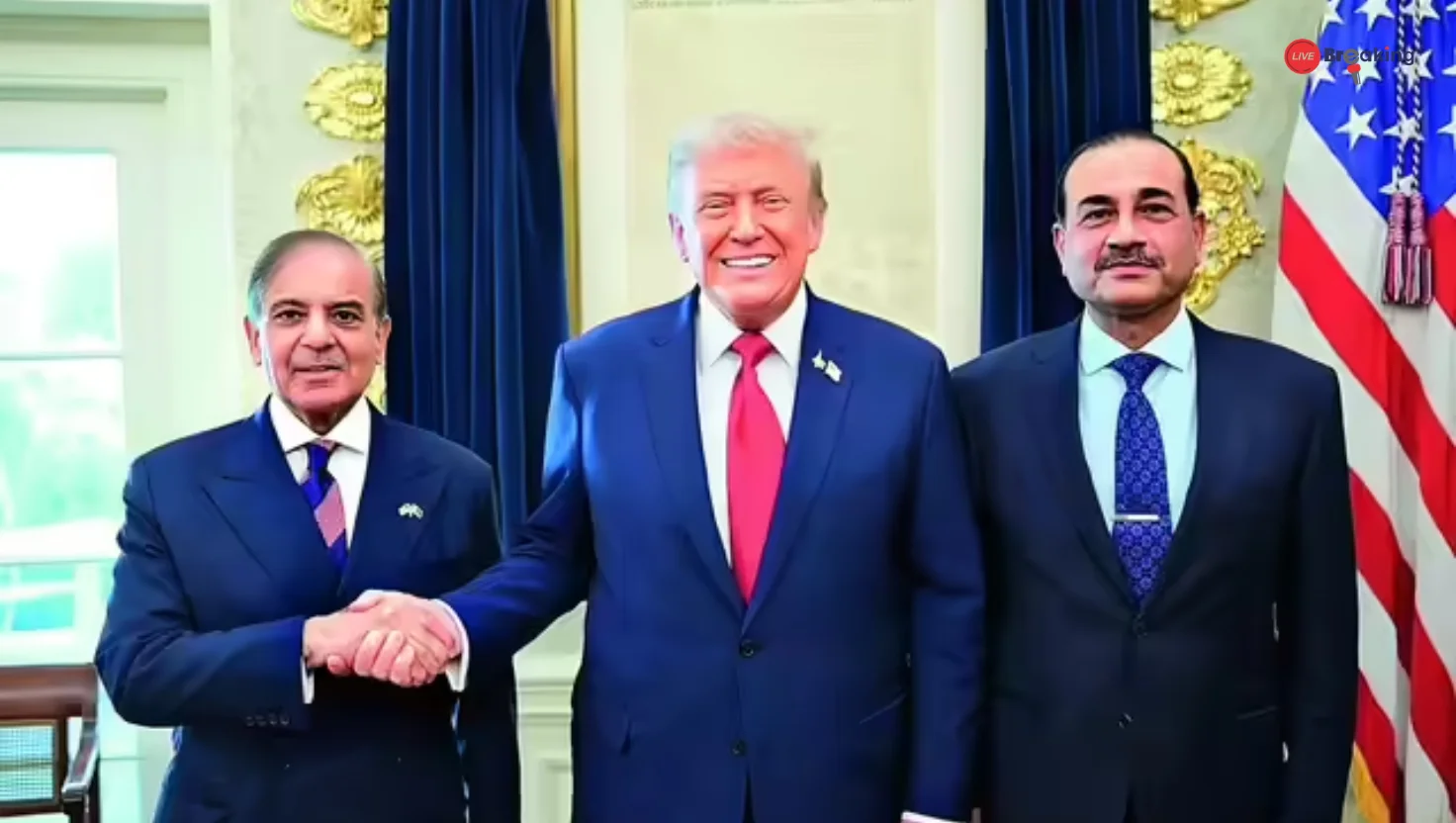
In his comments, Trump praised Pakistan’s Prime Minister Shehbaz Sharif and Army Chief Asim Munir, describing them as capable leaders managing a challenging security environment.
He reportedly emphasized his good rapport with Pakistani officials during his presidency, recalling cooperative efforts on counter-terrorism and regional stability. At the same time, Trump underscored that intervention should not be automatic, reflecting his long-standing “America First” philosophy that prioritizes US national interests over foreign entanglements.
His “I would intervene but…” comment suggests a willingness to mediate diplomatically under certain conditions, yet an unwillingness to commit American forces or resources without clear strategic benefit.
The Strategic Stakes for the United States
The United States’ history in Afghanistan — particularly the two-decade military presence following the September 11 attacks — makes any new conflict in the region particularly sensitive. Since the US withdrawal in 2021, Washington has maintained a watchful but limited role in Afghan affairs.
Pakistan, meanwhile, remains a key regional player with nuclear capabilities and strategic geographic positioning. Instability between Pakistan and Afghanistan risks:
-
Increased militant activity across borders
-
Refugee crises and humanitarian challenges
-
Disruption of regional trade corridors
-
Broader geopolitical competition involving China and Russia
Read more: Arvind Kejriwal, Manish Sisodia Cleared In Liquor Policy Case, Court Raps CBI
Trump’s comments therefore resonate beyond rhetoric. They reflect a broader debate in American foreign policy circles: Should the US re-engage proactively in South Asia, or maintain a hands-off approach unless core interests are directly threatened?
A Look at the Core Issues Fueling the Conflict
| Key Issue | Pakistan’s Position | Afghanistan’s Position | Impact |
|---|---|---|---|
| Border Dispute (Durand Line) | Recognized as official border | Historically contested | Repeated skirmishes |
| Militancy Allegations | Accuses Afghan-based groups of attacks | Denies responsibility | Military retaliation |
| Airspace Violations | Claims defensive operations | Calls it aggression | Diplomatic fallout |
| Refugee Movement | Security concerns | Humanitarian pressure | Regional instability |
This table highlights the complexity of the crisis. Each issue feeds into the next, creating a cycle of escalation that becomes increasingly difficult to control.
International Reactions and Regional Dynamics
Other regional powers are watching developments closely. China, with deep economic ties to Pakistan through the China-Pakistan Economic Corridor (CPEC), has strong stakes in maintaining stability. Russia and Iran, too, have security interests in Afghanistan’s future.
For the US, the calculus is more nuanced. A direct intervention could risk reigniting military commitments that the American public has largely rejected. However, a complete disengagement might allow rival powers to expand influence.
Trump’s remarks therefore can be interpreted as political signaling: supportive of allies, cautious about intervention, and consistent with his historical skepticism toward prolonged foreign engagements.
What Could Happen Next?
Several scenarios remain possible:
-
Diplomatic De-escalation – Mediation by international actors could reduce tensions.
-
Limited Military Exchanges – Skirmishes remain contained but persistent.
-
Full-Scale Escalation – A declared conflict drawing broader international attention.
-
Proxy Instability – Increased militant activity destabilizing both nations without formal war.
Much depends on diplomatic backchannels, internal political pressures in both countries, and whether international actors step in to facilitate talks.
Read more: YouTuber In Hyderabad Sends Mother In Kuwait “I Love You” Text, Then Kills Self
Could the US Really Intervene?
While Trump suggested openness to intervention, actual US involvement would require:
-
Congressional backing
-
Clear strategic objectives
-
Defined exit strategy
-
Support from regional allies
Given the recent history of American withdrawal from Afghanistan, large-scale military intervention appears unlikely. Diplomatic engagement or behind-the-scenes mediation would be more probable routes.
Frequently Asked Questions (FAQ)
1. What did Donald Trump say about the Pakistan-Afghanistan conflict?
He indicated that he would consider intervention but emphasized caution, reflecting his preference for limited foreign engagement.
2. Why are Pakistan and Afghanistan in conflict?
Tensions stem from border disputes, militant activity accusations, and security operations along the Durand Line.
3. Is this officially a war?
While some reports describe the situation as an “open war,” there has been no formal declaration. The conflict involves heightened military exchanges and diplomatic strain.
4. What role could the United States play?
The US could act as a mediator or diplomatic facilitator but is unlikely to deploy military forces given current political and strategic realities.
Read more: PM Modi Congratulates BNP’s Tarique Rahman: “India Will Support Democratic, Inclusive Bangladesh”
5. Why did Trump praise Pakistan’s leadership?
Trump highlighted his previous working relationship with Prime Minister Shehbaz Sharif and Army Chief Asim Munir, praising their leadership amid challenging circumstances.
Broader Implications for South Asia
South Asia remains one of the most geopolitically sensitive regions in the world. With nuclear capabilities, cross-border militancy, and complex alliances, even localized tensions can have far-reaching consequences.
Trump’s remarks, though unofficial, contribute to the global conversation about whether major powers should intervene in regional conflicts or encourage localized solutions.
As developments unfold, international observers will continue to monitor whether rhetoric translates into diplomatic action — or whether the region edges closer to sustained confrontation.