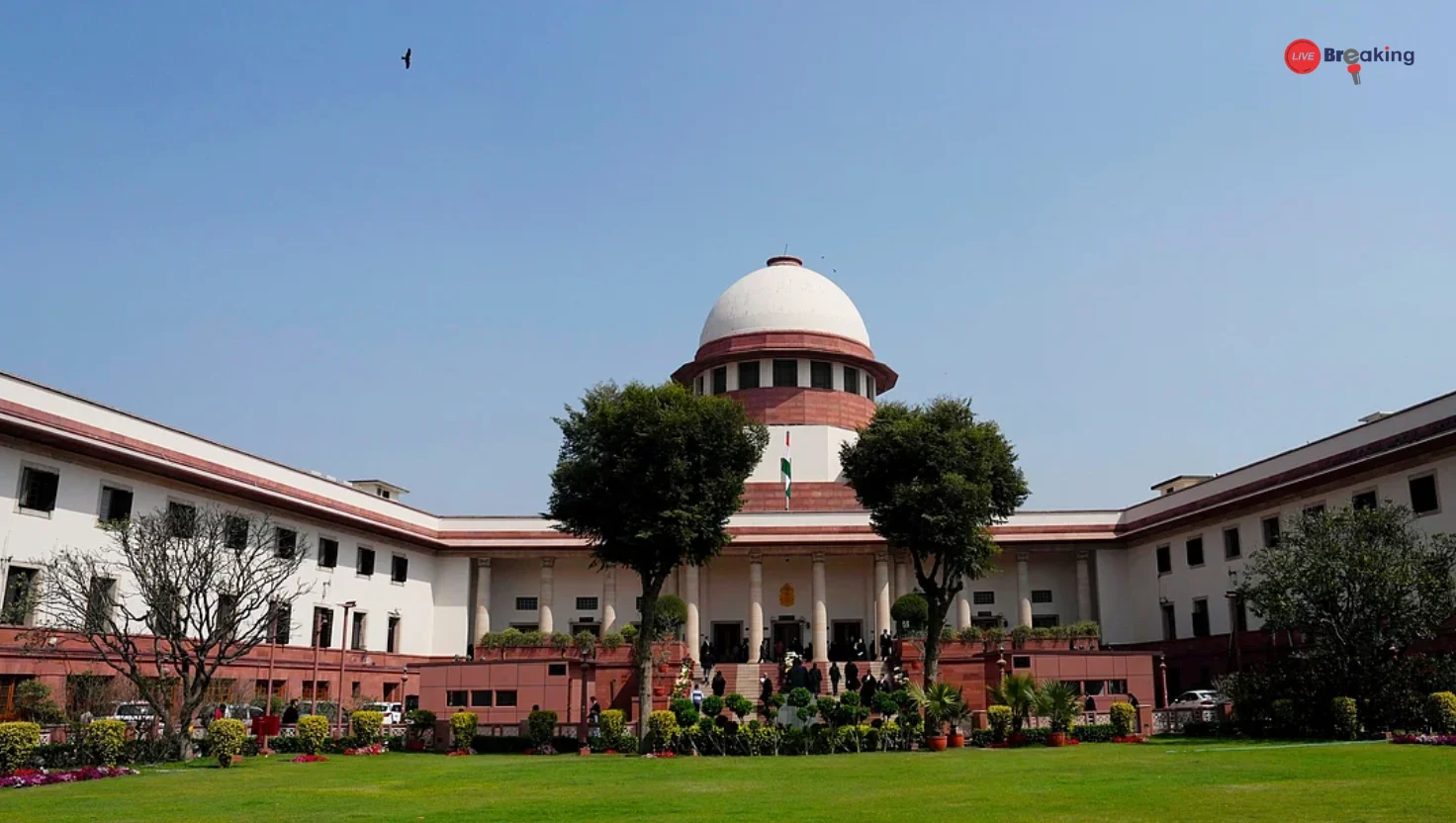
“Something’s Wrong”: Top Court Seeks Reply Over Madras Supreme Court Listings
The Supreme Court of India, during a recent hearing, made strong observations regarding alleged irregularities in the listing of cases at the Madras High Court. The apex court expressed concern that the listing pattern appeared unusual and demanded a detailed explanation from the Madras High Court administration. This scrutiny has sparked discussions across the legal community about transparency, accountability, and procedural fairness in judicial functioning.
Supreme Court Raises Red Flag on Listing Irregularities
During the hearing, a bench of the Supreme Court noted that the listing of certain cases in the Madras High Court appeared inconsistent with standard judicial procedure. The court went so far as to remark that “something is wrong”, indicating that the issue may be more than a simple administrative oversight.
The matter arose after litigants complained that their petitions were either being repeatedly deferred or placed before unexpected benches. Such irregularities, if proven, could undermine litigants’ trust in the judicial system.
The Supreme Court, treating the issue seriously, has directed the Registrar General of the Madras High Court to file a detailed reply explaining the criteria, logic, and administrative steps behind the contested case listings.
Why Case Listing Matters in Judicial Fairness
Case listing—the process of determining which bench hears which case—is not merely administrative. It is foundational to the fairness of hearings, timely justice, and transparency.
Sub-Head: The Role of Listing in Judicial Integrity
- It ensures random and non-preferential assignment of matters.
- It protects judges from allegations of bias and litigants from unfair processes.
- It prevents manipulation that could influence the outcome of sensitive cases.
Apex Court’s Directive to Madras High Court Administration
The Supreme Court has demanded:
-
A written explanation from the Registrar General.
-
Clarification on whether standard listing protocols were followed.
-
Details on why certain cases were moved or reassigned.
-
Assurance that no undue influence or procedural lapses occurred.
The apex court emphasized that such matters cannot be taken lightly, as case allocation must remain transparent and impartial.
Reaction Within the Legal Community
The legal fraternity—advocates, litigants, and judicial commentators—has reacted strongly to the Supreme Court’s remarks.
Read more: One Mistake, You’re Dead”: Elon Musk Reveals How Charlie Kirk’s Murder Changed His Life
Sub-Head: Concerns Over Transparency
Many legal experts believe that the Supreme Court’s intervention highlights a broader systemic issue: the need for modern, automated, and fully auditable case listing systems across all High Courts.
Some advocates argue that instances of irregular listing are not unique to the Madras High Court and stress that national-level reforms are needed.
Others welcomed the Supreme Court’s sharp observation, stating that judicial accountability must start from within the system.
What Happens Next?
The Madras High Court Registrar General is expected to submit the detailed reply within the time stipulated by the Supreme Court. Once the response is reviewed, the court may:
-
Order a probe into administrative lapses
-
Direct the High Court to revise its listing mechanisms
-
Issue guidelines for more transparent case allocation
-
Close the matter if it finds the explanation satisfactory
The outcome may set a precedent for all High Courts in India.
Broader Implications for Judicial Governance in India
This incident sheds light on an important aspect of India’s judicial machinery. At a time when courts face huge backlogs and delays, structural transparency in processes like case listing becomes essential.
Read more: 88 Minutes in PMO: Inside Rahul Gandhi Crucial Meeting with PM Modi Over CIC & CVC Appointments
The Supreme Court’s assertive stand signals a push toward:
-
More accountable judicial administration
-
Reduced scope for human discretion
-
Greater adoption of technology and automation
-
Strengthening public trust in the justice system